









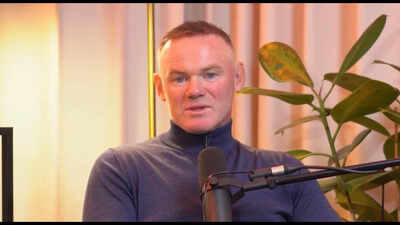
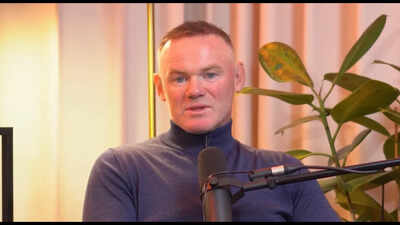
Wayne Rooney was scoring goals, winning trophies and approaching the peak of his career at Manchester United, but away from the pitch, he was struggling to cope with a life that appeared, from the outside, to be going exactly as he had hoped. The former England captain has now spoken about the drinking, isolation and mental health difficulties he kept hidden during those years, revealing that he reached a point where he contemplated suicide and sought help from a therapist. His account also explains how his wife, Coleen, helped him through a period he describes as the lowest of his life.
The drinking and isolation behind Rooney’s best years at Manchester United
Rooney has revealed that some of the darkest periods of his life coincided with what he regarded as the best years of his football career. Speaking to BBC presenter Gabby Logan on The Life at the Midpoint podcast, the former Manchester United and England forward described how he would spend days drinking alone at home, even as he continued to perform and score regularly for his club.Asked about the lowest point in his life, Rooney said he had not felt comfortable with adulthood until his mid-20s, when he eventually reached what he described as rock bottom.“Rock bottom was when I was drinking; I’d lock myself in the house for two days and just drink. This was at probably the best part of my career, playing-wise. I’d have a couple of days off, I’d go home and I’d sit in the games room, and I’d drink for two days. Then I’d get up in the morning, and I had training.”The routine became a cycle that was difficult for him to break. Rooney explained that scoring goals at the weekend made it easier to return to the same behaviour, because his performances on the pitch gave little indication of what was happening elsewhere in his life.“What didn’t help me is, I’d score one or two goals at the weekend. So it was like a cycle, and I’d do it again. I couldn’t deal with all the pressures of everything… the pressures of football, I think I was alright with. And I made stupid choices as well when I was younger, off the pitch. I really struggled to deal with it all, to be honest.”Rooney joined Manchester United from Everton in 2004 and went on to become the club’s record goalscorer, with 253 goals in 559 appearances. He helped United win five Premier League titles, the Champions League, the Europa League, the FA Cup and three League Cups before returning to Everton in 2017. His achievements on the pitch, however, concealed the extent of his difficulties at the time.
‘Contemplating suicide’: The point when Rooney knew he needed help
Rooney said his struggles eventually reached a point where he no longer wanted to be around other people. He described avoiding the streets and shops, and retreating from ordinary social contact, even though he remained comfortable in the familiar environment of a football pitch.“I got to a place where you’re contemplating suicide. I just didn’t want to be around anyone. I didn’t want to see people in the street, I didn’t want to go into the shops… and I was always comfortable on a football pitch, training and playing on a football pitch. But everything else, I really struggled with.”The former England captain also explained why he found it difficult to acknowledge what was happening. He felt pressure to conceal his struggles, particularly because he believed admitting to them would make him appear weak.“You don’t want to show any weakness, so you try to mask it. The position I was in, it was difficult to actually admit that I was in that position. I felt like I felt less a man, if you like, for doing it.”It was only after speaking openly with his wife, Coleen, and his mother that Rooney accepted he needed help. He said he had reached a point where keeping his difficulties to himself was no longer an option and began speaking to a therapist to understand what he was experiencing.“It was only when I spoke to Coleen [his wife], I spoke to my mum, and I opened up about it. Obviously, Coleen especially knew what was going on. But I vocally opened up and I knew I needed help to get through it.”Rooney also reflected on how difficult it was to reconcile those experiences with what was happening in his personal life. He had recently married Coleen and had become a father to their eldest son, Kai, who was a baby at the time. He believed he should have been enjoying one of the happiest periods of his life, but instead found himself struggling with his mental health and withdrawing from his family.“I was speaking to a therapist to try and figure out what was up with me because when I look back I was probably at the height of my career, I’ve just had a young son, I’ve just been married. It should be the happiest point in my life and it wasn’t. It was probably the lowest point because of the selfish acts I was taking.”
How Coleen helped him through the crisis
Rooney said he often isolated himself partly because he did not want his young son to see him drinking or in the state he was experiencing during those periods. Looking back, he acknowledged the time he lost and the effect his behaviour had on his family, while also explaining that he was struggling to understand and manage what was happening to him.“It’s when you look back now, you look back with regret, because there’s time lost. Kai was a baby at the time, and I can look back and say I was selfish but I knew I was going through something I was really struggling to deal with. I didn’t want Kai seeing me like that, so that’s why I’d hide away as well.”He credited Coleen with playing a decisive role in helping him recover, saying their relationship had come under considerable strain during the period. She could have left, he acknowledged, but instead stayed with him and helped him work through his difficulties.“Coleen helped me massively. She could have walked away, it was that bad. And she stuck by me, helped me get through, and we went on to have more kids.”Rooney said he stopped drinking for a period before returning to alcohol, although he stressed that his drinking did not return to the same level as before. His account did not present recovery as a single moment or a straightforward change, but as a process that involved recognising the problem, speaking about it and accepting support.The former forward also reflected on the pressure he felt to maintain an image of strength during his playing career. For a footballer operating at the highest level, he said, admitting that he was struggling was particularly difficult, even when his performances suggested that everything was under control.
From Manchester United record scorer to life beyond football
Rooney’s admission comes years after the end of his playing career, during which he became one of the most prominent figures in English football. He scored 53 goals in 120 appearances for England and remains Manchester United’s all-time leading goalscorer, having established himself as a central figure in the club’s most successful modern period.After leaving Everton, Rooney continued playing in the United States with D.C. United before retiring from professional football in 2013? No — Rooney retired from playing in 2021, after a spell at Derby County, where he also began his managerial career. He subsequently managed Derby, D.C. United, Birmingham City and Plymouth Argyle, although those appointments brought a different set of professional challenges from the playing career that made him famous.He has since moved into broadcasting, working as a pundit for the BBC and Amazon Prime. He was also named Pundit of the Year at the Broadcast Sport Awards and is currently appearing on the 26th series of I’m a Celebrity… Get Me Out of Here! His wife Coleen competed on the programme two years earlier.