











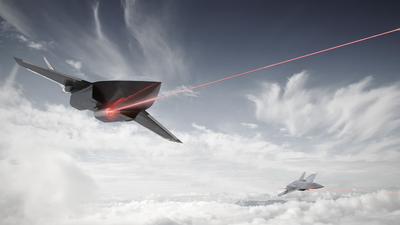
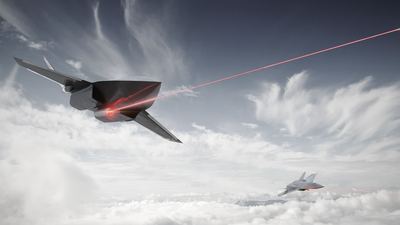
The breathtaking pace of technological advancements is turning science fiction into reality. Laser based Directed Energy Weapons (DEW) which were once only seen on the screen are now becoming a practical battlefield solution. This at a time when cheap drones have changed the economics of air defence. A drone worth a few thousand dollars can force a military to fire an interceptor that costs many times more, and when the attacks come in large numbers, that exchange quickly becomes unsustainable. Directed-energy weapons are increasingly seen as a way out, and developments in Germany and India show how seriously militaries are taking them.MBDA Deutschland has received a contract to build a pod-based demonstrator, Germany’s first formal move into airborne laser weapons. The aim is to lay the technological foundations for directed-energy capabilities on future German air force (Luftwaffe) aircraft, with the longer-term goal of shooting down enemy drones and cruise missiles. Laser technology has been a strategic research priority since 2019, and MBDA says it has worked on the technologies since 2008, claiming to have demonstrated a complete laser weapon system as early as 2012.Putting a laser on an aircraft is far harder than on a ship or truck, since power, cooling, weight, vibration and aerodynamics all limit the design.At home, the Defence Research and Development Organisation (DRDO) is set to seek an industry partner for its 30kW-class counter-drone laser weapon. The truck-mounted system is meant to counter drone swarms, fixed-wing UAVs and surveillance sensors at up to 5 km, and final trials were completed in August 2025.The need became sharper after Operation Sindoor in May 2025, when both sides used drones extensively, and Pakistan used cheap ones to probe and locate Indian air defences. A laser engages at the speed of light, costs far less per shot and, as long as power is available, will not run out of ammunition.The 30kW system sits at the top of a growing family. The 2kW weapon is already in production through Adani, Astra and Bharat Electronics Limited (BEL), and the 10kW version has cleared the acceptance of necessity stage. DRDO is working on 50kW and 100kW-class systems, as part of the layered air-defence effort under Project Sudarshan Chakra.Similar systems are being fielded across the world. The US has tested and deployed laser-based counter-drone systems, Israel is developing the 100kW-class Iron Beam and China has shown systems such as Silent Hunter and LY-1, while Russia is pursuing the technology.For DRDO, the 30kW programme tests whether research can move from laboratory to the armed forces, with industry handling production. If it does, lasers become another air-defence layer, defeating drones without costly interceptors.