






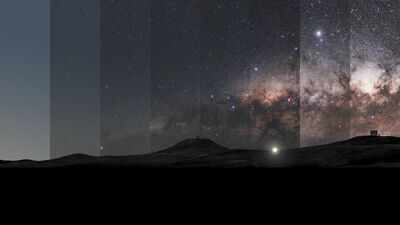
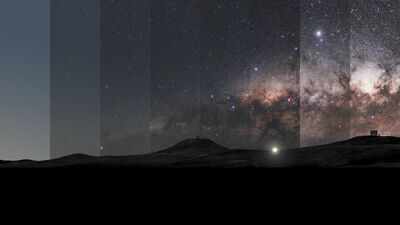
There was a time when stepping outside after dinner and merely looking up was enough to witness the universe in all its glory.As your eyes adjusted to the darkness, constellations would emerge one by one. The Milky Way would slowly appear as a hazy band across the sky. On exceptionally clear nights, there could be so many stars that the sky seemed almost crowded.But for millions of urban Indians today, that experience is nearly impossible.Look up at the night sky and you may notice something unsettling: there is almost nothing to see. A handful of stars. Perhaps a bright planet. Beyond that, a pale orange or grey haze stretching from horizon to horizon, washing out the darkness.While the disappearance of the stars may seem like a loss only for astronomers and stargazers, the consequences reach further: into wildlife habitats, human sleep, ecosystems, energy consumption and the very rhythm of the natural world.
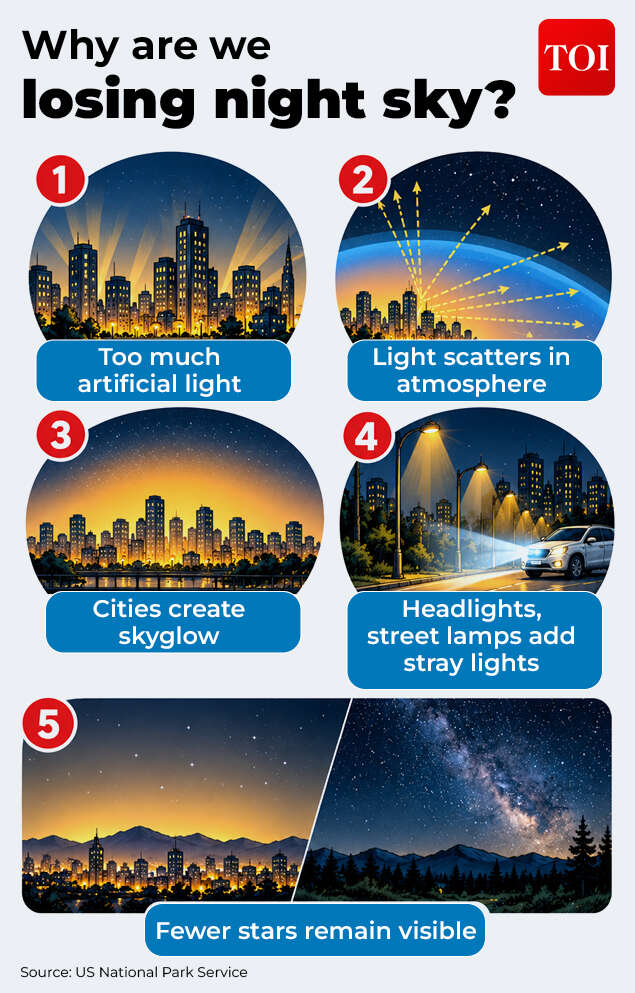
What’s causing the disappearance of stars from the night sky?
The bright night sky
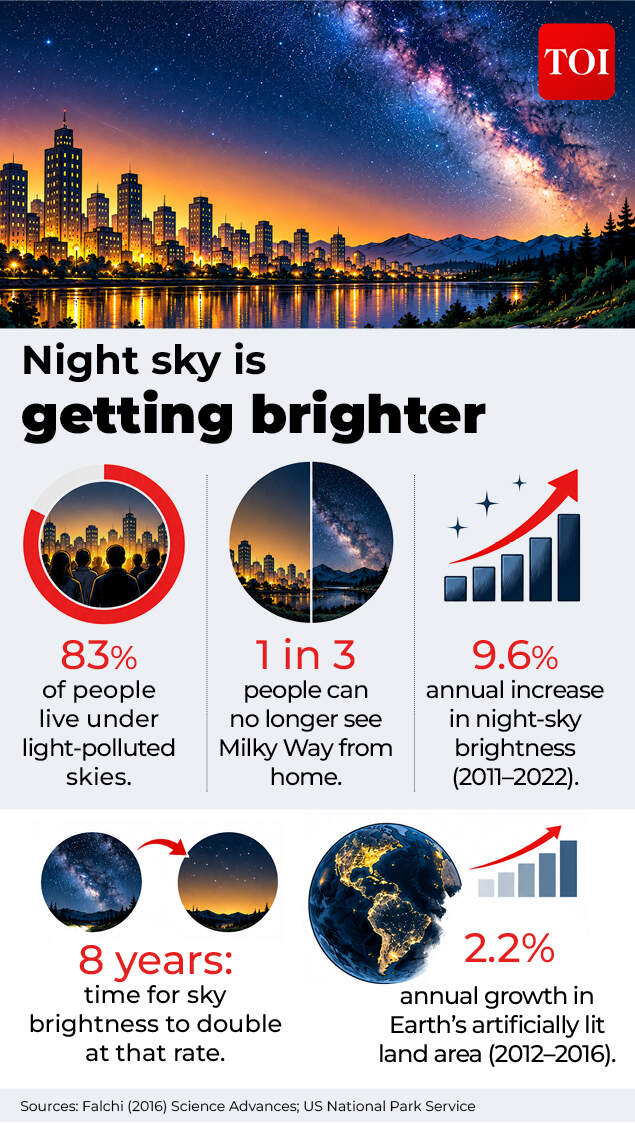
India’s expanding urban landscape is changing not only what its cities look like after sunset but also what the night sky itself looks like.Streetlights, illuminated buildings, billboards, highways, commercial districts and increasingly powerful LEDs are turning darkness into a permanent and suffocating glow.The phenomenon is known as light pollution, or artificial light at night (ALAN).A 2023 study published in Science, based on 51,351 observations made by citizen scientists between 2011 and 2022, found that the average brightness of the night sky increased globally by 9.6% a year in the human-visible band.At that rate, sky brightness doubles roughly every eight years. The researchers also found that the number of stars visible to the naked eye is falling at a rate consistent with that increase.For India, where urbanisation is rapidly transforming the landscape after sunset, the problem is becoming particularly difficult to ignore.
The stars are still there. We simply cannot see them
Light pollution works in a deceptively simple way.Artificial light from streets, buildings, vehicles and commercial spaces does not always travel neatly towards the ground.Some escapes upwards, where it encounters dust, aerosols, moisture and other particles in the atmosphere. The light scatters and returns towards the ground, producing skyglow – the artificial brightness that makes a city’s night sky appear white, orange or grey instead of black.
What does the data say?
This matters because faint stars are not bright enough to compete with that artificial background.The US National Park Service notes that the glow from cities can remain visible more than 200 miles away, illustrating why escaping urban light can affect skies far beyond municipal boundaries.That is also why a city can look dramatically different on a clear, dark night outside the urban core. Remove enough artificial illumination and suddenly the stars have not “returned” – they were there all along.
The global warning is stronger than satellite pictures suggest
The Science study by Christopher Kyba and colleagues is especially important because it reveals a limitation in how light pollution is normally measured.Satellites are excellent at detecting artificial light emitted towards space, but they do not capture everything that affects what the human eye sees. They are less sensitive to some wavelengths, including much of the blue light associated with modern LEDs, and do not fully capture horizontally emitted light.That helps explain a striking discrepancy.Satellite measurements had indicated that continuously lit areas were brightening by around 2.2% annually between 2012 and 2016. But the citizen-science observations analysed by the study indicated a much faster 9.6% annual increase in visible sky brightness between 2011 and 2022.For someone standing beneath a city’s skyglow, the practical consequence is fewer stars.
India’s light pollution problem
Urbanisation: a major culprit? Then vs now
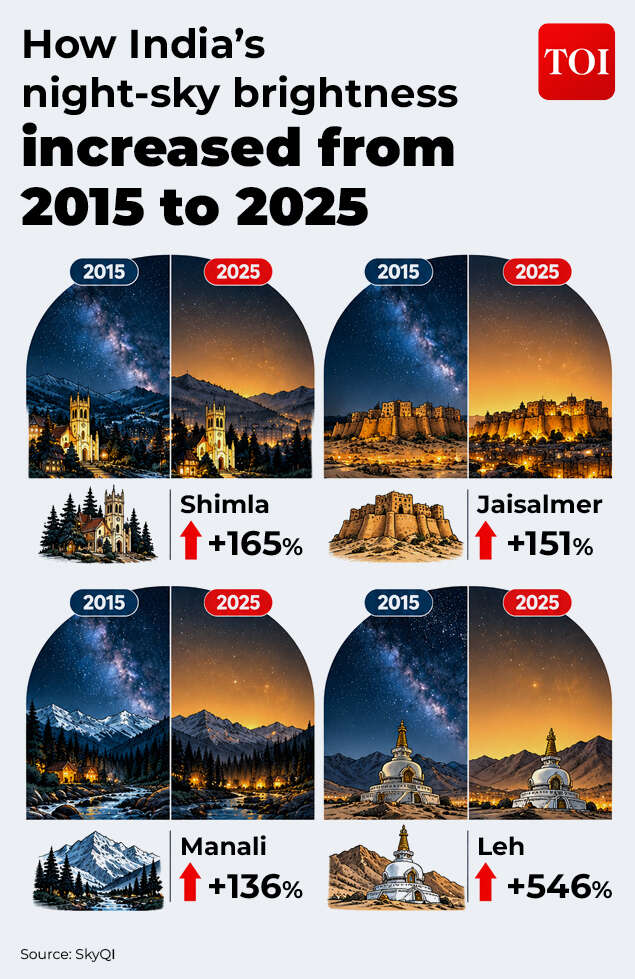
Indian research has already begun mapping the scale of the problem.A 2021 study in Environment, Development and Sustainability examined artificial night-sky brightness in ten of India’s most populous cities using high-resolution satellite data. The researchers found that street lighting showed a considerable relationship with city brightness, identifying it as an important contributor to artificial night-sky illumination.Another 2022 study examining light pollution as an emerging environmental concern in India documented increasing brightness and linked the phenomenon to rapid urbanisation, expanding housing and changing patterns of nighttime activity.The problem is not confined to city centres either. Research using VIIRS satellite data to examine India’s river basins found that artificial night-time light increased in riparian habitats between 2012 and 2020. Higher brightness was associated with areas near conurbations, airports, ports, refineries and power infrastructure. The researchers warned that this growing illumination could pose a biodiversity concern, including for species such as the critically endangered gharial.In other words, India’s expanding footprint of light is beginning to reach landscapes that were never designed to be brightly illuminated at night.
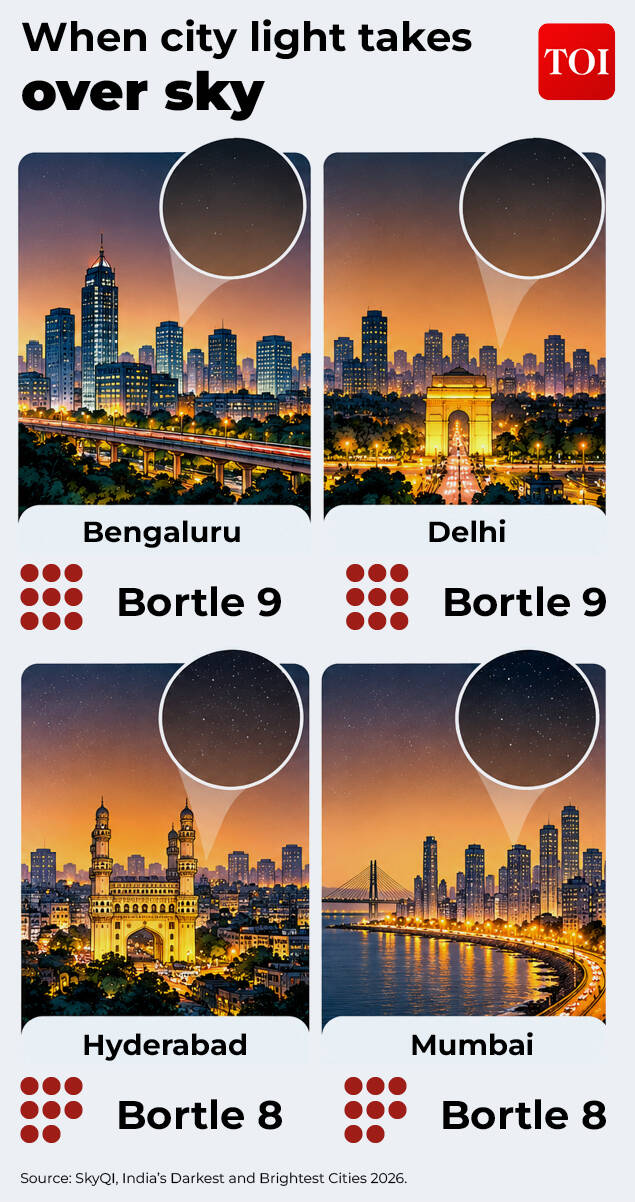
Bortle dark-sky scale is a nine-level numeric scale used by astronomers and stargazers to measure the brightness of the night sky and evaluate the impact of light pollution at a specific location
Delhi, Mumbai are lighting up the night sky
SkyQI, a platform that analyses satellite data to estimate sky quality, attempted to translate the problem into city-level measurements. This analysis of Indian cities uses NASA’s VIIRS satellite observations and classifies skies using the Bortle scale, which runs from 1 for exceptionally dark skies to 9 for heavily light-polluted urban skies.Its estimates place Mumbai and Delhi-NCR in the Bortle 8–9 range in their urban cores, with Kolkata, Bengaluru, Chennai, Ahmedabad and Hyderabad also in heavily light-polluted categories. These are SkyQI’s estimates, not an official national government ranking, and conditions can vary considerably within a city.The broader pattern, however, is consistent with established research: dense development brings more artificial light, while the resulting skyglow can spread well beyond the point where the light originates.The Indo-Gangetic Plain presents a particularly interesting case. As towns and cities expand along the corridor, individual pockets of illumination can begin to merge into a much larger continuous zone of artificial brightness.
A star-filled night sky
It is not only an astronomy problem
The disappearance of darkness carries ecological consequences.Nocturnal animals evolved around predictable cycles of light and darkness. Artificial illumination can alter feeding, reproduction and movement. Insects are attracted to artificial lights, while migratory birds can become disoriented around brightly illuminated structures.India’s own research is beginning to document the geographical expansion of artificial night light into habitats important to wildlife.Humans are also biological creatures governed by a roughly 24-hour circadian rhythm. Exposure to light at night can interfere with the signals that regulate sleep and other physiological processes. That does not mean every illuminated street or building is directly causing disease; rather, it adds to a growing body of research examining how excessive nighttime light affects human biology.There is also a simpler cost: energy.Light that escapes upward or spills sideways is illuminating neither a pavement nor a pedestrian nor a workspace. It is, quite literally, lighting the sky.
India’s dark skies are becoming something to protect
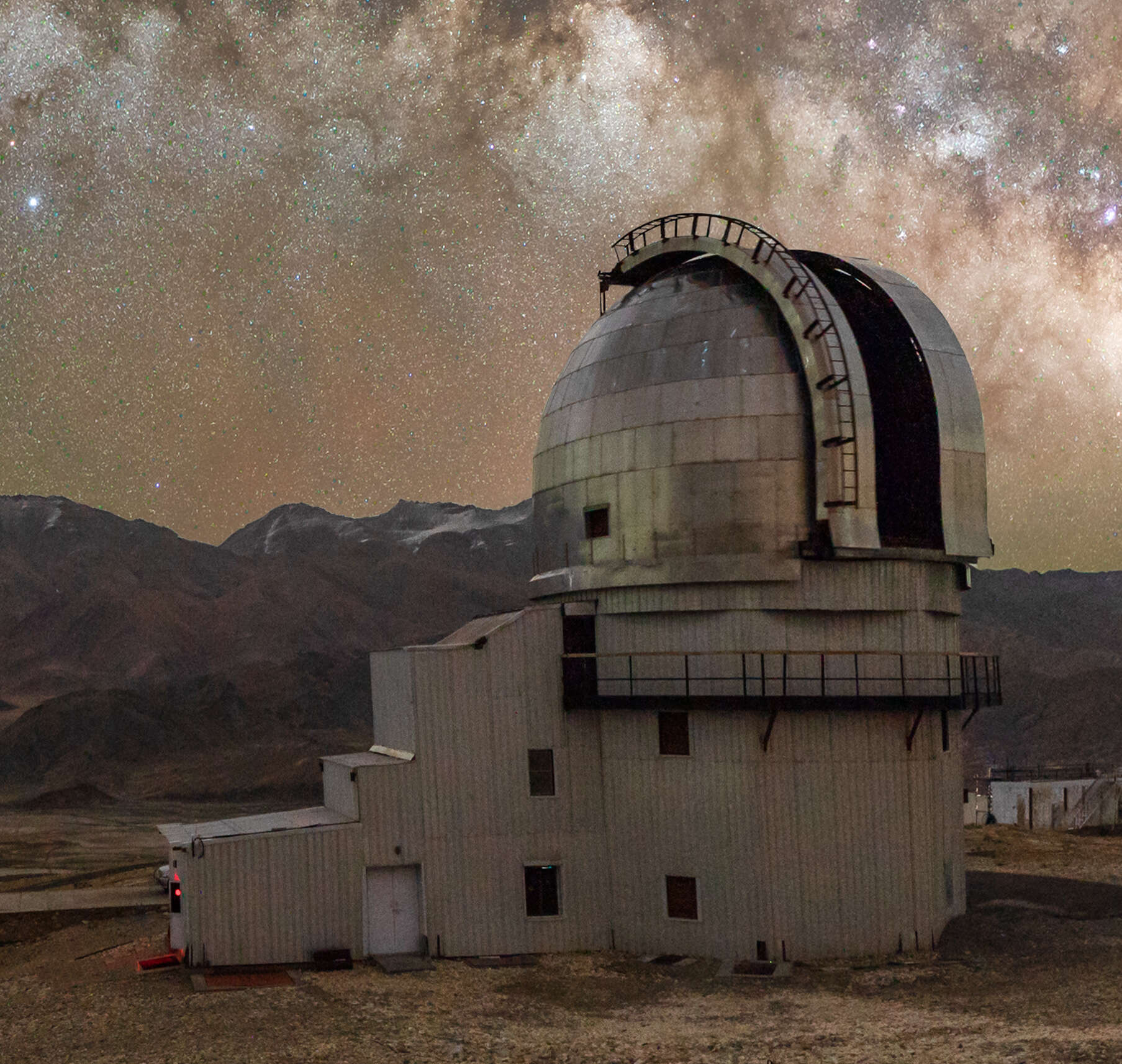
Indian Astronomical Observatory in Hanle, Ladakh. Photo credit: Indian Institute of Astrophysics (IIA) Bengaluru
The irony is that India still possesses extraordinary astronomical landscapes.Hanle in eastern Ladakh is perhaps the clearest example. The Indian Institute of Astrophysics operates the Indian Astronomical Observatory there, and the surrounding Hanle Dark Sky Reserve was established to protect exceptionally dark skies while promoting astronomy and astro-tourism. The institute’s light-management programme includes warm-coloured bulbs, outdoor shades, curtains and measures to reduce vehicle headlight glare.That experiment demonstrates something important: preserving darkness does not necessarily mean abandoning artificial lighting. It can mean using light more intelligently.Shielding fixtures, reducing unnecessary brightness, choosing warmer light where appropriate and switching off illumination when it serves no purpose can reduce skyglow while retaining useful lighting.The success of such measures in places such as Hanle and the dark-sky initiative at Pench also shows that darkness can be treated as an environmental asset rather than simply the absence of development.
NASA’s recipe for a star-filled sky
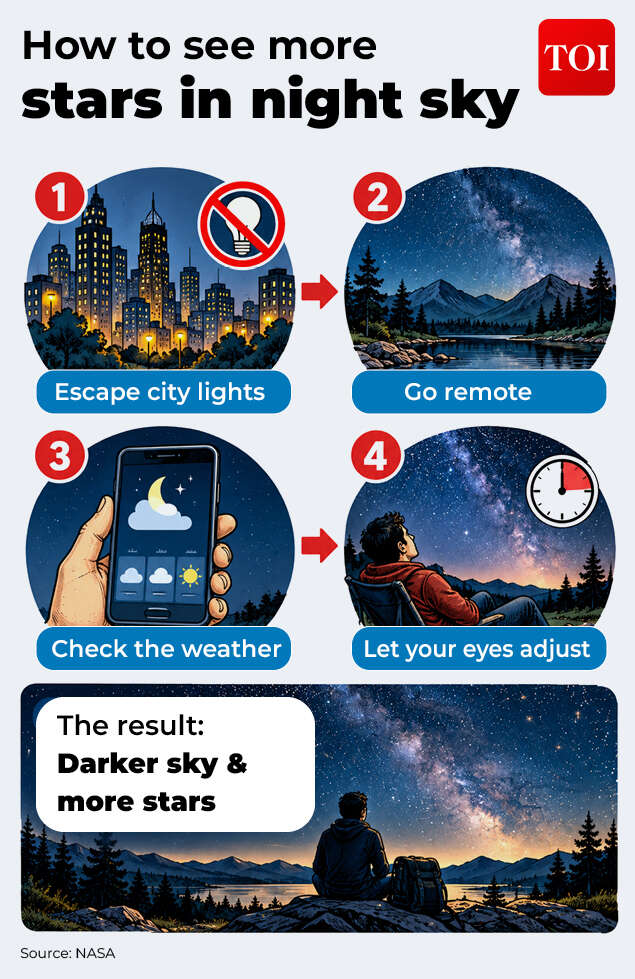
This is what NASA suggests
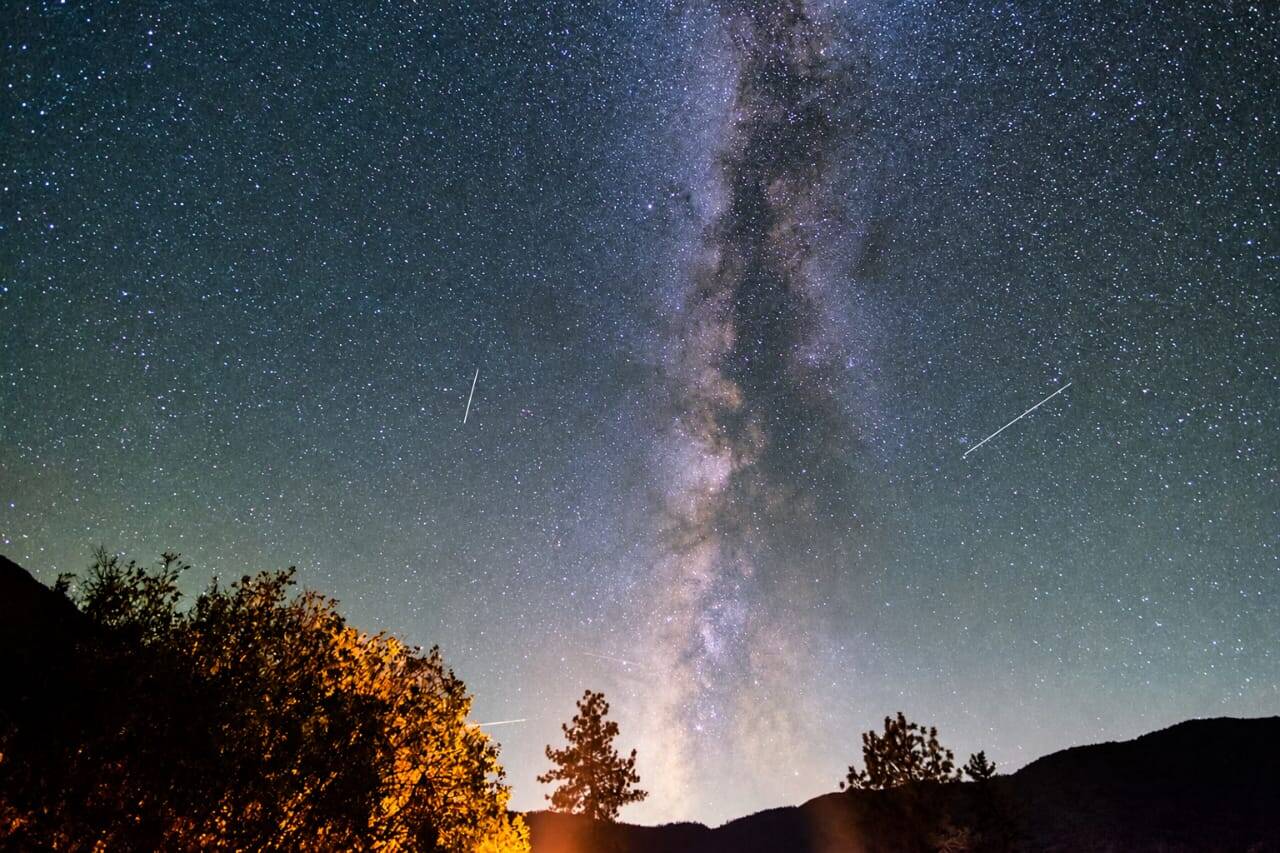
NASA recommends choosing stargazing locations far from cities and other sources of artificial light, where the sky is darker and more stars are visible. Its guidance notes that mountains, deserts and remote rural areas can offer better viewing conditions, while clear, dry weather and minimal moonlight can further improve visibility. The principle is simple: the farther you get from artificial light, the more of the night sky becomes visible.Astroport Sariska, which describes itself as India’s first astronomy resort in the Aravalli hills near Sariska, Rajasthan, offers a striking illustration: leave the urban glow behind, let your eyes adjust to the darkness, and a sky that seemed almost empty in the city can suddenly reveal itself as a field of stars.
So, what’s the fix?
Unlike many environmental problems, light pollution has an unusual characteristic: the pollution disappears when the unnecessary light disappears.There is no toxic residue to clean up and no decades-long remediation project. Cities can reduce light pollution through smarter lighting rather than less development. A 2022 review in Annual Review of Environment and Resources found that shielding fixtures, reducing brightness, shortening operating hours and using less blue-rich light can help reduce the impacts of artificial light at night. DarkSky International and the Illuminating Engineering Society similarly recommend lighting only where and when needed, using warmer-color lights, directing it downward and using the lowest necessary intensity. Cities can therefore remain dense and vibrant while protecting dark skies through better lighting design, adaptive controls and targeted illumination.