







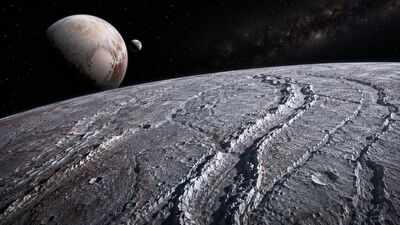
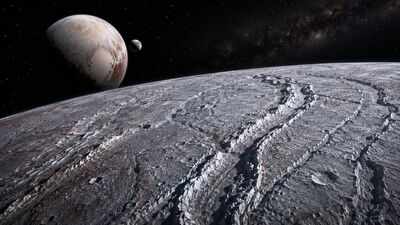
For generations of schoolchildren, the solar system had nine planets. Mercury, Venus, Earth, Mars, Jupiter, Saturn, Uranus, Neptune — and Pluto, the tiny, distant world at the edge of the planetary family. Then, on August 24, 2006, everything changed. Pluto lost its status as the ninth planet and was reclassified as a dwarf planet.Twenty years later, the decision remains one of the most debated moments in modern astronomy. Now, Mike Brown, the Caltech astronomer whose discoveries helped trigger Pluto’s demotion and who later embraced the nickname “Plutokiller”, has revisited the controversy in a new Scientific American article — and his position has not changed.
The discovery that changed Pluto’s future
Brown’s discovery of Eris, a distant object beyond Neptune that is more massive than Pluto, forced astronomers to confront an uncomfortable question: if Pluto was a planet, what about Eris? And what about other similar objects waiting to be discovered in the Kuiper Belt?The debate eventually led the International Astronomical Union (IAU) to adopt a formal definition of a planet on August 24, 2006.Under the definition, a planet must orbit the Sun, be sufficiently massive for its gravity to make it nearly round, and have cleared the neighbourhood around its orbit.Pluto satisfies the first two conditions. The third is where it falls short.Pluto shares its region of the solar system with numerous other objects in the Kuiper Belt, a vast region of icy bodies beyond Neptune. As a result, the IAU classified it as a dwarf planet.
“If the Moon is not a planet, Pluto isn’t one either”
In his Scientific American retrospective, Brown offers a surprisingly simple test for those who want Pluto restored to full planetary status: look at Earth’s Moon.“Is the moon a planet?” Brown asks.His argument is based on consistency.Pluto’s supporters often argue that it should be considered a planet because it is round, geologically complex and possesses features traditionally associated with planets. But Brown points out that Earth’s Moon — which is larger than Pluto and has a rich geological history — would also meet many of those criteria.The crucial difference, he argues, is not simply what an object looks like but how it fits into the larger solar system.The Moon orbits Earth, not the Sun. Pluto orbits the Sun but exists among a large population of objects in the Kuiper Belt and has not cleared its orbital neighbourhood.For Brown, dynamics matter.
What if Pluto became a planet again?
Removing the dynamical requirement from the definition could restore Pluto’s planethood. But, according to Brown, Pluto would not be alone.Several moons, asteroids and numerous objects in the Kuiper Belt could potentially qualify as planets under a broader definition based mainly on their physical characteristics.Scientific American notes that this could add one asteroid, multiple moons of Jupiter, Saturn, Uranus and Neptune, along with perhaps dozens — or even far more — objects beyond Neptune to the planetary list.Brown, who discovered several distant bodies himself, acknowledges that such a change could technically make him one of history’s most prolific discoverers of planets.But he argues that would create another problem: if these objects are planets, then Earth’s Moon would have to be considered one too.
Is the fight really about science or nostalgia?
The debate over Pluto has never been purely scientific. For millions of people, Pluto was part of a childhood memory.Brown himself admits to feeling that nostalgia.In his Scientific American article, he recalls having a solar system poster as a child and being fascinated by Pluto’s unusual and distant orbit. He never imagined, he wrote, that one day he would help create a solar system in which school posters no longer listed Pluto as a planet.But Brown argues that nostalgia should not determine scientific classifications.His conclusion, two decades after Pluto’s demotion, remains unchanged: Pluto is still an extraordinary and fascinating world. Its nitrogen glaciers, unusual terrain and complex system of moons remain worthy of scientific exploration.But, he argues, being fascinating does not automatically make something a planet.And so, 20 years after the decision that made him one of astronomy’s most controversial figures, Brown’s message remains blunt: “Pluto had it coming.”Disclaimer: This article is based on an opinion and analysis piece published by Scientific American and publicly available information on Pluto’s 2006 reclassification. The views and arguments expressed by Mike Brown are his own and do not necessarily represent the views of TOI Education.