







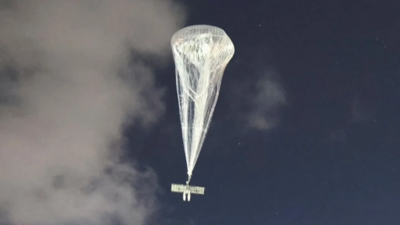
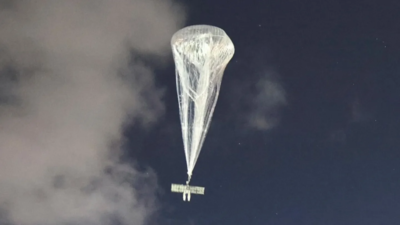
The US Army is exploring the deployment of hundreds of high-altitude balloons in a future European conflict to monitor enemy movements, maintain communications, deceive air defences and potentially launch drones, highlighting the growing military significance of the stratosphere. India, meanwhile, is developing its own high-altitude airship capability under a Rs 15,000-crore programme aimed at providing persistent surveillance along its borders.The US Army’s plan envisages deploying 200 to 300 balloons at a time, with hundreds or potentially thousands operating towards adversary territory during a major conflict. The platforms could carry reconnaissance equipment, electronic sensors and communications payloads, while some could deploy drones for surveillance, electronic warfare or strikes. Their role would extend beyond intelligence gathering to providing alternative communication links if satellites are disrupted or destroyed during hostilities.The US Army has been testing high-altitude balloon technology in Europe, including launches in the Baltic region and Poland, as it assesses the platforms for future multi-domain operations. Operating at altitudes of around 60,000 feet or higher, the balloons could carry cameras, radar and electronic intelligence equipment to monitor large areas. Depending on their design, they could remain airborne for days, weeks or months, although weather conditions and seasonal winds would influence their deployment.India is pursuing a related capability through its Airship-based High Altitude Pseudo Satellite programme. The Defence Acquisition Council cleared the programme in February 2026, following which the defence ministry invited domestic companies to develop the platforms under the Make-I category. The government will fund up to 70% of prototype development costs.Designed to operate at around 20 km, or 65,000 feet, the Indian airships are expected to provide persistent intelligence, surveillance and reconnaissance over border regions, alongside communications support. These lighter than air vehicles are expected to carry payloads such as electro-optical and thermal imaging systems to keep an eye on the intended targets, as well as electronic intelligence equipment to snoop on the adversary’s radio signals and other electro-magnetic emissions such as radars. Unlike free-floating balloons, airships offer greater control over where they can fly, thus allowing them to remain over areas of operational interest. They could monitor the adversary’s military movements, while complementing satellites, drones and crewed surveillance aircraft.The programme is part of India’s broader effort to shorten the sensor-to-shooter chain, enabling faster detection, tracking and sharing of target information with operational units.For both countries, stratospheric platforms offer an additional layer between conventional aerial means and satellites. The operational effectiveness of these platforms will depend on endurance, payload capacity, communications resilience and survivability in contested environments.