


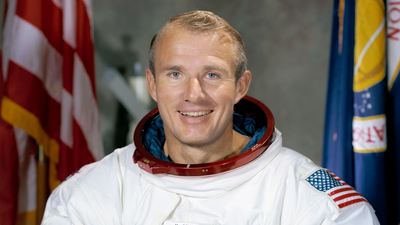
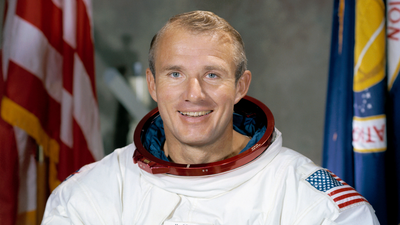
Former NASA astronaut Vance Brand spent decades exploring space and commanding shuttle missions, but a 40-acre piece of land along the eastern boundary of Rocky Mountain National Park remains one of his most lasting contributions on Earth. The story began in 1967, when Brand bought 160 acres of land next to the national park for $32,000. Decades later, with the support of his wife and children, he decided to donate a quarter of the property, 40 acres of undeveloped forest, to protect the natural landscape around the park. The land was first transferred in 2019 to the Rocky Mountain Conservancy, the non-profit partner of the national park, to hold until federal officials could officially add it to the park. Because changing the boundary of a national park requires federal approval, Congress had to act. In 2020, Colorado lawmakers introduced the Rocky Mountain National Park Boundary Modification Act. The legislation was sponsored in the Senate by Senator Michael Bennet and former Senator Cory Gardner, along with Representative Joe Neguse in the House. It quickly gained bipartisan support, passed through Congress and was signed into law in January 2021, officially changing the park boundary.
Expanding protected high-elevation ecosystems
In September 2022, officials from Rocky Mountain National Park, the Rocky Mountain Conservancy and the Brand family gathered near the park boundary for a formal ribbon-cutting ceremony. The event marked the final addition of the 40-acre property to the federally protected park. According to official National Park Service news releases, the land sits next to the park’s eastern boundary, about four miles from Longs Peak. The property is covered by aspen and pine forests and crossed by small mountain streams. It creates a natural buffer between private homes and three popular hiking routes: the Estes Cone, Storm Pass and Eugenia Mine trails.In a statement released by the National Park Service, Brand explained why he chose to donate the family property: “To me the park is a wonderful place that must be preserved – and where possible expanded. The numerous hiking, camping, and (non-technical) mountain climbing experiences that I had there in my youth led me to purchase land along Rocky Mountain National Park’s eastern boundary in 1967. Over time my family has developed an appreciation of the natural beauty of the land and have encouraged keeping it as it is. I’m thankful that there were early national park enthusiasts like Enos Mills and Teddy Roosevelt who had the foresight to encourage establishment of Rocky Mountain National Park and our entire national park system. The National Park Service does a terrific job of maintaining our national parks. In short, my family and I sincerely hope that this donation to the national park will keep the land in its natural state for the benefit and enjoyment of current and future generations of Americans.”
From boyhood hikes to orbit
Brand was born and raised in Longmont, Colorado, where the tall peak of Longs Peak stood above the western skyline. As a Boy Scout and later a student at the University of Colorado Boulder, he spent summers working different jobs in Estes Park. He worked as an elevator operator at the historic Stanley Hotel and as a busser at the Plantation Cafe, while spending his free time hiking local trails. After finishing his studies, Brand became a Marine Corps officer, military pilot, test pilot and aeronautical engineer before joining NASA. In 1975, he served as the command module pilot on the historic Apollo-Soyuz Test Project, the first joint spaceflight between the United States and the Soviet Union. He later commanded three Space Shuttle missions: STS-5 in 1982, STS-41-B in 1984 and STS-35 in 1990.Despite travelling into low Earth orbit, Brand kept a strong connection to the wilderness where he grew up. In interviews with regional news outlets, including CBS Colorado and The Denver Post, Brand described buying the land as a fortunate investment that he was happy to return to the public. When lawmakers considered expanding the park boundary, they stressed that the donated property would not create an added financial burden for the federal park system. In letters to Congress, Rocky Mountain Conservancy Executive Director Esther Rivera Murdock said the land was completely natural and undeveloped, meaning park staff would not face deferred maintenance costs after it was added.
Federal funding and conservation management
The land transfer is recorded in official government reports covering conservation work on public lands. In the Fiscal Year 2022 Lands Accomplishments Report published by the Land and Water Conservation Fund under the National Park Service, federal officials described the Brand donation as an important success for public land management and wildlife habitat connections. According to the Land and Water Conservation Fund report, protecting buffer areas around high-elevation ecosystems helps preserve wildlife corridors used by animals moving between different elevations as seasons change. Bipartisan action in Congress allowed the land to become part of the park without using federal land acquisition funds, helping protect sensitive habitats at no cost to taxpayers. Representative Joe Neguse, whose district includes the park, said during congressional testimony that expanding Rocky Mountain National Park protects important wilderness areas for millions of visitors each year while preserving the natural condition of the surrounding mountains. The property is now permanently managed by the National Park Service. For the millions of visitors who use the Estes Cone and Storm Pass trails, the former astronaut’s 40-acre donation means the forests along the eastern side of the park will remain protected and largely undisturbed for generations.