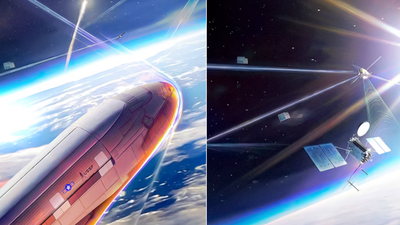







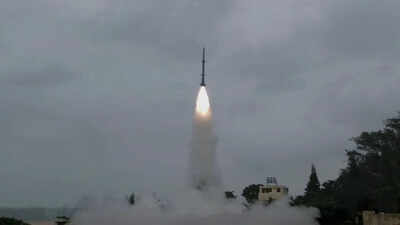
The successful first test of the Kusha Surface to Air Missile (SAM) has set a new benchmark for the country in general and the Defence Development and Development Organisation (DRDO) in particular. Project Kusha, which is being developed in three variants, is dubbed as the indigenously developed answer to the famed Russian S-400 system, that demonstrated its worth in last year’s Operation Sindoor.Ongoing conflicts, such as the one in West Asia and Ukraine, as well as the active phase of Operation Sindoor, have demonstrated the importance of a robust air defence network, that can tacjle a variety of air-defence threats ranging from small drones at one end of the spectrum to ballistic missiles at the other end. Prime Minister Narendra Modi had last year, during his Independence Day address, announced that such a system, termed ‘Sudarshan Chakra’ will be developed domestically and that it will be designed from the outset to defend strategic, as well as civilian areas from aerial threats by 2035.The aim is to develop a credible ballistic missile defence (BMD) shield. While the test itself is only the first step in a complex journey. The DRDO has demonstrated that it can design and validate systems capable of intercepting hostile ballistic missiles in both endo-atmospheric and exo-atmospheric domains. This plan was kickstarted, much before Iran started firing missiles at its neighbours, demonstrating the ineffectiveness of traditional systems against this threat.Iran’s missile and drone attacks on Saudi Arabia and the UAE exposed vulnerabilities in even advanced air defence systems such as the US-supplied Patriot and Terminal High Altitude Area Defence (THAAD). Despite billions of dollars spent on these systems, these countries struggled to prevent damage to critical infrastructure. This demonstrates that an effective air defence network is a layered, integrated system, which requires redundancy. India has absorb these lessons as it moves forward with mission Sudarshan Chakra.Under Project Kusha, India plans to field three long-range surface-to-air missiles (LR-SAMs)—M1 (with a range of 150 km), M2 (with a range of 250km) and M3 (with a range of 350km). This suystem will form the backbone of a layered defence system capable of engaging aircraft, stealth fighters, cruise missiles and drones. The system is envisioned as fully automated and integrated, rivalling the Russian S-400. But unlike the S-400, Project Kusha is being built as scalable and integrated into a broader national shield.The MSC concept is ambitious, akin to the US’s proposed “Golden Dome” or Israel’s “Iron Dome.” Yet India’s challenge is unique: unlike Israel, which defends a small territory, India must protect a vast landmass with multiple high-value targets spread across thousands of kilometres. This requires not just interceptor missiles but a large-scale integration of sensors, radars, command centres and will include weapons ranging from long-range SAMs to directed energy systems like lasers. Building such a shield will demand a whole-of-nation approach that would require the involvement of industry and research institutions.The building blocks are already in place. India has developed quick reaction SAMs, very short-range air defence systems, and even tested a 30-kilowatt laser-based directed energy weapon. Phase-I of the indigenous BMD system, capable of intercepting missiles in the 2,000-km class, has been validated. More recently, DRDO tested Phase-II interceptors designed to neutralise threats in the 5,000-km range class. These achievements demonstrate capability, but the challenge lies in integration—creating a seamless network that can detect, track and neutralise threats.The test of Project Kusha’s interceptor missile demonstrates that New Delhi is serious about building a layered defence against ballistic and aerial threats. But it is only the beginning. To truly secure its skies, India must invest in integration, redundancy, and innovation. The Gulf wars have shown that even the best systems can fail under saturation attacks. India’s challenge will be to build resilience into its air defence umbrella.