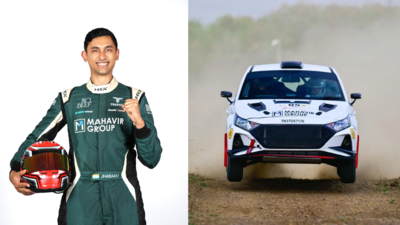
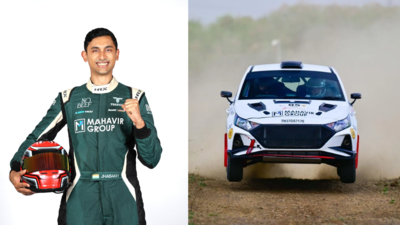
Hyderabad-based racer Jeet Jhabakh, alongside co-driver Musa Sherif, recently won the 2026 FIA Asia-Pacific Rally Championship (APRC), becoming the first driver in the championship’s 38-year history to win the overall title in a two-wheel-drive car. The duo also created history as the first all-Indian driver and co-driver pairing to clinch the continental championship.For Jeet, however, the victory is more than a personal milestone. He hopes it will open doors for Indian racers who have the talent but struggle to find the financial backing and international exposure needed to compete at the highest level.Unlike cricket, where a bat and ball can provide the starting point for a young player, motorsport requires access to specialised equipment, vehicles, training and technical support, with the costs increasing significantly as drivers move up the competitive ladder.“It is an extremely expensive sport. In cricket, most people just require a bat and a ball to play. But in motorsport, you require a full-fledged car, and as you go higher and higher, the car gets more expensive. It is definitely a rich man’s sport,” Jeet told TimesofIndia.com in an exclusive conversation.
From cricket to cars: How Jeet Jhabakh found his calling
Like many Indian children, Jeet grew up playing cricket, but his interest gradually shifted towards cars as he began following Formula One and the World Rally Championship (WRC). With his family already involved in the automobile business, the transition into motorsport came naturally.“Honestly, just like every other child in India, I also first started with cricket. We all could have fun playing cricket in the streets next to our houses. The first sport you tend to gravitate towards is basically a sport which is very accessible,” Jeet said.“As I grew older, I started watching a lot of Formula One and WRC. That’s when I realised my heart had always been in cars. Fortunately, my family business is also related to cars, so it kind of tied in well with me. When I got an opportunity to get into motorsport, I jumped at it. There was no looking back at all.”
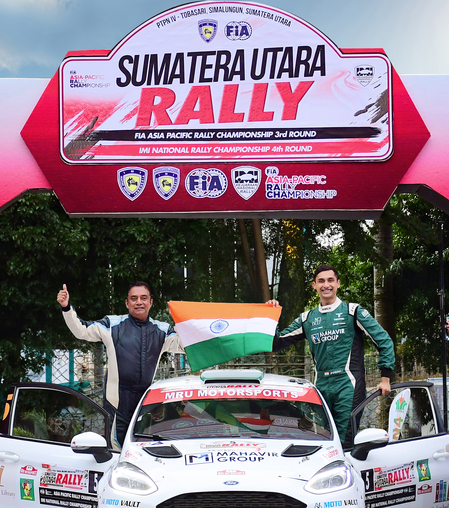
Despite eventually finding success in rallying, Jeet’s childhood motorsport inspiration came from Formula One legend Michael Schumacher. He admired the German’s dominance but was equally impressed by his race intelligence, strategy and ability to look beyond outright speed, something he has come to appreciate in his own racing career.“Michael Schumacher was the person we used to really follow back in the day. He was absolutely dominant. Even though he might not have been the absolute fastest on track, his strategies and thinking were always on point,” Jeet said.“I always wondered whether speed was the only reason you win or whether it was a holistic approach. Now I have realised it is the holistic approach. It’s not pure speed always. You have to think out of the box and be able to adapt.”Jeet’s experience in both circuit racing and rallying has also given him an understanding of the different skill sets the two disciplines demand.Unlike circuit racing, where drivers compete against each other on a fixed track, rallying is a race against the clock across a series of timed stages conducted on different surfaces, including gravel, dirt, tarmac and snow. Drivers are guided by their co-drivers, who read out pace notes describing upcoming corners, jumps and road conditions.“In racing, you start together and compete with another person. You’re fighting for that tenth of a second, pushing really hard. But in rallying, you don’t compete with each other at the same point in time. There’s a gap between the car in front of you and the car behind you,” he explained.“You tend to stick to your notes, do your best and hope that your time is better than the others. Both disciplines require different sets of skills, but they tie together in their own way.”
The expensive reality of motorsport in India
India has produced several prominent rally drivers over the years, including five-time national rally champion Hari Singh, seven-time national champion Naren Kumar and Gaurav Gill, who in 2013 became the first Indian to win the overall Asia-Pacific Rally Championship title.But for many aspiring Indian racers, securing the financial backing needed to build a career in motorsport remains one of the biggest challenges, something Jeet acknowledges from his own experience.Having never participated in competitive karting, Jeet began his competitive career through a single-make championship. His victories in the series helped him secure a sponsored drive and eventually become a factory driver for Utsavya Motorsports in 2019, an opportunity that allowed him to continue racing without having to carry the entire financial burden himself.“After I won it again in 2019, I became the factory driver for Utsavya Motorsports. I was sponsored completely by them. Because of that, I got an opportunity to drive for four and a half years. I was very fortunate. A lot of people, unfortunately, don’t get that opportunity,” Jeet said.
‘Indian drivers have the talent’: What separates India from Europe?
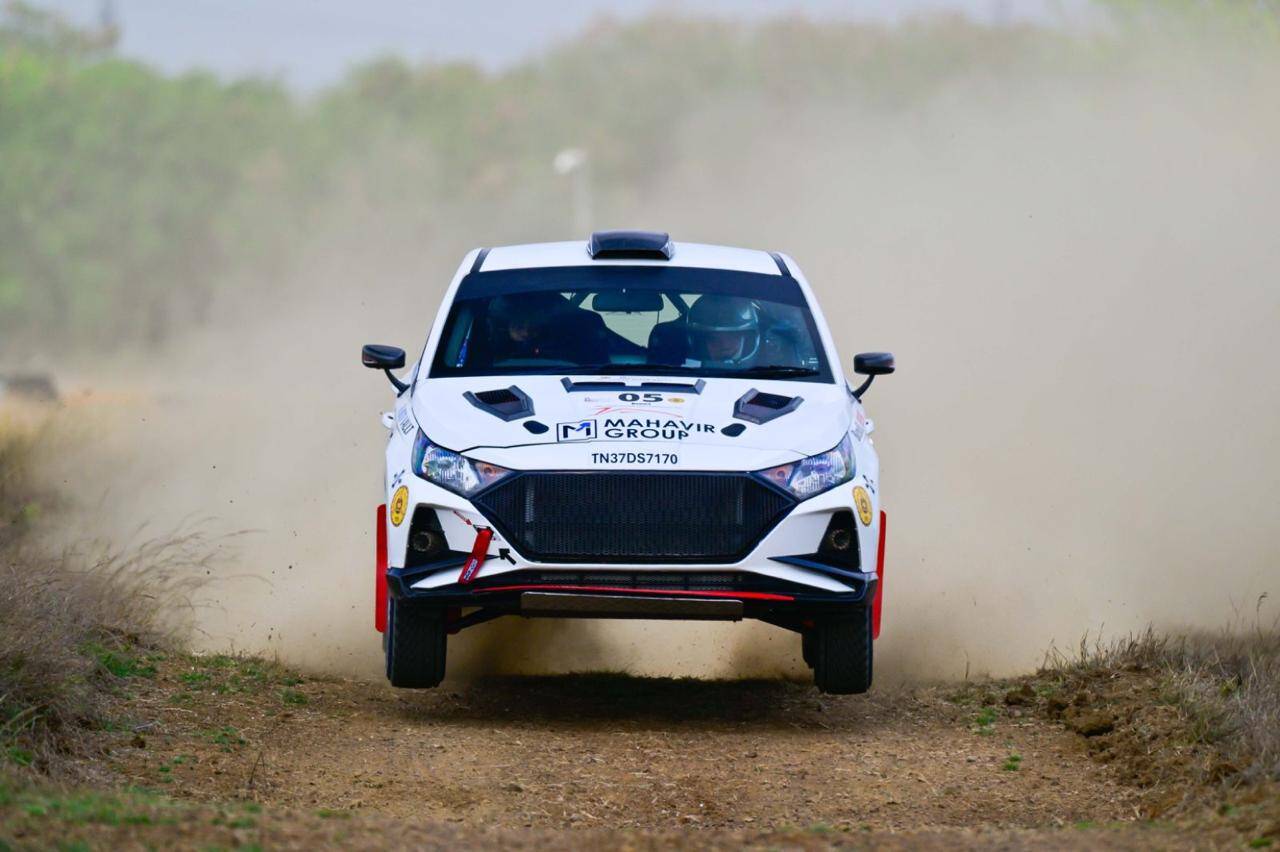
Beyond the cost of competing, Jeet believes one of the biggest differences between Indian drivers and their European counterparts is the amount of time they are able to dedicate to the sport.While drivers in more established motorsport ecosystems have greater opportunities to pursue racing as a full-time professional career, many Indian drivers have to balance their sporting ambitions with regular employment to finance their careers.“In India, I cannot make this my only source of income because it gets very difficult. We are all working something or the other. Monday to Friday, we are working hard to make a little bit of money for ourselves to spend on racing and rallying,” he explained.“Over there, they are able to take this as a professional career. They are driving Monday to Friday and competing on Saturday and Sunday. With that amount of time in the car, training and guidance, there is bound to be a difference in quality over time.”His own APRC victory, he feels, is evidence that Indian drivers can compete at the international level if provided with similar opportunities.“If we get the same opportunity, I personally feel Indian drivers can get to that level in due course of time. I think we can compete in it. This championship is a testament that it is possible,” he said.
Can Formula One’s return change the fortunes of Indian motorsport ?
India’s stint as a Formula One host between 2011 and 2013 introduced a generation of fans to international circuit racing. However, the departure of the Indian Grand Prix left a gap in the country’s motorsport calendar and limited opportunities for fans to experience the sport at the highest level.For Jeet, who grew up watching Formula One and dreaming of being part of its ecosystem, the departure was particularly disappointing.“Honestly, it broke my heart as a kid when Formula One decided to pull out of India. Every child who is into cars, the first thing is that you want to be a part of the whole system. When it pulled out, I was just like, man, I wish it continued,” he recalled.Jeet believes the return of major international racing events, alongside the growth of domestic competitions such as the Indian Racing Festival, could help attract new fans, encourage corporate investment and create better opportunities for Indian racers.“Even small races like the Indian Racing Festival coming back to India is a massive opportunity. You get to see the tracks and fast cars. That’s when the public gets to know that something like this can happen,” he said.“A lot of media today covers sports like cricket. Badminton is also getting a lot more attention, but motorsport, even our national championships, are not really covered in the media. When something like Formula One or WRC comes to India and there is a lot of media presence, people will start getting involved. When people start watching it, more money flows into it through advertisements and sponsorships.”For now, Jeet hopes his APRC triumph will encourage more businesses to invest in Indian motorsport and provide upcoming drivers with the kind of opportunities he was fortunate enough to receive early in his career.“I’m hoping that this championship we’ve won will open doors for a lot of sponsorship, not just for myself, but for a lot of people in the country as well. There is a lot of talent here in India. Why don’t we set up something in India for upcoming drivers?” he said.