









MUMBAI: Insurance Regulatory and Development Authority of India (Irdai) introduced statutory caps on commissions and expenses of management (EoM) to put an end to commission-driven bidding wars and excessive upfront distributor payouts, ensuring cost efficiencies are directly passed on to policyholders through lower premiums, improved investment returns, and reduced mis-selling.
- What are the measures taken by the regulator on
insurance distribution ?
Irdai has proposed moving insurance distribution away from a predominantly acquisition-and-commission model towards one focused on cost control, persistency, transparency and customer protection. The proposals include product-level commission caps, effort-based remuneration, restrictions on bundling insurance with loans and changes to the timing of life insurance commissions. The measures, however, are still proposals, not final regulations, with the consultation process open until Oct 25, 2026.
- Why have the shares of insurers, insurance distribution companies and banks fallen following the proposals?
Irdai has proposed bringing back product-level commission caps that were removed in 2023. For example, first-year commissions for life insurance distribution entities could be capped at 20% for policies with premium-paying terms of 10 years or more, while health insurance commissions could be capped at 15% in the first year and 5% on renewals. The proposals have raised concerns about the revenue of brokers, online aggregators, corporate agents and banks that earn significant income from insurance distribution.
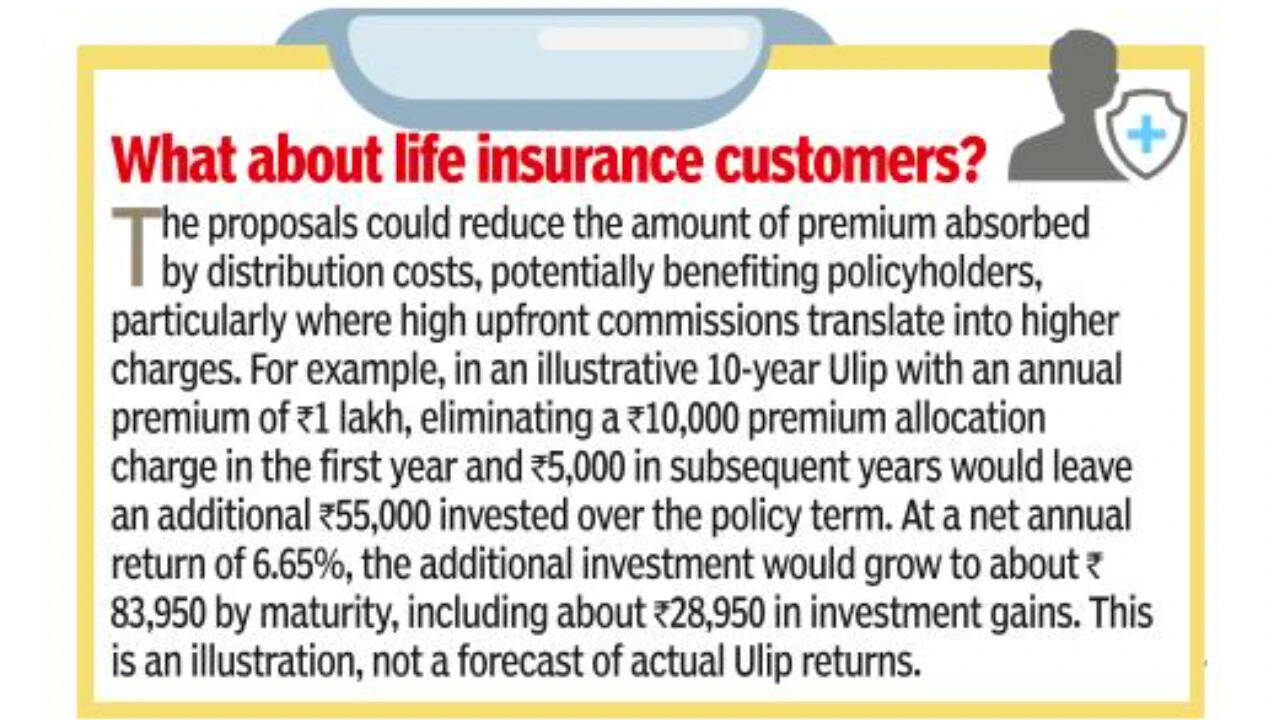
What’s new for customers
- Which category of distributor is likely to be the most affected?
Insurance brokers, digital distribution platforms and other intermediaries that depend heavily on commission income appear more exposed, followed by banks and NBFCs with significant bancassurance or credit-linked insurance income. PB Fintech, the parent of Policybazaar, fell 36% on Sept 24, while Turtlemint fell 20%; shares of several banks also declined. Analysts said revenues of brokers, banks and non-bank lenders would be hit more than those of individual agents.Irdai has also proposed effort-based commissions, under which remuneration would be linked to factors such as product complexity, the effort involved in selling and servicing the policy, and the distribution channel. This could reduce payouts on products where commissions are rather high relative to the effort involved.
- What about impact on individual agents?
Individual agents are also subject to product-wise commission caps, but the impact is expected to be lower than for brokers, banks and other large distribution channels. The proposals provide relatively higher commission ceilings for agents in some products and additional incentives for business from rural and underserved areas.
- What about general insurance?
The impact on non-life insurance is less clear. In motor insurance, third-party premiums are regulated, and Irdai has proposed eliminating commission on third-party motor insurance. In health insurance, a reduction in sales incentives could affect new policy additions; if healthier customers are less inclined to buy while people with higher health risks continue to seek cover, insurers could face adverse selection. Property insurance pricing is also influenced by the global reinsurance cycle.
- What is the connection between high commissions and mis-selling?
High commissions can create an incentive to sell products that generate greater remuneration for distributors rather than products that best suit customers. The concern is particularly relevant to bancassurance, where banks distribute insurance alongside their other financial products. Irdai’s proposals seek to address this by capping commissions, changing structure of life insurance payouts and restricting bundling of insurance with loans.