




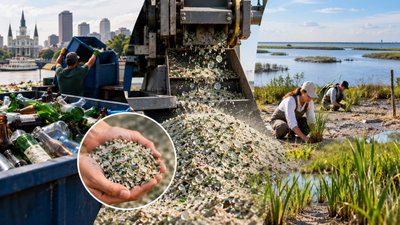
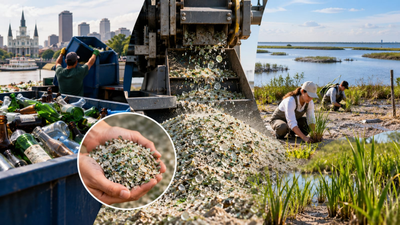
A bottle tossed away in New Orleans does not necessarily have to end its life in a landfill. A project launched in 2020 is giving discarded glass a second purpose; crushing bottles into sand that can be used in coastal restoration. Glass Half Full, founded by Tulane University students Franziska Trautmann and Max Steitz, has grown from a small backyard operation into a larger recycling programme. In February 2026, Tulane University reported that the initiative had diverted more than 12 million pounds of glass from landfills. The project is now turning a common waste stream into material that can support efforts to restore Louisiana’s vulnerable coastline.
From discarded bottles to recycled sand
The idea behind Glass Half Full is relatively simple: collect unwanted glass, crush it and give the resulting material a new use. The organisation accepts glass through residential and commercial pickups as well as drop-off programmes before processing it at its facility. According to Tulane University, the operation can process about two tons of glass per hour, turning the waste into sand and gravel for several industries, with coastal restoration being a major focus.That approach grew from the founders’ frustration with the lack of glass recycling infrastructure in New Orleans. When Trautmann and Steitz started the initiative in 2020, they used a small machine and a grassroots collection model. Community support helped the project expand, eventually moving from its early backyard setup to a larger recycling operation capable of handling much greater volumes. The recycled material now has applications beyond coastal work. Glass Half Full produces sand and gravel that can be used in construction, disaster relief and other projects, while the organisation continues to develop its coastal restoration programme.
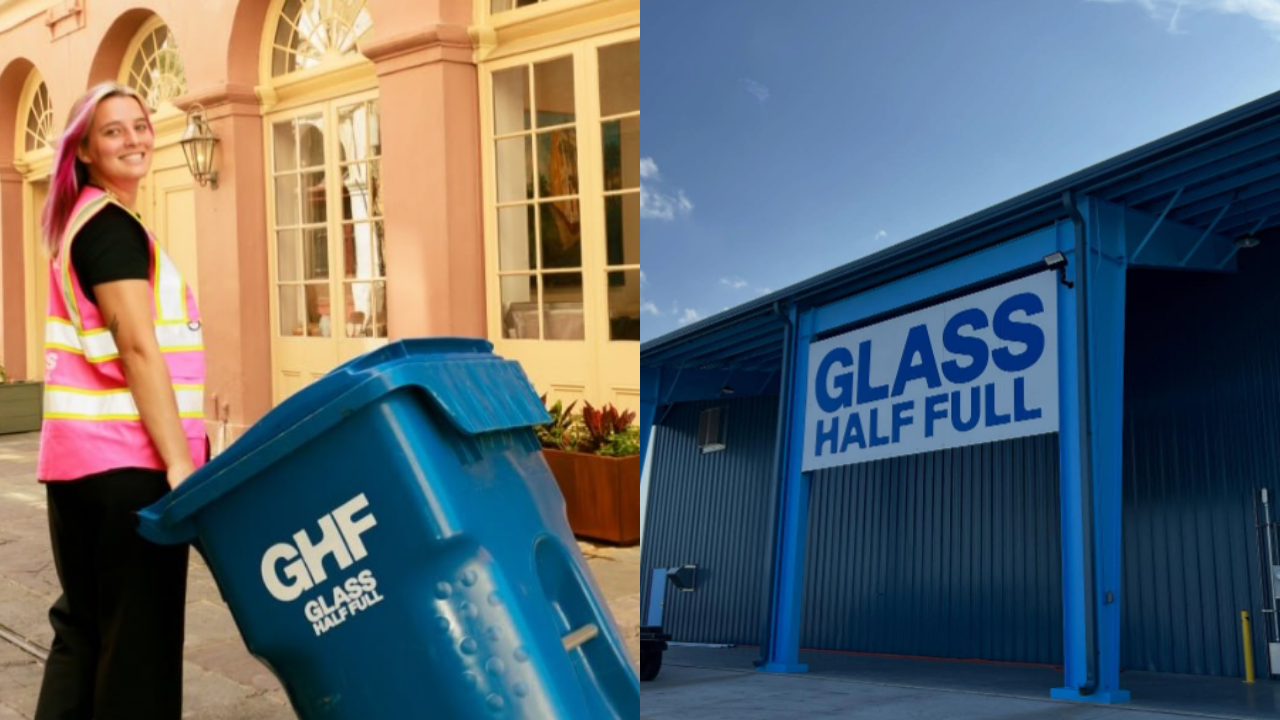
The initiative had diverted more than 12 million pounds of glass from landfills (Image Credit: Instagram/ @glassgrrrl)
Why recycled glass matters for Louisiana’s coast
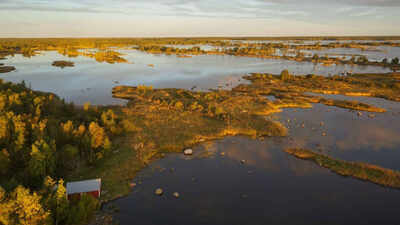
Louisiana’s coastline faces persistent land loss, making the search for restoration materials an important part of efforts to rebuild vulnerable wetlands. Traditional restoration projects can rely on sediment dredged from the Mississippi River, but researchers are examining whether recycled glass could supplement those materials. In April 2026, Tulane researchers described an ongoing experiment involving four constructed islands in wetlands east of New Orleans. Two sets of islands are being compared; one uses dredged river sand, while the other combines river sand with recycled glass sand produced by Glass Half Full. Researchers are studying how vegetation develops on the different surfaces over time.The experiment reflects a broader research effort known as ReCoast, which brings together scientists from fields including ecology, engineering and coastal science. The programme is investigating how recycled glass sand can be used safely and effectively in coastal restoration, including how plants respond to the material and where it may be most useful.
Testing whether glass can help rebuild wetlands
The concept is not simply to replace natural coastal sediment with crushed bottles. Researchers are studying how glass sand can work alongside other materials and biological systems. Recent Tulane research has focused on growing coastal cypress and other plants in recycled glass sand. Researchers found that some wetland plants do not grow well in glass sand alone, leading them to examine mixtures containing nutrient-rich Mississippi River sediment as well as beneficial bacteria and fungi. The aim is to create conditions in which plants can establish themselves and eventually help stabilise newly restored areas. That plant growth is important because restoration is about more than adding material to an eroded shoreline. Once vegetation becomes established, roots can help hold sediment together and create habitat, allowing newly constructed areas to develop into functioning wetland ecosystems.Glass Half Full has already worked with Tulane researchers and other partners on restoration projects. The collaboration has included projects in southeast Louisiana, including work at Big Branch Marsh National Wildlife Refuge and with the Pointe-au-Chien Tribe in areas affected by Hurricane Ida.
Turning a waste problem into a restoration resource
The project’s growth illustrates how a material traditionally treated as waste can be redirected towards a local environmental need. Instead of discarded bottles travelling to a landfill, they can be collected, processed and transformed into a material that researchers are testing for use in wetlands and other restoration projects. The scale has also changed considerably since 2020. Tulane University reported that Glass Half Full has now diverted more than 12 million pounds of glass from landfills, while the organisation continues to process millions of pounds each year. The work does not mean recycled glass can replace every source of sediment or solve Louisiana’s coastal land-loss challenges on its own. Instead, researchers are testing where the material can be useful, how it should be mixed with natural sediment and which plants can establish successfully in it.For New Orleans, however, the premise remains strikingly direct: bottles that once represented a waste problem can be transformed into sand and put back to work. Six years after Glass Half Full began, its millions of pounds of diverted glass are becoming part of a much larger experiment in turning everyday waste into a resource for Louisiana’s changing coastline.