






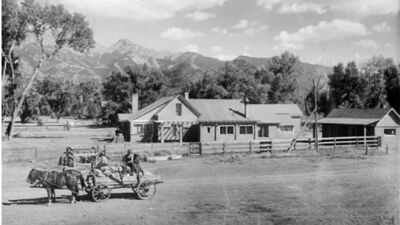
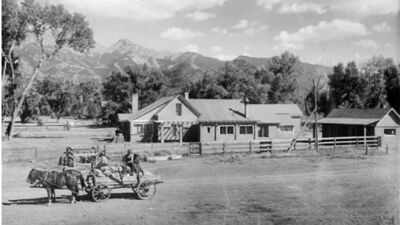
A piece of land can begin as a forgotten investment and end as part of a national treasure. That is the remarkable story of Colorado’s Baca Ranch, a vast property at the base of the Sangre de Cristo Mountains. In 1862, heirs of Luis María Cabeza de Baca sold the land to Territorial Governor William Gilpin for only 30 cents an acre, according to the National Park Service. More than a century later, the ranch became entangled in one of the San Luis Valley’s biggest debates: whether its groundwater should be developed and exported. As documented by the Colorado Division of Water Resources in its StreamLines newsletter, the Nature Conservancy agreed in 2002 to purchase the ranch for $31.28 million. The deal ultimately helped expand protection around the Great Sand Dunes and establish a national park and preserve.A land grant becomes an investmentThe Baca Ranch’s history began in the early nineteenth century, when the region was still under Mexican rule.In 1823, Luis María Cabeza de Baca received a large land grant from the Mexican government in what is now New Mexico. After the United States acquired control of the Southwest, the Baca claim became part of a complicated legal dispute with the federal government.Eventually, the claim was exchanged for a parcel in Colorado near the base of the Sangre de Cristo Mountains. This new property was immense, but it did not become a family homestead. In fact, no one in the Baca family ever visited the Colorado parcel, according to the National Park Service. It was treated simply as an investment.That detail gives the later conservation story an almost surprising beginning. The land that would eventually help create a national park was not initially valued for its dunes, wetlands, wildlife or water. It was an asset held at a distance, part of a legal and financial transaction whose future significance remained hidden.In 1862, the Baca heirs sold the property to William Gilpin, Colorado’s first territorial governor, for 30 cents per acre.At that price, the transaction reflected an era when vast areas of the American West were bought, sold and developed with little understanding of the ecological systems they contained. The San Luis Valley was seen largely as open land with potential for ranching, settlement and resource development.The land’s story, however, was only beginning.The ranching yearsCattle grazing began on the Baca property in 1862, the same year it was sold by the Baca heirs. For several years, the land was leased to different cattle owners.George Adams was the first person to develop the property fully. During the 1870s, he added fences, irrigation ditches, sheds and corrals. These improvements transformed the open tract into a more organized working ranch.The ranching era shaped the Baca’s identity for generations. It was not an untouched wilderness in the strictest sense, but a working landscape where human activity existed alongside rivers, wetlands, grasslands, mountains and dunes.That combination is important. Conservation history is sometimes told as a story of nature being protected from all human influence. The Baca offers a more complicated picture. Ranching, water management, land ownership and wildlife habitat were all woven together.The surrounding region was also extraordinary. The Great Sand Dunes rise from the floor of the San Luis Valley, backed by the rugged Sangre de Cristo Mountains. Snowmelt flows from the high country, while wind moves sand across the valley. Wetlands and groundwater help maintain the ecological conditions around the dunes.The Baca Ranch occupied a crucial position within that larger system. Its value was not limited to the acreage listed on a deed. It included the relationships between land, water and wildlife.How the Great Sand Dunes gained protectionThe Great Sand Dunes were first protected as a national monument in 1932 during the administration of President Herbert Hoover.That designation was encouraged by local residents who wanted to prevent mining and other commercial activities from damaging the dunes. The campaign was led in part by women connected with local Ladies’ PEO chapters.Their efforts reflected a strong community connection to the landscape. Residents understood that the dunes were not merely a dramatic backdrop. They were a distinctive natural feature that could be permanently altered if mining and extraction expanded.The national monument protected the central dunes, but its boundaries did not encompass the entire environmental system that supported them. Over time, concerns grew about the surrounding watersheds, wetlands, groundwater and wildlife habitat.This broader perspective became particularly important in the late twentieth century, when the Baca Ranch attracted interest from water-development companies.The issue was not only whether the land itself would be built over. It was whether groundwater beneath the San Luis Valley could be pumped in enormous quantities and transported elsewhere. Local water users feared that large-scale exports could affect existing water rights, agriculture and the valley’s ecological balance.The debate changed the way many people understood the Baca. It was no longer just a large ranch near a national monument. It was part of the water system that helped sustain the region.The water-export controversyDuring the late 1980s, American Water Development Inc., or AWDI, filed a water court case involving a plan to export several hundred thousand acre-feet of water from the valley to municipalities.The proposal alarmed local water users. They worried that exporting groundwater could injure their existing rights and reduce the water available for agriculture and communities.According to the Colorado Division of Water Resources newsletter, local water users successfully challenged the proposed change in water court. The legal fight illustrated how closely land ownership and water rights were connected in the San Luis Valley.The controversy did not end there. During the 1990s, the ranch changed hands, and another company, Stockman’s Water Company, pursued water development and export plans.In 1998, Stockman’s managed to place two initiatives related to its development proposal on the state ballot. Voters rejected both initiatives. Water users spent more than $1 million opposing them, showing how seriously the community viewed the threat.These battles created a turning point. If the ranch remained controlled by companies interested in water development, the valley could face renewed pressure. But if the land could be protected, it might help preserve the wider ecosystem and reduce the risk of large-scale water export.Conservation became a possible solution to a conflict that had previously been fought mainly through lawsuits, political campaigns and water regulation.The $31.28 million purchaseIn late 2000, Congress authorized the purchase of the Baca Ranch as part of an effort to create the Great Sand Dunes National Park and Preserve.The legislation provided a legal pathway for acquiring the property, but it did not make the purchase simple. The ranch was enormous, expensive and connected to years of controversy.The Nature Conservancy, which was located near both the ranch and the dunes, began negotiations to buy the property. The organization planned to acquire the ranch and then transfer it to the federal government for conservation purposes.By the end of 2001, negotiations were still moving slowly. Then another important detail emerged: the majority partner in the consortium that owned the ranch was an investment group funded by the Yale Endowment.Colorado Senator Wayne Allard met with Yale’s president and urged the university to help complete the sale. Yale agreed to donate its profits from the transaction back to the Nature Conservancy. That contribution was expected to be approximately $4 million.In January 2002, the Nature Conservancy announced that it had signed an agreement to purchase the ranch for $31.28 million. The Colorado Division of Water Resources newsletter described the property as a 100,000-acre ranch, while later National Park Service materials identify the key acquisition area as the 97,000-acre Baca Ranch.The difference in acreage likely reflects how the property and transferred lands were described at different stages of the transaction. The central point remains the same: a vast ranch was secured for conservation at a cost of more than $31 million.Compared with the 30 cents per acre paid by William Gilpin in 1862, the later sale represented a dramatic change in financial value. But the real transformation was not simply monetary. The land had acquired a new kind of value—one based on ecological protection, public benefit and cultural significance.From monument to national parkThe Baca purchase helped make possible the expansion of Great Sand Dunes National Monument into Great Sand Dunes National Park and Preserve.The new designation was officially created in September 2004, after the federal government completed the purchase and transfer process. The expansion made the protected area nearly four times larger than the original monument.The newly protected landscape included more than the famous dunes. It contained wetlands, wildlife habitat, archaeological sites, grasslands and important portions of the surrounding watershed.Some of the Baca lands were incorporated into the national park, while other parts became the Baca National Wildlife Refuge. The refuge was created next to the park and added another layer of protection for wildlife and habitat.The park and preserve also encompass higher-elevation environments, including forests, alpine tundra, lakes and streams. These areas are connected to the dunes through water and climate. Snow that falls in the mountains can eventually contribute to streams and groundwater in the valley below.Protecting the high country and the valley floor together created a more complete conservation landscape.The National Park Service explains that the Baca Ranch helped protect resources vital to the Great Sand Dunes. Without the acquisition, the national monument would have remained more isolated from the ecosystems that influence its survival.Why the Baca matters todayThe Baca Ranch story shows why conservation cannot always be limited to the most visually impressive feature in a landscape.The dunes attract attention because they are spectacular. Their towering ridges of sand appear almost otherworldly against the Colorado mountains. But the dunes are sustained by less obvious processes involving wind, streams, snowmelt, groundwater and wetlands.If those surrounding systems are disrupted, the dunes could be affected even if the most recognizable sand formations remain protected.The Baca acquisition helped preserve those connections. It also protected habitat for birds and other wildlife, along with archaeological and cultural resources that reflect the long human history of the San Luis Valley.The story also demonstrates the importance of local communities in conservation. Residents challenged water-export proposals, defended their water rights and pushed back against development plans. Their efforts helped create the political environment in which national protection became possible.Government agencies, conservation groups, elected officials and private institutions each played a role. No single organization could have completed the effort alone.A lesson in changing valuesIn 1862, the Baca land was sold for a price that now seems astonishingly low. More than 140 years later, the ranch was purchased for $31.28 million and became part of a national conservation achievement.The contrast is tempting to describe as a simple real-estate story: land bought cheaply and sold for far more. But that interpretation misses the deeper meaning.The ranch’s importance did not come only from its market price. Its value grew as people understood the water, wildlife and cultural systems connected to it. What had once appeared to be an isolated investment became essential to protecting one of the country’s most unusual landscapes.The Baca also reminds us that preservation often happens just before a landscape reaches a point of no return. Had water-development plans succeeded, the effects on the San Luis Valley might have been difficult to reverse. Purchasing the ranch created a chance to protect the land before large-scale extraction changed its future.Today, visitors may see the Great Sand Dunes as a place for hiking, photography, sandboarding and quiet reflection. Behind that experience lies a long history of legal disputes, ranching, community activism and conservation negotiations.The dunes may be the most visible part of the story, but the Baca Ranch is what helped give that story a larger and more secure future.