







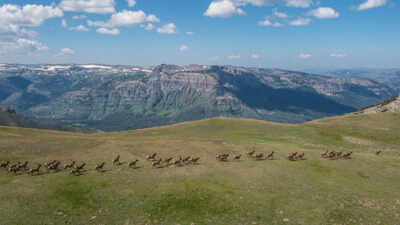
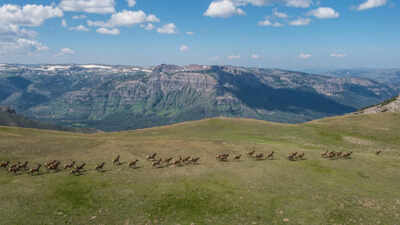
The National Fish and Wildlife Foundation (NFWF) has announced $13.3 million in grants for 14 projects aimed at protecting wildlife habitat and migration corridors across the western United States. The projects will cover Arizona, California, Colorado, Idaho, Montana, Nevada, New Mexico, North Dakota, Oregon, Utah and Wyoming.The grants will support conservation work for mule deer, elk, pronghorn, moose and other wildlife, the foundation said in an official statement. The projects will work across public, private and Tribal lands to improve the places where animals live and the routes they use to move between seasonal habitats. The $13.3 million in grants will be combined with $3.8 million in matching contributions, taking the total conservation impact to $17.1 million.The projects are expected to improve habitat management across more than 206,000 acres of public, private and Tribal land. They will also restore more than 40,000 acres in priority migration corridors and seasonal ranges. In addition, more than 225 miles of fencing will be removed, installed or improved to meet wildlife-friendly standards.The funding comes through the Western Big Game Seasonal Habitat and Migration Corridors Fund. The programme is a partnership between NFWF, the US Fish and Wildlife Service, the Bureau of Land Management, the US Forest Service, ConocoPhillips, Cargill, Taco Bell and Native Americans in Philanthropy. The aim is to support projects that improve habitat and allow wildlife to continue moving between seasonal ranges.
Why migration corridors matter
Wildlife in the western US depends on connected areas of habitat during different parts of the year. Migration corridors allow animals to move between seasonal ranges and reach the food, water and habitat they need.However, migratory wildlife faces pressures from habitat fragmentation, invasive species and changing land-use patterns. These pressures can make it harder for animals to reach seasonal habitats and reduce the connectivity between different areas.NFWF executive director and CEO Jeff Trandahl said protecting these migrations requires cooperation between different groups.“Across the American West, vast herds of elk, mule deer and pronghorn have moved across the landscape for generations, shaping some of the region’s most iconic wildlife spectacles,” Trandahl said.“Protecting these migrations requires partnership at every level,” he said, adding that the grants support voluntary efforts by private landowners, Tribes, state and federal agencies, conservation organisations and corporate partners.
Montana project to restore winter habitat
One of the grants will support Montana Fish, Wildlife and Parks in a large-scale project focused on winter range and migration habitat for mule deer and elk in western Montana.The project will work across 16 sites on Wildlife Management Areas and nearby public and private lands. It is expected to improve nearly 9,000 acres of habitat and conditions within priority migration corridors and seasonal ranges.The area has faced changes over the past century. Conifer encroachment and invasive plants have reduced the quality and extent of native grasslands and shrublands. These areas provide forage and winter habitat for big game.The project will remove encroaching trees and treat invasive species. It will also use prescribed fire to improve habitat conditions and modify fencing so that wildlife can move more easily through the landscape.The work is part of a wider effort to maintain connected habitats while also supporting areas used for ranching. Cargill Beef Sustainability Director Carlos Saviani said conservation work can support both wildlife and ranching communities.“Healthy, connected landscapes can support both wildlife and the ranching communities that care for them,” Saviani said.He added that Cargill was supporting voluntary, locally led conservation work aimed at improving habitat, strengthening migration corridors and keeping working lands productive.
100 projects funded since 2019
The latest projects are part of a longer conservation programme that has been operating since 2019. Since then, the Western Big Game Seasonal Habitat and Migration Corridors Fund has awarded $34.9 million across 100 projects.Those grants have attracted $71.1 million in matching contributions, creating a total conservation impact of more than $106 million, according to NFWF.The projects funded since 2019 have contributed to the restoration of more than 176,000 acres of habitat. They have also supported the protection of more than 109,000 acres through conservation easements and improved more than 1,800 miles of fencing to support wildlife movement and habitat connectivity.The latest 14 projects will add to that work by focusing on migration corridors, seasonal habitats and areas where barriers can restrict wildlife movement.