







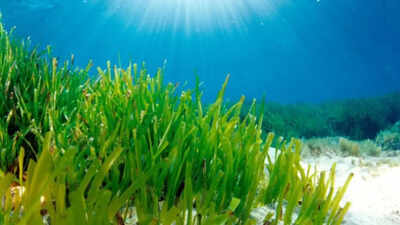
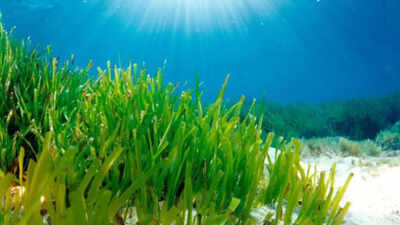
In the Mediterranean Sea, vast underwater meadows of seagrass grow in places where sunlight is weak. Yet these plants continue to photosynthesise efficiently, produce oxygen, store carbon and suppor marine life.A new study has revealed how one of these seagrasses has changed its photosynthetic proxcess to make the most of the limited light available underwater.The study, published in Nature Communications, focused on Posidonia oceanica, a seagrass found only in the Mediterranean Sea. It grows from shallow coastal waters to depths of around 50 metres, where sunlight is much weaker and red light has almost disappeared because water absorbs it quickly.Unlike seaweeds, seagrasses are flowering plants. Their ancestors once lived on land before returning to the sea between 70 and 100 million years ago.Today, Posidonia oceanica forms large underwater meadows that are among the world’s most productive ecosystems. These meadows provide shelter for marine species, stabilise seabeds and lock away large amounts of carbon for thousands of years, making them important natural carbon sinks.
Light-harvesting system
The researchers measured how efficiently the seagrass carried out photosynthesis and compared it with two land plants, Arabidopsis thaliana and maize.Posidonia oceanica performed particularly well under low light. While land plants reached peak photosynthetic only under brighter light, seagrass did it at much lower levels.The plant also has a larger light-harvesting system around one of its main photosynthetic structures-Photosystem I.It is a protein inside plant cells that captures sunlight and converts it into chemical energy. In Posidonia oceanica, this system has extra light-harvesting proteins.Normally, making the light-harvesting system larger can slow the movement of energy inside the plant. But the seagrass appears to have solved that problem in an unusual way.
Faster movement of energy
Using cryo-electron microscopy and ultrafast spectroscopy, the researchers examined the plant’s photosynthetic structures in great detail.They found that the seagrass had lost certain special chlorophyll molecules known as low-energy chlorophyll forms.In land plants, these molecules help absorb far-red light, which is useful in forests where leaves filter sunlight. However, underwater there is almost no far-red light to absorb.
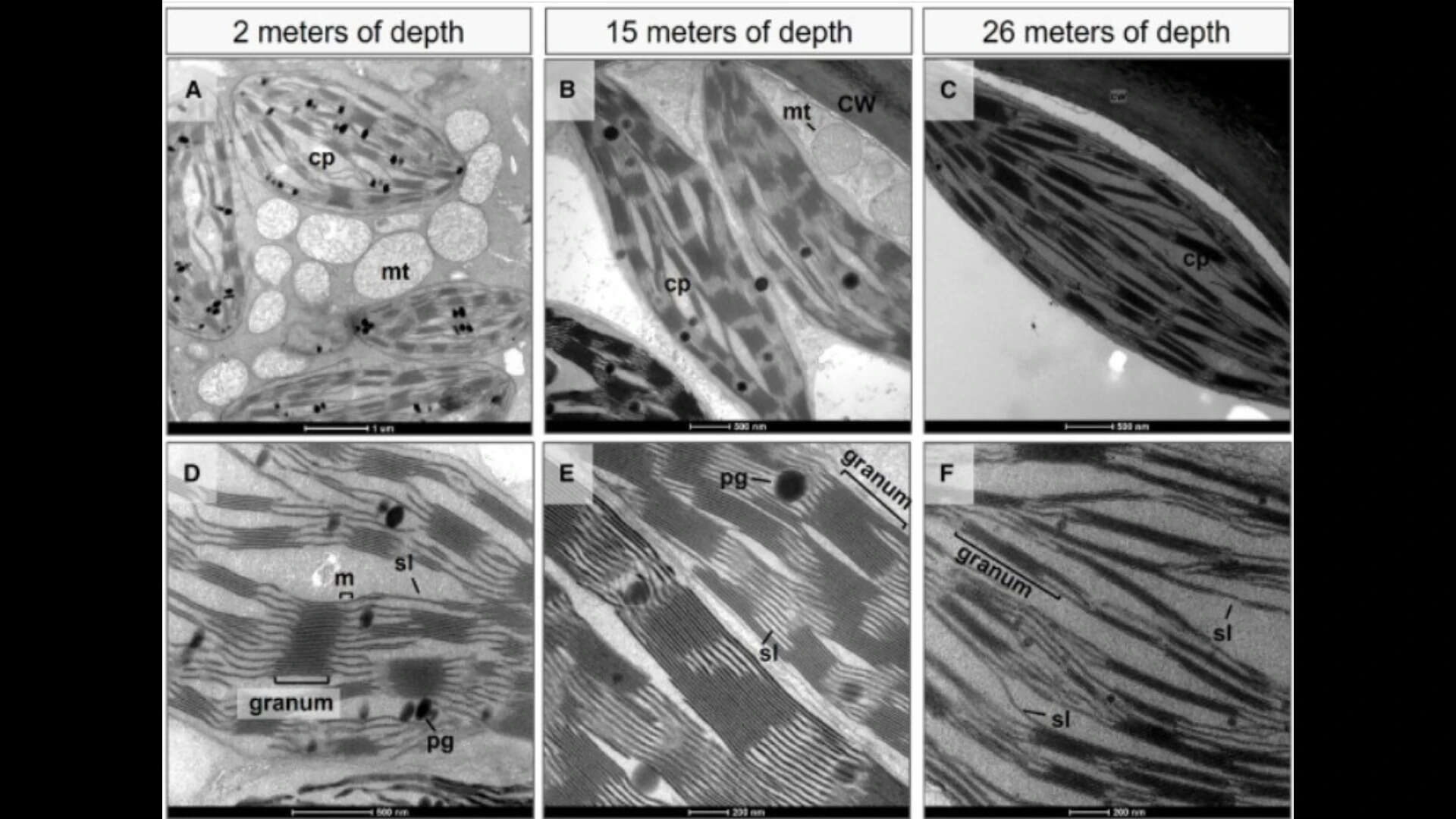
Images show how Posidonia oceanica reshapes its leaf cells as light decreases with depth.
Without these chlorophyll forms, energy moves through the photosynthetic system more quickly. The researchers found that this compensates for the plant’s larger light-harvesting antenna letting it collect more light without slowing the overall process.
Small genetic changes
The scientists also identified several small changes in the proteins around chlorophyll molecules. The changes slightly altered the position of the chlorophyll which removed the low-energy forms found in land plants.To confirm the findings, scientists reversed these genetic changes in laboratory-grown proteins. When they restored the land plant version, the missing low-energy chlorophyll forms returned, which showed that the identified genetic changes were directly responsible for the underwater adaptation.
Built for dim light
The researchers say the plant’s photosynthetic system appears to have been redesigned specifically for underwater conditions.Its light-harvesting antenna is larger, allowing it to capture more photons. At the same time, the absence of low-energy chlorophyll forms speeds up energy transfer, preventing delays that could reduce efficiency.The team also found that the seagrass permanently keeps certain light-harvesting proteins attached to Photosystem I. In land plants, these proteins usually move between two photosystems depending on changing light conditions.In the Mediterranean seagrass, however, they remain attached, which suggests a long-term adaptation and not a temporary response.Understanding how seagrass improves light capture while maintaining fast energy transfer could provide new ideas for developing crops that perform better under shaded conditions.