



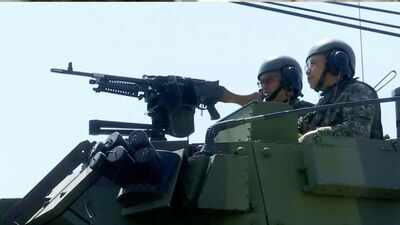
Taiwan is overhauling its military reserve system by extending mandatory reserve training from up to seven days to 14 days, introducing drone operations and US-made High Mobility Artillery Rocket Systems (Himars), as it seeks to tackle worsening troop shortages amid a declining birth rate and rising military pressure from China.The reforms, described as one of the biggest changes to Taiwan’s reserve force in decades, are aimed at strengthening the island’s defence capabilities as the number of military-age recruits continues to decline.From this year, Taiwan has replaced its previous five- to seven-day reserve call-up programme with a compulsory 14-day training course for all eligible reservists, South China Morning Post reported. Speaking during a legislative hearing last month, Taiwan’s defence minister Wellington Koo Li-hsiung said reservists would receive training on modern military equipment, including drones and the US-made Himars rocket system.“Besides training on new systems such as drones and the US-made High Mobility Artillery Rocket System (Himars), reservists will return to units matching the roles they held while on active duty under the military’s ‘returning personnel to their original positions’ policy,” Koo said.Taiwan’s defence ministry also plans to amend the law to include retired female volunteer service members in the reserve mobilisation system. Officials said women who served in active military units should continue contributing to national defence after leaving service.
Manpower shortage drives reforms
The changes come as Taiwan faces a growing shortage of military personnel.The number of men eligible for military service dropped below 100,000 for the first time in 2023, reaching 97,828. According to Taiwan’s legislature Budget Centre, the figure is expected to fall further to 79,742 next year.The staffing level of Taiwan’s armed forces has also declined to about 79 per cent despite recruitment efforts.Military planners have warned that Taiwan risks having advanced weapons but not enough trained personnel to operate them as new missile systems, drones and other military equipment enter service.“The demographic trend is something Taiwan simply cannot avoid,” said Max Lo, executive director of the Taiwan International Strategic Study Society.“As the number of people serving declines, the defence ministry has extended reserve training to strengthen reservists and compensate for the shrinking manpower pool,” he said.
Focus on modern warfare
Officials said the new training programme has been designed using lessons from the war in Ukraine, where drones, precision strikes and reserve forces have played a significant role.According to Taiwan’s All-Out Defence Mobilisation Agency, reservists will now undergo around 10 hours of training each day, including live-fire drills, battlefield first aid, camouflage, tactical marches and overnight exercises.Those who previously operated specialised systems such as drones or Himars during active service will receive refresher training in the same field rather than being assigned new duties.The defence ministry said the longer programme is intended to restore military skills and better prepare reservists for modern warfare.
Experts warn challenges remain
Despite welcoming the reforms, defence experts said training alone would not solve Taiwan’s manpower problems.Lo said the current mobilisation system often recalled reservists with specialist skills more frequently than others, creating resentment among former service members.“The defence ministry needs to broaden specialist training, including for drone operators, so more people can share mobilisation responsibilities,” he said.“Otherwise, resentment over unequal call-ups could reduce people’s willingness to participate.”He also observed that many reservists now have families and established careers, making mobilisation during a conflict more difficult than when they were on active duty.Lu De-yun, a former spokesperson for Taiwan’s defence ministry, said the reserve force still lacked a clearly defined wartime role.“The reservists seem to be expected to do everything,” Lu said, referring to frontline combat, logistics and maintaining public order.“Different missions require different weapons, equipment and training. Those questions still have not been fully answered.”Lu added that Taiwan’s regular armed forces still needed significant strengthening and argued that greater clarity was required over how reservists would be used in any future conflict.China considers Taiwan part of its territory and has repeatedly said it will reunify the island with the mainland by force if necessary.