








Top News

Trump denies offering US arms to China’s Xi, contradicts his own envoy
Trump rejects envoy’s claim he offered US arms to China’s Xi US president Donald Trump on Monday denied asking Chinese president Xi Jinping whether he wanted to buy American weapons, contradicting US Ambassador to China David Perdue, who said Trump had made such an offer to his Chinese counterpart.According to news agency AFP, Trump appeared…
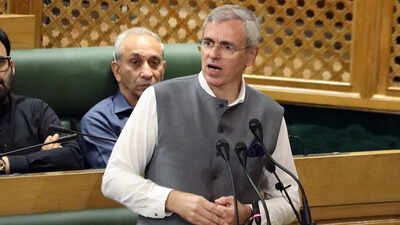
Omar Abdullah: If guns decide statehood, Pakistan will decide | India News
Jammu & Kashmir Chief Minister Omar Abdullah SRINAGAR: CM Omar Abdullah said Monday that making J&K statehood conditional on the end of militancy would effectively give Pakistan a say in its restoration, as the assembly passed a resolution for full statehood and set off a BJP walkout over its reference to a 2000 autonomy demand.Omar…
In 2019, a former US merchant mariner opened a Mississippi wildlife rescue after finding a baby raccoon on her ship; seven years later, 76 orphaned kits are learning to forage, swim and survive before release
Not just humans, even raccoons are being trained for survival in boot camps now. In a wildlife centre in Mississippi, a dedicated staff is braving mud, sweat and at times, blood, all to train their raccoon soldiers. But unlike what it seems, this boot camp is truly for their own benefit. It runs with the…

FBI puts gangster Goldy Brar on Ten Most Wanted Fugitives list | India News
Goldy Brar enters FBI’s Ten Most Wanted list as manhunt goes global NEW DELHI: Federal Bureau of Investigation (FBI) has officially placed notorious gangster Satinderjeet Singh aka Goldy Brar, on its famed Ten Most Wanted Fugitives list, offering a reward of up to $1 million for information leading to his arrest.The announcement, made early Tuesday,…

UNFPA report: Migrant workers cite livelihood insecurity, low wages, poverty and debt as reasons for moving out for better life | India News
For migrant workers, moving brings better livelihoods—but little job security NEW DELHI: Nearly 72% of migrant workers surveyed in three south Indian states felt that moving for work has improved their standard of living and more than half (around 57%) intended to continue working in their destination state, as per a new report.At the same…

‘Look at this Indian’: University of Florida student says he was harassed, abused, ‘I was genuinely fearing for my life’
A University of Florida student alleged racial abuse near the campus and posted a video of the harasser. A University of Florida student has posted a video of another student harassing him on the road near the university campus, calling him names and hurling homophobic slurs on him. Posting the video on the university’s unofficial…

A Maryland couple bought 116 acres as a hunting property; 20 years later, they had replaced crops with native grasses, wildflowers and trees and permanently protected the land for wildlife
Photo Credit: ESLC via easternshoreundercover.com When Louise and John Durocher bought 116 acres in Kent County, Maryland, the property was intended primarily as a hunting retreat. Over the next two decades, however, the couple gradually changed its purpose. They stopped growing crops and began restoring the fields with native grasses, wildflowers, shrubs and trees. They…
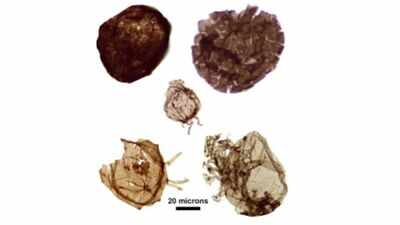
Scientists found more than 12,000 fossils in 1.7-billion-year-old Australian rocks; the ancient cells were early eukaryotes, offering clues to how complex life evolved long before animals appeared
Fossils reveal complex features in single-celled eukaryotes 1.7 billion years ago Photo credit: Leigh Anne Riedman via Science Daily More than 12,000 microscopic fossils recovered from 1.7-billion-year-old rocks in northern Australia are offering scientists a rare glimpse into the early history of complex life. The fossils belonged to ancient eukaryotes, the broad group that includes…

Gautam Adani, 4 group firms settle with Sebi in minimum public shareholding violation case
The settle included total payment of Rs 1.48 crore NEW DELHI: Adani Group chairman Gautam Adani, four group companies and 13 others have settled proceedings with the Securities and Exchange Board of India (Sebi) over alleged non-compliance with minimum public shareholding (MPS) requirements by paying a combined Rs 1.48 crore, according to a settlement order…
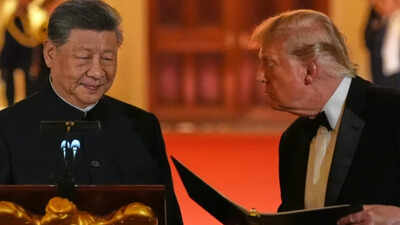
From containment to commerce? Trump is said to make arms sales pitch to Xi
Trump-Xi meeting puts US-China ties, Taiwan and Washington’s arms policy in focus TOI correspondent from Washington: MAGA supremo Donald Trump has spent much of his presidency telling allies and partners, including India, to buy more American weapons. At his meeting with Xi Jinping, America’s top arms salesman apparently decided to extend the same customer-service offer…