





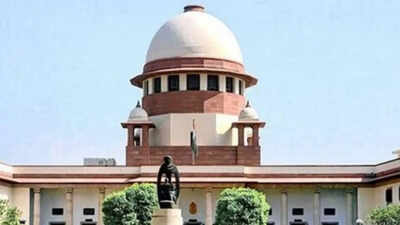
NEW DELHI: Opposing the application of the ‘creamy layer’ criterion for exclusion of affluent members of scheduled caste and scheduled tribe communities from benefits of reservation in jobs and admissions to educational institutions, the government has told the Supreme Court that discrimination against SCs/STs and OBC/SEBC communities do not happen only due to economic considerations.“Keeping the broader concept of equality in view, discrimination against SC, ST and OBC/SEBC communities do not happen only based on economic conditions. The system of reservation aims to provide fair opportunities, reduce economic disparities, and foster diversity in governance and academia by addressing historical marginalisation,” it said.On Aug 1, 2024, a seven-judge top court verdict permitted states to sub-categorise castes within SC communities based on socio-economic backwardness and the degree of under-representation in government jobs to ensure that the larger pie of 15% quota goes to the most backward. The court had asked governments to devise suitable criteria to bar the ‘creamy layer’ among the Supreme Court from availing reservation.Filing the affidavit nearly a year after Supreme Court sought response to a PIL by two people – one belonging to SC community and the other to OBC category – on Aug 11 last year, the government said, “Modification of reservation policy, particularly to introduce income-based preferences within reserved categories, should be preceded by a holistic review and thorough empirical study, including socio-economic data of reserved category beneficiaries” and could be done only by Parliament.Parliament alone can modify the list of SC and ST communities entitled to quota, it further stressed.Elaborating upon, it said caste, tribe or part of or group within any caste/tribe can be included or excluded from the list of SCs or STs issued under Articles 341(1) and 342 only by Parliament by law and it is not open to state governments or courts or tribunals or any other authority to modify, amend or alter the list of SCs or STs specified in the notification issued under Clause (1) of Article 341 or 342.
Share your thoughts in the comments
Be respectful · TOI community guidelines
Now similar provisions have been made for Socially and Educationally Backward Classes (SEBC) through the Constitution (One Hundred and Second Amendment) Act, 2018, it said.The government said, “In the majority of schemes of welfare and development of SC, ST, and SEBC, excepting reservation in educational institutions and reservation in services under the state, there is a means test which ensures that benefits of schemes percolate to those who actually deserve them.”