






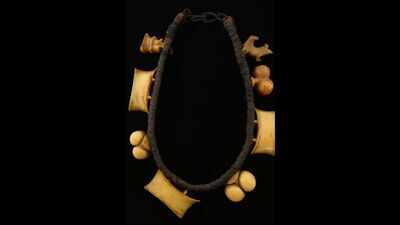
A necklace nearly taken to a car boot sale with a £15 price tag turned out to be a rare 18th-century Polynesian treasure worth almost £100,000. The piece, made from human hair and sperm whale bone and originating from the Austral Islands in the South Pacific, had been found during a house clearance. At Ewbank’s auctioneers in Surrey, it sold for £99,000, far above its original estimate of £60 to £100, according to Antique Collecting and the Antiques Trade Gazette.
Nearly lost at a car boot sale
The necklace was brought to Ewbank’s by the owner of a house clearance firm, who had no idea of its significance. It was part of a batch of items that had been priced at £15 and was destined for the A3 car boot sale opposite the auction rooms. At the last moment, the owner changed his mind and took the necklace to Ewbank’s instead. That decision transformed the fate of an object that might otherwise have been sold for a few pounds at a roadside stall, as per the reports.The auction house identified it as a rare late 18th-century necklace from the Austral Islands. Made from hair and sperm whale bone, it belonged to a category of Polynesian material culture that is highly prized by collectors and museums.
Why the necklace was valuable
The necklace’s value came from its age, rarity and cultural importance. Objects made from human hair and whale bone were significant in Polynesian societies, and surviving examples from the late 1700s are exceptionally scarce. Ewbank’s senior partner and auctioneer Chris Ewbank said, according to Antique Collecting Magazine, that the piece was a rare late 18th-century necklace emanating from the Austral Islands. Its materials and provenance placed it firmly within the field of tribal art, where authenticity and historical context can dramatically affect value.Before the sale, interest from collectors suggested the necklace might reach £20,000 to £30,000. Even that estimate was hundreds of times higher than the £15 price originally attached to it, as per the report.
A dramatic bidding battle
The final sale exceeded every expectation. A bidder in the auction room dropped out at £50,000, leaving a French bidder using Ewbank’s live online bidding platform to compete against an Australian telephone bidder. The contest pushed the hammer price to £99,000, as per the reports. It became the highest sale at Ewbank’s in 2016 and the highest price achieved on the firm’s live bidding platform, which had been launched earlier that year.The result showed how competitive the market for rare tribal art can be. Collectors were not simply buying an old necklace, but a rare surviving object connected to the material traditions of the South Pacific.
From £15 to £99,000
The story is remarkable because of the enormous gap between the necklace’s initial valuation and its final sale price. A £15 item became a £99,000 auction result, a rise of more than 6,000 times its original price.It also illustrates the importance of expert assessment. Many valuable antiques are overlooked because they look worn, unusual or unfamiliar, particularly when they do not resemble conventional European jewellery or furniture.For collectors, the case is a reminder that provenance, materials and age can matter more than immediate appearance. A small object from a house clearance can carry a history that only specialist knowledge can reveal.
A lesson for anyone clearing a home
House clearances often uncover objects that owners no longer recognise or understand. While most items will not turn out to be rare Polynesian artefacts, the necklace shows why it can be worth having unusual pieces examined before they are sold cheaply.Old jewellery, carvings, textiles, weapons, shells and bone objects can all fall into specialist categories. Auction houses, museums and tribal art experts can help identify whether an item has historical or cultural significance.In this case, one last-minute decision saved a rare South Pacific necklace from a car boot sale and brought it before collectors who understood its true importance. The £99,000 result was not just a windfall, but proof that overlooked objects can still hold extraordinary stories.