




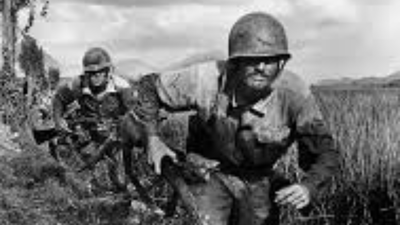
A US Army private who was killed during the Korean War at just 17 years old is finally being laid to rest under his own name, more than seven decades after his remains were buried as an unidentified soldier. Pvt. Joseph E. Boyd, from Bear Creek, North Carolina, was identified after forensic scientists analysed remains designated “Unknown X-1642”, according to the US Defense POW/MIA Accounting Agency (DPAA). The agency announced on October 17, 2026, that Boyd had been accounted for on June 10, with his burial scheduled for October 21 in Owings Mills, Maryland.Boyd was serving with Company A, 1st Battalion, 9th Infantry Regiment, 2nd Infantry Division, when he was reported missing on January 25, 1951, near Chigu-ri, South Korea. His disappearance occurred during patrol operations as US forces fought to clear enemy troops from mountainous areas near Wonju. His remains were not recovered at the time, leaving his fate unresolved for decades.
Remains recovered but identity remained unknown
In February 1951, a local villager discovered human remains near Saemal, South Korea. A US Army search-and-recovery team retrieved them and transferred them to the Central Identification Unit in Kokura, Japan, for examination. Despite the identification methods available at the time, investigators could not establish the person’s identity.The remains were designated “Unknown X-1642 Tanggok” and, in 1956, were buried at the National Memorial Cemetery of the Pacific in Honolulu, Hawaii. The cemetery, commonly known as the Punchbowl, became the final resting place for hundreds of unidentified American service members from the Korean War. Boyd’s remains remained there for decades without his name being attached to them.The identification effort was part of a broader programme to resolve cases involving American service members whose remains had been recovered but could not be identified using the scientific techniques available at the time. In 2018, the DPAA proposed a plan to disinter 652 Korean War unknowns from the Punchbowl for renewed examination.As part of the programme, officials exhumed Unknown X-1642 in November 2023 and transferred the remains to a DPAA laboratory for further analysis. The renewed examination allowed specialists to compare the remains with records and evidence associated with service members who had been reported missing during the conflict.
How scientists identified Boyd
The identification relied on several forms of evidence rather than DNA testing alone. According to the DPAA, scientists combined dental and anthropological analysis with circumstantial evidence. Specialists from the Armed Forces Medical Examiner System also used mitochondrial DNA analysis and mitochondrial genome sequencing data to help establish the identity.The process illustrates how advances in forensic science can help resolve cases that remained uncertain for generations. Dental comparisons and anthropological examinations can help narrow the list of possible identities, while genetic analysis can provide additional evidence when suitable reference samples are available from relatives.The DPAA’s wider disinterment programme involves researchers examining historical records, personnel files, unit documents and reports of earlier investigations alongside laboratory findings. Investigators compare the circumstances in which unidentified remains were recovered with the documented disappearance of missing service members. When the evidence indicates a likely match, the remains can be exhumed for detailed forensic analysis.Boyd’s identification was announced after his family received a full briefing from officials, allowing the agency to release further details about the case.
A wider effort to identify the missing
Boyd’s case forms part of a continuing US effort to account for military personnel who went missing in past conflicts. According to the DPAA, more than 7,000 Americans remain unaccounted for from the Korean War, and the agency continues to investigate possible recovery sites and examine unidentified remains.The Korean War, fought from 1950 to 1953, left families across the United States without definitive answers about relatives who never returned. Some remains were recovered during or shortly after the fighting, but the methods available then were not always sufficient to identify them. Those remains were often buried as unknowns, with the possibility of future identification left open.The DPAA says its ongoing work combines historical research, field investigations and laboratory techniques, including DNA analysis, to provide families with answers where possible. The disinterment programme also allows officials to revisit remains that had previously been considered unidentifiable.
Burial more than seven decades later
Boyd’s name had been recorded among the missing at the National Memorial Cemetery of the Pacific. Following his identification, the DPAA said a rosette would be placed next to his name at the Courts of the Missing to indicate that he had been accounted for. His burial was scheduled for October 21, 2026, in Owings Mills, Maryland.For a soldier who disappeared at 17, the identification brings an official resolution to a case that remained open for more than 75 years. The forensic work cannot recover the time his family spent without knowing what happened to him, but it has restored his identity to remains that had long been recorded only by a number.Boyd’s case also demonstrates why the search for missing service members continues decades after a conflict ends. As forensic techniques improve and old records are revisited, remains once buried without names can sometimes be returned to families for burial with the recognition they were denied for generations.