









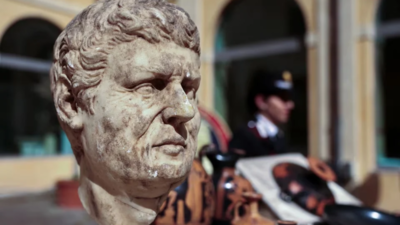
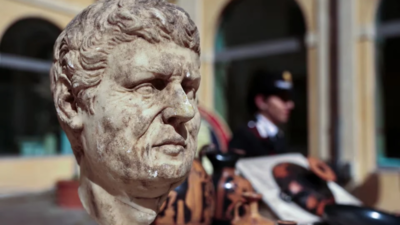
The United States has returned 337 looted antiquities to Italy, in one of the largest recent returns of stolen cultural property, according to Reuters. The objects were presented on Wednesday, 29 April 2026, at the headquarters of the Carabinieri cultural protection unit in Rome. They include Roman, Greek, Etruscan and Egyptian pieces, handed back after investigations, many of them centred on New York. Among the most significant is a first-century AD marble head of Alexander the Great, stolen from a Rome museum in 1960. Reuters reports that the Manhattan District Attorney’s office found 221 of the objects, and that the recovered items will now be studied.
337 looted antiquities return to Italy after US-led investigations
According to Reuters, the 337 artefacts were returned by the United States following a series of investigations, many of them centred on New York. Reuters reports that the items range from ancient Roman sculptures to Greek, Etruscan and Egyptian pieces. The agency says the handover highlighted closer cooperation between Rome and Washington. It adds that the Manhattan District Attorney’s office found 221 of the objects in this latest haul.Reuters reports that the US Ambassador to Italy, Tilman J. Fertitta, told reporters that the United States would do whatever it takes to help bring such artefacts back to Italy. Italian Culture Minister Alessandro Giuli also spoke at the presentation. He said that protecting cultural heritage means defending memory and strengthening identity, and that it passes the value of culture on to future generations as a universal public good.
PC: Reuters
Alexander the Great marble head stolen from a Rome museum in 1960
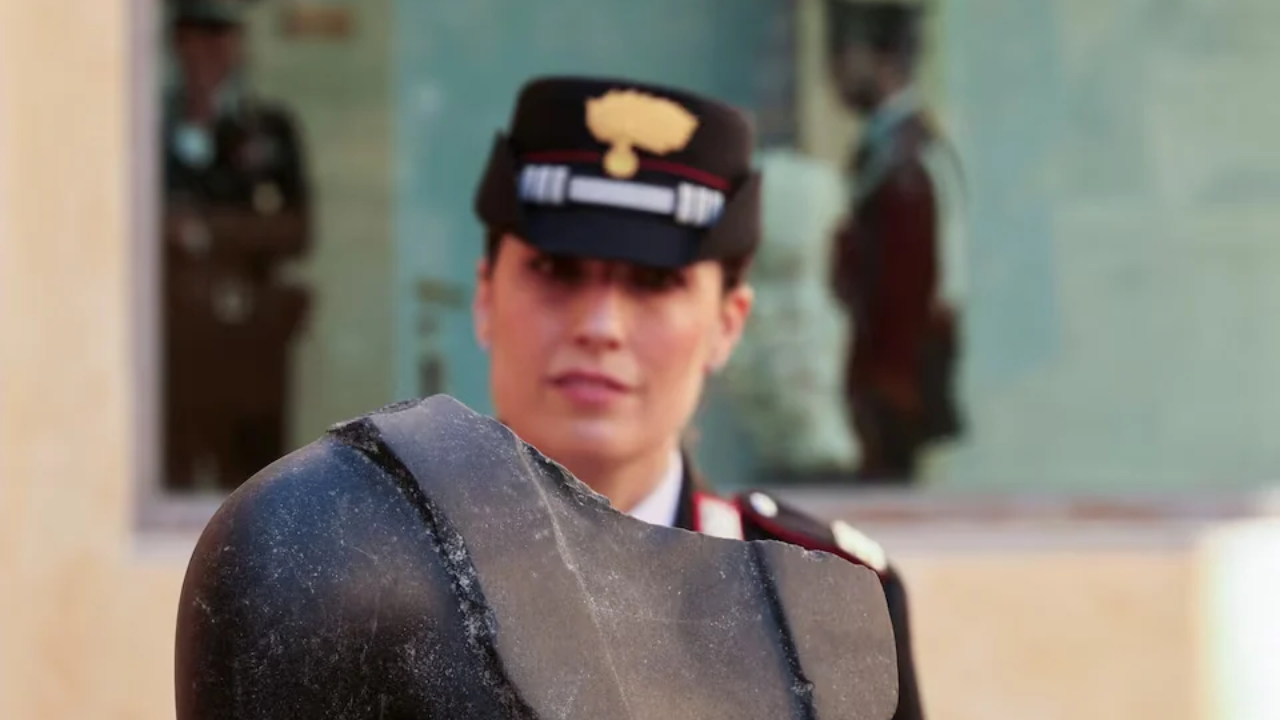
Reuters names the marble head of Alexander the Great as one of the most significant items unveiled. It dates to the first century AD and was stolen from a Rome museum in 1960. Reuters lists other notable pieces: a bronze sculpture looted from the Roman town of Herculaneum and two Egyptian basalt statues. The recovered objects also include Roman coins, jewellery, ceramics and architectural fragments spanning the fifth century BC to the third century AD.The Manhattan District Attorney’s Office describes a first-century C.E. marble head depicting Alexander the Great as Helios, the sun god, in a press release dated 6 August 2025. According to the office, the head was excavated from the Basilica Emilia in the Roman Forum and stolen from the Antiquarium Forense Museum, a state-run archaeological museum in Rome. The release says it was laundered through several individuals and institutions in New York. Alan Safani acquired it in good faith in 2017. The office seized it under a warrant, and Safani eventually agreed to surrender it so it could be repatriated.
Manhattan investigations trace stolen Italian antiquities to trafficking networks
According to the Manhattan District Attorney’s Office, the objects in its August 2025 announcement were recovered through criminal investigations into several antiquities trafficking networks. The office names convicted traffickers Giacomo Medici, Giovanni Franco Becchina, Robin Symes, Robert Hecht and Eugene Alexander, as well as alleged trafficker Edoardo Almagià. It says Alexander was convicted on 8 July 2025 of Conspiracy in the Fifth Degree to Commit Antiquities Trafficking. It also says it holds an arrest warrant for Almagià, who is awaiting extradition from Italy.The office’s release gives further examples of items repatriated to Italy on 5 August 2025, part of a group of 31 antiquities. These include 61 fragments of a terracotta column-krater attributed to the Lydos Painter and dated to 580 B.C.E. The Antiquities Trafficking Unit seized them from the Metropolitan Museum of Art in 2025. The release says smugglers broke the object into fragments and sold the pieces separately over several years. The Unit also seized nine Tarentine objects from the Met in 2025. The office says they date to the 4th and 3rd centuries B.C.E. and come from tombs in southern Italy. Of one group of seven, it notes that the only provenance was the “English collection”.
Italy strengthens efforts to recover stolen artefacts from US
Italy has spent decades trying to curb a rampant trade in illicitly excavated antiquities. In that time, it has secured the return of thousands of artefacts worth tens of millions of euros. According to the agency, the campaign has gained momentum in recent years, helped by online databases, advances in technology and closer cooperation with US authorities. Reuters adds that Italy and the United States renewed a memorandum of understanding last year. It tightens US import restrictions on Italian archaeological material, strengthens customs controls and expands information-sharing.The United States is one of the main markets for global antiquities, with auction houses, private collectors and museums interested in rare artefacts. An Italian Culture Ministry official who was not authorised to speak to the press said, “We know what is missing and are getting much better at finding it.” She predicted more returns in future. Reuters also reports that the recovered objects will now be studied and, where possible, returned to their places of origin across Italy. The Manhattan District Attorney’s Office says its Antiquities Trafficking Unit has recovered more than 6,060 antiquities since its creation, valued at more than $476 million. It says it has returned more than 5,700 of them to 30 countries.