



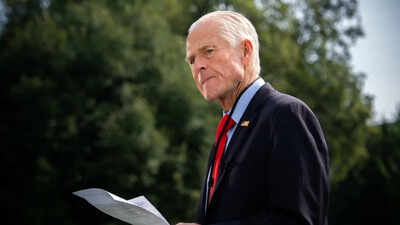
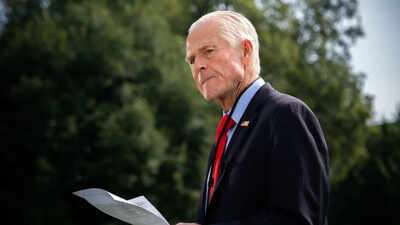
US President Donald Trump and Prime Minister Narendra Modi have a “very good working relationship” and will resolve differences over Washington’s threatened tariffs on countries buying Russian oil, White House Trade Adviser Peter Navarro said on Tuesday.Navarro’s comments came days after the US Senate passed a bipartisan bill that could allow Trump to impose tariffs of up to 100% on goods from major purchasers of Russian oil and gas, including India. The legislation seeks to increase economic pressure on Moscow by targeting countries whose purchases of Russian energy are seen as helping finance its war in Ukraine.Responding to an ANI question about the issue, Navarro said the dispute between Washington and New Delhi would be handled directly by Trump and PM Modi. “The president and your prime minister have a very good working relationship. They are going to work that out amongst themselves, and it’s not for me or any gaggle to get between that,” he said.Navarro also repeated his criticism of India’s purchases of Russian crude, arguing that New Delhi became heavily involved in the trade only after Russia invaded Ukraine in 2022.“During the Ukraine-Russia war, 6-8 months ago, I think I wrote wrote an op-ed in the Financial Times, which absolutely factually correctly pointed out that prior to the Russian invasion of Ukraine, India was not involved in the oil trade with Russia, but afterwards it got heavily involved and was selling a lot of refined products on behalf of Russia, which helped feed the war machine. And that issue has been resolved. Maybe I had a little bit to do with that with that op-ed, but I can tell you, I got actually firebombed by the Indian continent on the internet. All I would say to you, don’t do that,” Navarro said.He was referring to an opinion article he had written in the Financial Times in which he criticised India’s Russian oil purchases. Navarro has repeatedly accused New Delhi of helping sustain Moscow’s war effort by buying discounted Russian crude, while India has maintained that its energy procurement is driven by market conditions and national energy requirements.The Senate’s Lindsey O Graham Sanctioning Russia and Iran Act of 2026 was approved on August 7 by an 86-11 vote. The measure would give the US president discretionary authority to impose tariffs of up to 100% on imports from the world’s top five buyers of Russian crude oil or natural gas.India remains among the largest buyers of Russian crude, having sharply increased purchases after the outbreak of the Russia-Ukraine war in 2022. The discounted oil allowed Indian refiners to reduce input costs and maintain supplies amid disruptions in global energy markets.Navarro’s latest comments mark a softer tone towards the India-US relationship after months of criticism. Early 2026, he had repeatedly attacked India over Russian oil imports and previously described New Delhi as the “Maharaja of tariffs”.He had further defended US tariffs on Indian goods as a national security measure, saying they were linked to India’s refusal to stop buying Russian oil. His remarks about “Brahmins” profiting at the expense of the Indian public also drew a strong response from New Delhi, with the Ministry of External Affairs rejecting what it called inaccurate statements.