



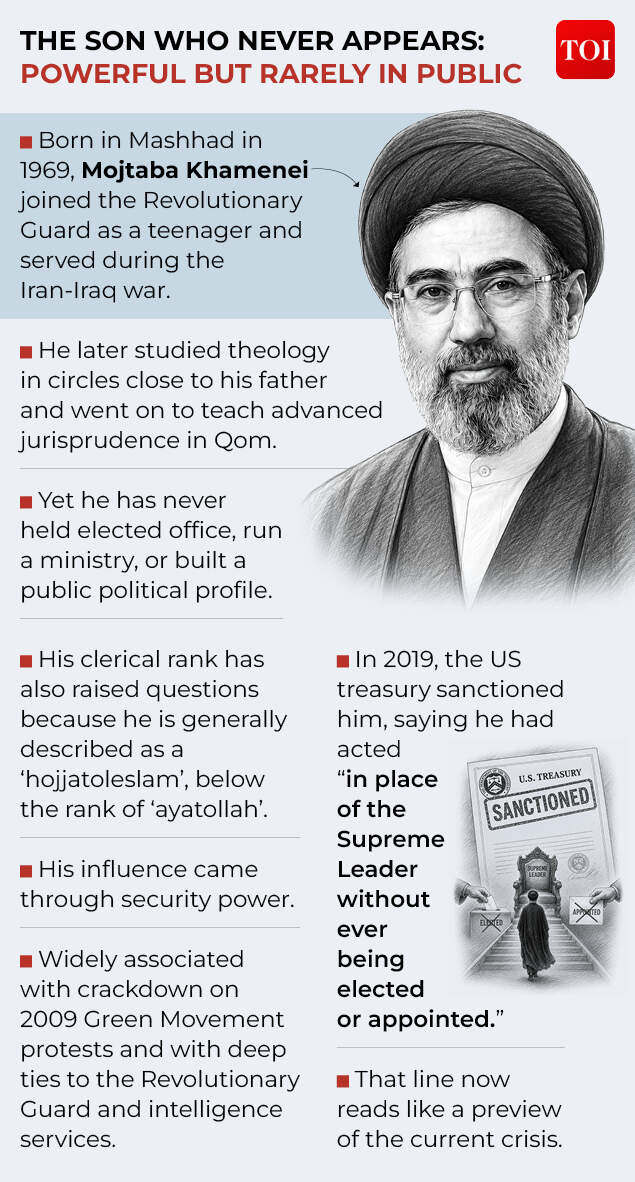
Driving the newsIran is holding the largest funeral in its history for Ayatollah Ali Khamenei. Over six days, the mourning procession moves from Tehran through Qom, Najaf, Karbala and Mashhad — a route that traces a political and spiritual map, meant to steady a system rattled by months of war, unrest and uncertainty at the very top.But his son and successor, Mojtaba Khamenei, hasn’t been seen in public since Operation ‘Epic Fury’ that killed his father began.
State of play
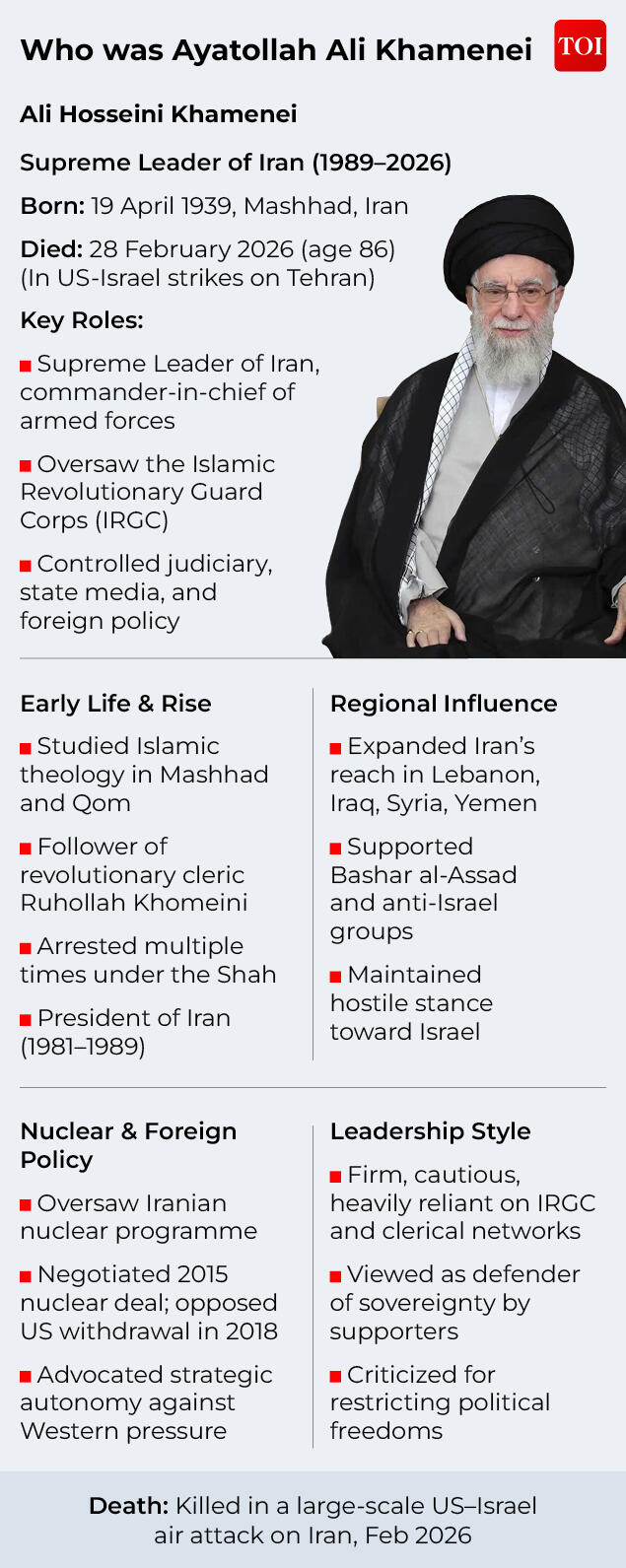
- Ali Khamenei was killed on February 28, when US and Israeli strikes hit his residential compound in Tehran. Several family members died with him.
- On March 9, the Assembly of Experts elevated Mojtaba to supreme leader. The vote, per the New York Times, landed at 59 of 88 — just past the two-thirds bar.
- Ali Khamenei’s own will reportedly asked for an in-person vote and opposed handing the job to his son. The Assembly did it anyway.
- Since then: No speech, no audience, no confirmed footage. Just one written statement, read out on state TV three days after the vote. Analysts noted even that carried typos and clerical formatting errors a seminary-trained cleric wouldn’t ordinarily make.
By the numbers
- ·6 days: The length of the procession: Tehran to Qom, across the border to Najaf and Karbala, then back to Mashhad for burial.
- ·15–20 million: mourners Iranian officials say they expect along the route
- ·Over 100 countries, including, are sending delegations to attend the funeral.
Why it matters
On paper, Mojtaba Khamenei is the most powerful man in Iran. In practice, he is a name on a title with no face attached and that gap is now the biggest open question in Iranian politics.His absence has become the funeral’s central tension. Iran is staging one of the largest public ceremonies in its history to honor a slain leader, while the man who inherited his authority hasn’t been seen since the strikes of February 28.
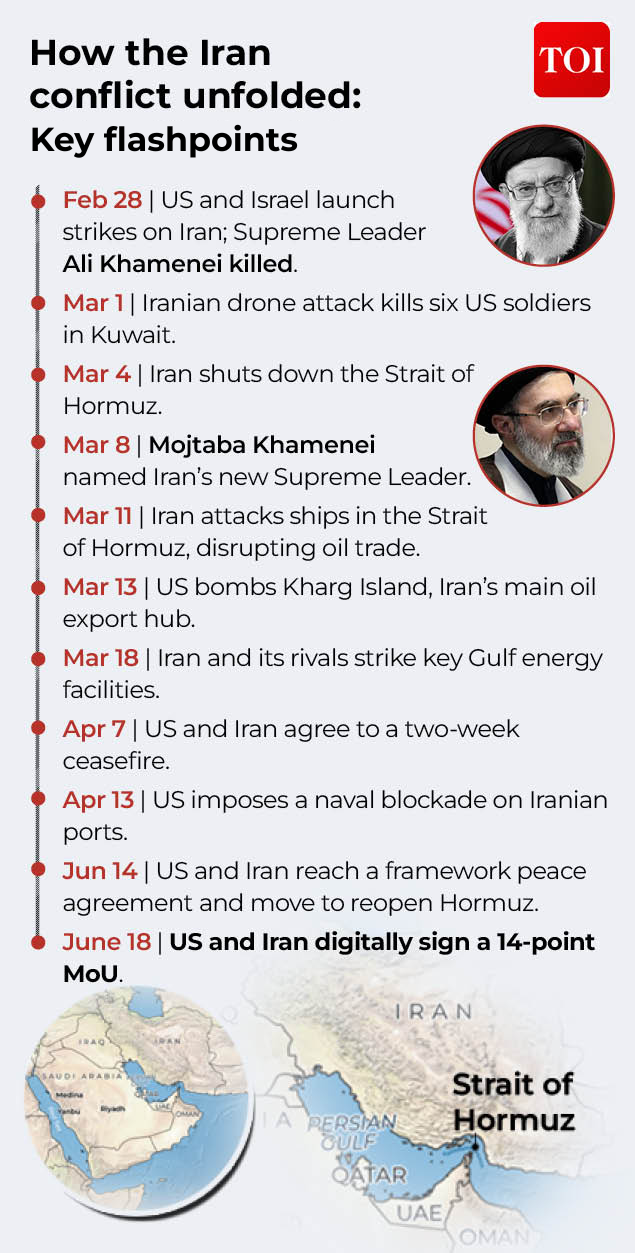
This is more than a burial. It’s a test of whether the Islamic Republic can still project strength after a year of war, unrest and elite casualties — and it’s having to do so without its new supreme leader in the frame.Officials are leaning on the turnout to argue the state remains intact, popular and able to fill the street. Tehran hopes the sheer scale of the crowds will shore up its claims to legitimacy at home and give Washington pause about further military action, according to an FT report.The Supreme National Security Council cast the funeral as a message to Iran’s enemies, writing on X: “Keep your eyes fixed on Iran these days. This is the same Iran you thought you could bring to its knees in just a few days!”The council said the “roaring sea of people” was chanting two slogans: “Resistance against the enemies” and “Vengeance for the blood of their martyred Leader”.
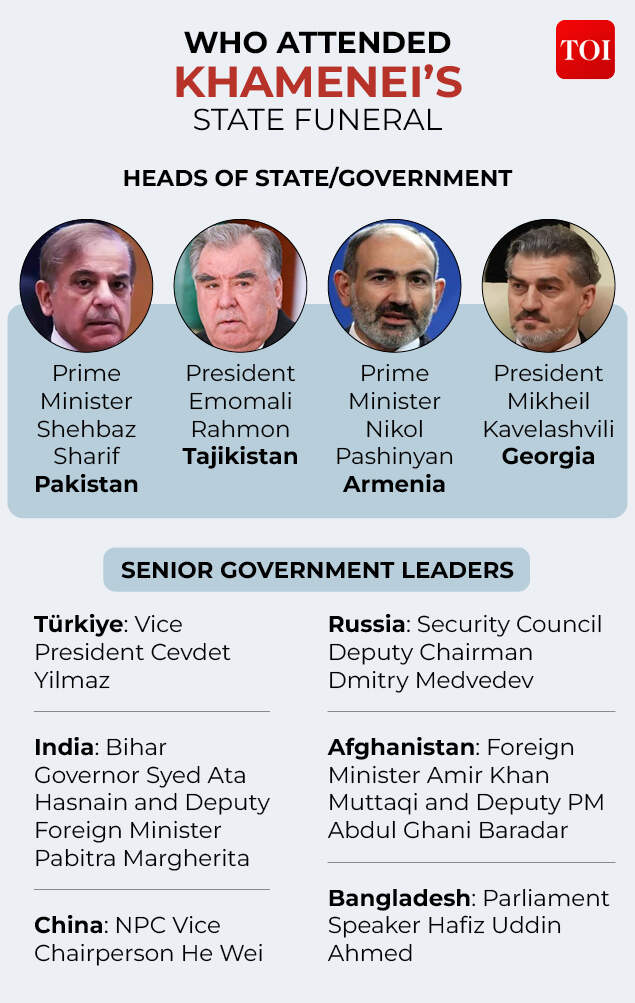
.
‘Fake tears’:
US President Donald Trump told Axios he was surprised to see Iranians crying at the funeral — he had assumed the public hated the late supreme leader. “Maybe it’s fake tears,” Axios quoted Trump as saying.
Between the lines
Three of Khamenei’s other sons — Mostafa, Masoud and Meysam — did show up Sunday, praying behind their father’s coffin for the first time since the war began. Two were seen in tears. Revolutionary Guard commander Ahmad Vahidi also resurfaced after four months out of sight.So the family showed up. The military showed up. The president and the parliament speaker showed up.The son who now runs the country did not.That’s not an accident: It’s the strategy. Every other pillar of the state stays visible so that one absence doesn’t read as a vacuum. Power, meanwhile, runs in the open: President Pezeshkian fronts the government, parliament speaker Ghalibaf handles the US negotiations, and the Revolutionary Guard — the institution that pushed Mojtaba’s succession through — stands guard over a man nobody can confirm having seen.
The bigger picture
The funeral route is doing the political work Mojtaba Khamenei cannot do in person.Tehran shows the state can still summon huge crowds in the capital. Qom ties the succession to Iran’s clerical establishment. Najaf and Karbala carry the symbolism beyond Iran’s borders, into the wider Shiite world. And Mashhad — where Khamenei was born, and where he is expected to be buried near the Imam Reza shrine — closes the circle at Iran’s holiest city.
.
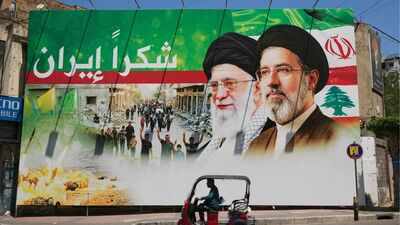
The NYT reported that Tehran has been remade by portraits, banners, security checkpoints and carefully managed ceremonial spaces — a capital performing strength and order while still carrying the visible marks of war damage, economic strain, water shortages and power cuts.The choreography matters. This is a state production meant to prove the Islamic Republic can outlive its patriarch, absorb the shock of war, and keep negotiating with the same country involved in the strike that killed him.But scale cuts both ways. The harder the state insists on unity, the more conspicuous Mojtaba’s absence becomes.And the succession itself remains raw. Iran’s own history makes this moment combustible: A republic founded against monarchy is now led by the son of its late supreme leader — and that son will not show his face.But as NYT’s reporting from Tehran underlines, the capital is also haunted by recent traumas that cannot be papered over with banners: Months of economic crisis, mass protests crushed in blood, and then a war that brought death to schools and damage to historic sites such as Golestan Palace. Families grieving protest victims still want accountability. Younger Iranians continue to push the social boundaries symbolized by mandatory veiling and political red lines.
What’s next
The procession continues through the coming days, with authorities laying on transport, meals and accommodation for mourners.Once the mourning ends, talks with Washington are expected to resume. The two sides remain divided over the Strait of Hormuz, Iran’s nuclear program and the broader terms of a permanent settlement.For now, the Islamic Republic is using Khamenei’s funeral to send two messages at once: To Iranians, that the system has endured; to Washington and Israel, that the state still commands loyalty, anger — and numbers.
What to watch
Once the coffin reaches Mashhad and the talks resume in Doha, Iran runs out of ceremony to hide behind. At some point, Mojtaba Khamenei either steps forward and actually rules — or stays what he is now: A supreme leader nobody has seen, governing entirely through the people who govern in his name.