





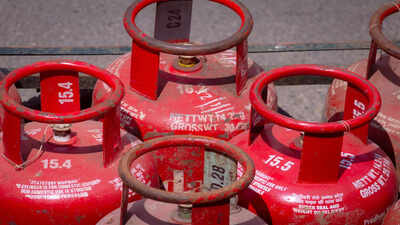
The government’s spending on LPG subsidies could climb past Rs 1 lakh crore in FY27, far exceeding the Rs 30,000 crore set aside in the Union Budget, according to a report by PL Capital.The report said the Budget provision of Rs 300 billion has already been surpassed, with the subsidy loss currently estimated at Rs 490 for every LPG cylinder. If spending continues at the current pace, the total LPG subsidy bill could cross Rs 1 trillion by the end of the financial year.It stated, “We estimate that the subsidy allocation of R s3,00bn in budget for FY27 has been long overshot, and current LPG subsidy loss per cylinder if Rs 490 and at current run rate LPG subsidy might cross Rs 1 trillion”.PL Capital attributed the rising subsidy burden to the government’s decision, along with oil marketing companies (OMCs), to absorb a larger share of higher fuel and LPG prices amid continued uncertainty related to the ongoing war situation.The report also showed that subsidy spending has accelerated sharply at the start of FY27. Between April and May 2026, the government spent Rs 755.4 billion on major subsidies, up 47% from Rs 512.5 billion during the same period last year.Food subsidy accounted for the largest share, rising to Rs 408.0 billion from Rs 279.9 billion, a 46% increase. Spending on nutrient-based fertiliser subsidy rose 39% year-on-year to Rs 60.1 billion, while urea subsidy increased 50% to Rs 284.5 billion from Rs 189.5 billion.Petroleum subsidy, which stood at nil in the corresponding period last year, came in at Rs 2.8 billion during April-May 2026.According to the report, the uncertainty surrounding the war-related situation has pushed up subsidy commitments, adding pressure on the government’s finances.At the same time, PL Capital expects the Centre to remain cautious with capital expenditure in the first half of FY27. Rather than increasing borrowings, the government is likely to prioritise keeping the fiscal deficit under control while managing the higher subsidy bill.Capital expenditure stood at Rs 2.5 trillion by the end of May 2026, up 13% from Rs 2.2 trillion a year earlier. However, the report noted that the comparison comes against a high base, as capital spending in FY26 had been front-loaded, resulting in a much sharper 54% year-on-year increase during the corresponding period.The report added that rising subsidy commitments, combined with the government’s focus on fiscal discipline, may keep capital spending measured during the first half of the current financial year.