





The International Cricket Council’s (ICC) revamped format for the 2027 ODI World Cup has not only increased the possibility of India and Pakistan facing each other three times during the tournament, but it has also reignited criticism over how inclusive cricket’s biggest event really is. At a time when major global sporting events are expanding opportunities for more nations, the ICC has opted for a format that, despite officially increasing the ODI World Cup from 10 to 14 teams, effectively limits meaningful participation for lower-ranked sides. The new structure requires the three lowest-ranked qualified teams to fight for a single place in the main competition, meaning only one of them progresses while the other two are eliminated before the tournament reaches its principal stages. The governing body has said the new format is designed to make every match more meaningful from the opening day and strengthen the competitive narrative throughout the event. However, it also creates a pathway for multiple meetings between cricket’s biggest rivals.
First meeting in the group stage
The tournament will begin with a ‘Super Series’ involving Teams 12, 13 and 14. Only the winner of that round-robin advances to the next phase. The remaining 12 teams will then be split into two groups of six. Each side will play the others in its group once, with the top three teams from each group and the next best team overall qualifying for the Super 7. The ICC does not use a completely random draw for its global events, and India and Pakistan have regularly found themselves in the same group in recent tournaments. If that continues in 2027, the rivals could meet for the first time in the group stage.
Super 7 opens door for second encounter
The seven qualifying teams will then compete in a single round-robin Super 7 stage. Since every team plays each other once, India and Pakistan would be guaranteed another meeting if both reach this phase, taking their tally to two matches in the same tournament. The top four teams from the Super 7 will qualify for the semi-finals.
Knockout stage could produce a third blockbuster
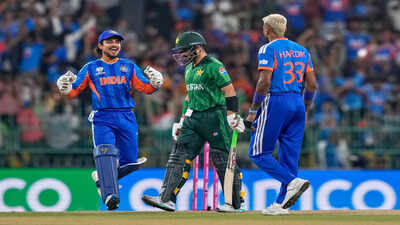
The format also leaves room for a third India-Pakistan contest. If both teams qualify for the last four, they could meet in the semi-finals if they finish first and fourth or second and third in the Super 7 standings. If they finish on opposite sides of the draw, they could instead face off in the final. That means the revised format allows for as many as three India-Pakistan matches in a single ODI World Cup: one in the group stage, one in the Super 7, and another in either the semi-final or the final. While the ICC has presented the changes as a way of increasing the significance of every game, the format has also drawn attention for effectively reducing opportunities for emerging nations while simultaneously increasing the chances of repeat meetings between the sport’s biggest commercial rivals.