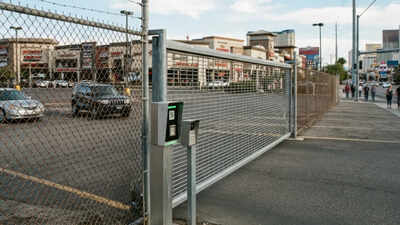
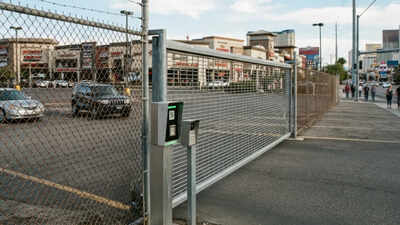
A dispute over customer parking on the Las Vegas Strip has ended with the state’s Supreme Court backing an order on Friday to remove a fence and electronic gates installed around a vacant parking lot. The property owner had enclosed the land with a chain-link fence and introduced a QR-code system for motorists who wanted to park there. However, a neighbouring shopping centre said the changes interfered with access its customers were entitled to under an existing agreement. The Nevada Supreme Court upheld a lower court’s order directing the owner to take down the barriers from the portion of the property covered by the agreement.According to CREdocket, a legal news website, the disagreement involves two companies that own neighbouring properties on the Las Vegas Strip. One operates a vacant parking lot, while the other owns a shopping centre housing retail outlets and restaurants. The shopping centre’s owner, EC 215 Las Vegas LLC, is referred to as Silver City in the court documents. It argued that the new entry arrangements made it difficult for its customers to reach the shopping centre.The issue arose after Siegel LV North Strip Tolleson LLC bought the parking lot. The purchase came with an existing agreement that allowed Silver City and its customers to use certain parts of the land. Siegel later introduced the fence and gates, prompting the shopping centre to challenge the changes in court.
New gates disrupt access to shopping centre
The parking lot was not entirely free of obligations when Siegel acquired it. An agreement known as the Parking Easement Agreement gave Silver City and its customers access to specified sections of the property.Siegel subsequently enclosed the lot with a chain-link fence. It also installed gates that required customers arriving by car to enter a QR code to park without paying.The new arrangement changed how people could move between the parking lot and the neighbouring shopping centre. Customers could no longer freely use the lot as a route to reach Silver City’s property. The court order noted that the barriers affected both pedestrians and motorists.Silver City objected, saying the changes went against the access arrangement already in place. It approached the district court and asked for an order requiring Siegel to remove the fencing and gates.The company argued that the restrictions could also affect its shopping centre tenants, whose customers needed access to parking facilities.
Lower court backs shopping centre
The dispute first reached the Eighth Judicial District Court in Clark County. After hearing evidence from both sides, the court sided with Silver City at the preliminary stage of the case.On July 10, 2024, it ordered Siegel to remove the barriers while the legal proceedings continued. This was a temporary measure intended to protect the shopping centre’s access rights until the wider dispute could be resolved.Siegel asked the district court to reconsider its decision. The request was rejected on April 28, 2025. However, the court clarified that the company did not have to remove the entire fencing arrangement. The direction applied only to the sections covered by the parking agreement. Siegel then challenged the order before Nevada’s Supreme Court.
Owner argues some access was still available
Siegel’s main argument was that the agreement did not prevent it from putting up barriers around its property. The company maintained that Silver City had been given access to the parking lot, but that this did not mean customers had to be allowed to enter and move through it without restrictions.In other words, Siegel argued that the QR-code gates did not necessarily violate the agreement because customers could still gain access through the system. The Supreme Court did not accept this as sufficient reason to overturn the lower court’s order.The judges considered the agreement and the district court’s assessment of the dispute. They found that allowing some access was not the same as complying with all the access rights available to Silver City under the agreement.The court also considered Siegel’s argument that certain restrictions in the agreement applied only when construction of a parking garage began. It found that this did not establish that the company was free to block or restrict access before construction started.The Supreme Court did not make a final ruling on every disagreement over the meaning of the agreement. It examined whether the lower court had reasonable grounds to believe Silver City could succeed in its case and needed protection while the proceedings continued. It found no sufficient reason to interfere with that decision.
Shopping centre warns of impact on tenants
Siegel also questioned why the shopping centre needed a court order when any financial losses could potentially be recovered through compensation.Silver City argued that the consequences of restricted parking could go beyond lost business or reduced revenue. Its agreements with shopping centre tenants included responsibilities relating to parking access for their customers.If the barriers remained, the shopping centre could face difficulties meeting those commitments. This could affect its business relationships with the retailers and restaurants operating on the property.The Supreme Court considered this a significant concern. It agreed that the potential damage was not limited to losses that could easily be calculated and repaid later.The judges therefore found that the district court had sufficient evidence to conclude that financial compensation alone might not address the problem.Siegel also suggested that the gates could have been modified instead of being removed. The company argued that changes to the system might have allowed customers to reach the shopping centre while keeping some restrictions around the parking lot.However, it did not point to any particular alternative that the lower court had failed to consider. Silver City had sought the removal of the barriers, and the district court had granted that request for the areas covered by the agreement.The Supreme Court said its decision did not prevent the parties from discussing a modified arrangement during the continuing legal proceedings.
Court rejects owner’s safety concerns
Siegel further argued that removing the fence and gates could create problems for the parking lot, including concerns involving crime and homelessness.The company wanted these risks to be considered while deciding whether the barriers should remain in place.However, the Supreme Court pointed out that Siegel had known about these concerns when it purchased the property. It said the company could not use problems that already existed at the time of purchase as a reason to justify installing the barriers later. After examining the arguments, the court found no grounds to overturn the district court’s order.