






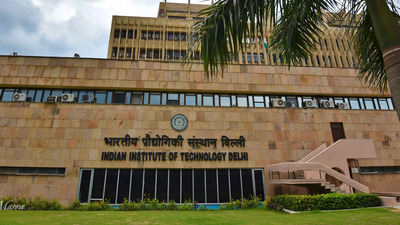
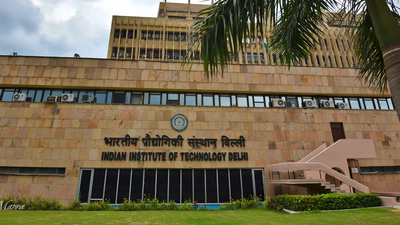
For a generation entering the workforce today, startups are no longer a side road taken after corporate life. They are often the starting point. Young professionals are drawn by speed, responsibility and the chance to see the results of their work quickly — sometimes within weeks rather than years. In an economy defined by rapid technological change, the appeal is obvious: startups promise learning curves that are steep, unforgiving and, for many, deeply rewarding.This cultural shift did not happen in isolation. It has been shaped by institutions that quietly normalised entrepreneurship long before it became fashionable. IIT Delhi stands out as one such influence. What began decades ago as a handful of alumni testing entrepreneurial waters has grown into one of the most consequential startup ecosystems associated with any academic institution in India, influencing not just founders but how young people think about careers themselves.From Public Sector Roots to Startup MomentumIn its early years, between the 1960s and late 1970s, IIT Delhi largely channelled graduates into the public sector and established industry. Entrepreneurship existed, but at the margins. The first clear signals emerged in the 1980s and 1990s, when alumni-led ventures such as Pine Labs, Mindtree and Indiabulls showed that small, focused teams could build serious businesses.The early 2000s marked a decisive inflection. As IT services and the internet reshaped opportunity, companies like Fractal Analytics demonstrated that data-driven, globally relevant businesses could be built from India. Acceleration followed swiftly. Between 2006 and 2010, startups including Flipkart, Zomato and Policybazaar arrived with scale in mind, backed by improving access to capital and a growing appetite for risk.Evolution of IIT Delhi Alumni Startups
By the mid-2010s, the momentum had broadened. Firms such as Delhivery, Tata 1mg and Blinkit reflected expansion beyond pure technology into logistics, healthcare and consumer infrastructure. Since 2016, policy support and global venture capital inflows have fuelled exponential growth, producing leaders like BharatPe, Groww and Udaan.Startups as Career Classrooms, Not Just Founder StoriesThe scale of the ecosystem today reframes startups as mainstream career destinations. IIT Delhi alumni have founded over 2,600 startups, led by more than 2,000 alumni founders, operating across 35+ countries. Together, these companies are valued at US$178+ billion and have created approximately 4.8 lakh jobs.IIT Delhi Alumni Startups — At a Glance (Jan 2026)
Crucially, many of these roles are not founder positions. Alumni-founded startups have become training grounds for early-career engineers, product managers, data scientists and operators who take on responsibility far earlier than they might in larger organisations. For young professionals, startups function as intensive career classrooms — places where titles matter less than judgment and outcomes.Sector Strength and the Nature of OpportunityFintech leads the ecosystem, accounting for 15% of alumni startups, with firms such as BharatPe, Groww and Pine Labs illustrating how regulatory understanding and platform models enable rapid, capital-efficient scaling. IT and IT services follow at 13%, where global-first companies like Rubrik, Glean and Fractal Analytics combine lean teams with international markets.Top Sectors Powering IIT Delhi Alumni Startups
Education technology, at 11%, reflects a direct engagement with learning and skills, while commerce and marketplace ventures — including Flipkart, Zomato and Udaan — stand out for employment generation and spillover effects across logistics and MSMEs. Healthcare startups, though a smaller share at 8%, endure through longer lifecycles built on trust, compliance and deep expertise.Together, these sectors highlight a range of career outcomes — from high-velocity scaling environments to slower, regulation-heavy businesses offering stability and depth.India-First Roots, Global ReachMost alumni startups remain India-based, with 76.2% of companies operating domestically. Yet global-only ventures, though fewer, deliver disproportionate impact. They account for 11 unicorns and one decacorn, reinforcing the idea that alumni founders — and the teams they build — are increasingly geography-agnostic.Geographic Distribution of Alumni Startups
This flexibility is especially attractive to young professionals whose careers now unfold across borders, markets and time zones.Startup Outcomes by Geography
The Institutional Flywheel — and What Comes NextBehind this growth sits a reinforcing flywheel. Alumni return as mentors, early investors and advisors, while campus-linked incubators and research ecosystems reduce the distance between ideas and execution. The philosophy is simple but enduring: give back, innovate, build enterprises, and measure success by impact.Looking ahead, the centre of gravity is likely to shift further towards deep technology, climate solutions and healthcare — areas where research, patience and interdisciplinary thinking matter more than speed alone. For the next generation, startups will not replace traditional careers, but they will continue to redefine ambition.At IIT Delhi, that redefinition has already taken root — not as a trend, but as a mindset.