






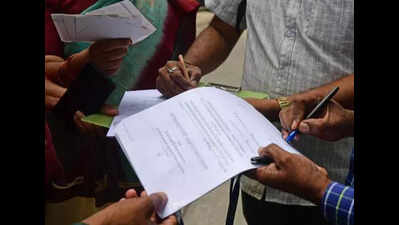
Bengaluru: To offset a nearly 10% shortfall in participation in the socio-educational or caste survey, the Karnataka State Backward Classes Commission (KSBC) has decided to use secondary data available with various govt departments to determine the backwardness and social progress of different communities.The commission achieved 90% enumeration across the state but fell short due to 10–12 lakh people refusing to participate and another 60 lakh being unavailable or out of station during the survey.“We are not really worried about the numbers. We are only worried that people who have been misled would be depriving themselves or members of their own communities of getting an effective report from the commission. But we will certainly have the secondary data which will give us a fairly good idea for identifying which community has advanced how much,” said KSBC chairman Madhusudhan Naik.Officials said secondary data mainly refers to records of govt employees—showing how many people from each community are in public service— which help assess their social and economic progress.Naik hinted that members of forward castes formed the majority of those who refused to take part, allegedly due to misleading political advice. “We still have the data about them. But that may possibly become counterproductive from the thinking process of the people who were supposed to be the leaders and who were supposed to be guiding the people of their own community,” he said.Some officials within the commission, however, believe the role of secondary data will be limited. “While secondary data will definitely be a component that the commission will refer to, that will not have a big impact. For there is a 90% response from citizens and secondary data may not capture the exact picture for the remaining 10%,” said one official.KSBC also faces pressure to outperform the earlier HR Kantharaju Commission report of 2015, which had achieved over a 95% enumeration. However, the population base at the time was only 6 crore and it has gone up to 6.8 crore now, officials said.“The possible concern will be that this enumeration may not be able to reflect a clear growth map of communities and we will have to rely on secondary data for the purpose, as it is always an inverted pyramid with forward castes having negative population growth while the OBCs, SCs, and STs having an increased population growth,” said an official.