




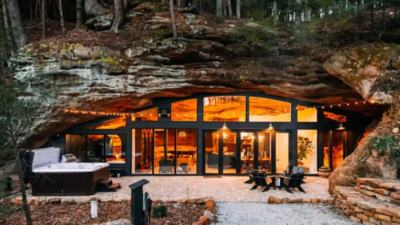
An Ohio engineer’s decision to trade a conventional career for an unconventional hospitality business has turned a wooded property in Hocking Hills into a lucrative vacation rental destination. Bryant Gingerich, who founded Dunlap Hollow with his wife, Amy, transformed an old cottage, a contemporary A-frame and a natural cave into distinctive holiday homes. According to Fortune, which reported on the business in January 2025, the three rentals generated more than $700,000 in annual revenue, with net profits exceeding $350,000. The property listings on Airbnb and the business’s official website offer further insight into how the unusual stays have been developed and marketed.
From a wooded property to a hospitality business
Gingerich’s journey began with a 34-acre parcel in Ohio that offered a combination of rugged terrain, sandstone formations, woodland and natural features. Although he was trained as a mechanical engineer, his interest in construction and design made the land an opportunity to build something beyond his regular professional life.He and Amy acquired the property with financial assistance from family and a local lender. Their first project was an existing cottage that needed extensive renovation before it could welcome guests. The initial rental performed well enough to establish a foundation for the business. That early response encouraged the couple to invest in more ambitious accommodation, eventually creating Dunlap Hollow, a collection of stays designed around the landscape rather than conventional hotel-style rooms.
Three distinctive stays with different appeal
The business now offers three properties, each catering to travellers looking for a different kind of escape. The Cottage is a renovated one-bedroom home with a loft, combining a rustic setting with contemporary comforts. Surrounded by woodland and sandstone cliffs, it provides a smaller, more intimate option for guests visiting the Hocking Hills region.The A-Frame takes a more architectural approach. Designed with large windows and a striking triangular structure, the three-bedroom property accommodates larger groups and includes amenities such as a hot tub, outdoor fire features and access to private hiking trails. Its design has also attracted interest from people looking to recreate a similar home elsewhere.The most distinctive property is The Cave, a roughly 1,500-square-foot residence built into a natural recess in the rock. Despite its unusual setting, the accommodation includes two bedrooms, bathrooms, a fully equipped kitchen, a luxurious bathtub and modern entertainment facilities. Its interiors contrast the surrounding stone with carefully selected furnishings and decorative details.According to the official Dunlap Hollow website, the properties were designed by Bryant and Amy Gingerich, with additional architectural and interior design support for the A-frame and cave. Their combination of natural surroundings and considered interiors has helped distinguish the rentals in a competitive holiday accommodation market.
How social media helped drive demand
Visual appeal has been central to Dunlap Hollow’s growth. Rather than relying exclusively on conventional property listings, the business used social media to reach travellers who discover holiday destinations through photographs and videos.The couple initially promoted the A-Frame through complimentary stays offered to influencers in exchange for exposure. As the properties gained visibility, the business attracted a wider audience and developed a following around its distinctive architecture and woodland setting.The strategy helped turn the rentals into destinations in their own right. The official website now supports direct bookings, while the properties remain listed on Airbnb, where guests can review the accommodation, amenities and overall experience. The business has also found a second source of income through the A-Frame’s design. Demand from people interested in building similar homes led Gingerich to offer architectural drawings and computer-aided design plans for sale. Fortune reported that these plans had generated approximately $220,000 in passive income over three years, adding a digital product business to the rental operation.
Leaving engineering for a more hands-on career
Gingerich left his engineering role in 2020, during the Covid-19 pandemic, as he committed more time to developing Dunlap Hollow. The decision carried financial risk, particularly because the property’s mortgage represented a substantial share of his previous salary. However, the combination of rental income, design work and direct marketing helped establish a business that aligned with his interests in construction, architecture and the outdoors.The financial results reported in January 2025 reflected the performance of the three-property operation at that time, rather than a guaranteed outcome for similar ventures. The costs of purchasing land, renovating buildings, constructing unusual accommodation and maintaining short-term rentals can vary significantly. Dunlap Hollow’s growth illustrates how a distinctive property, thoughtful design and a strong digital presence can work together in the holiday rental market. Its success also highlights a broader opportunity for entrepreneurs to build hospitality businesses around experiences that conventional accommodation may struggle to replicate.