





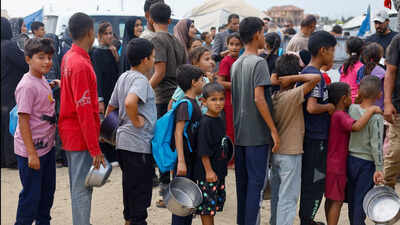
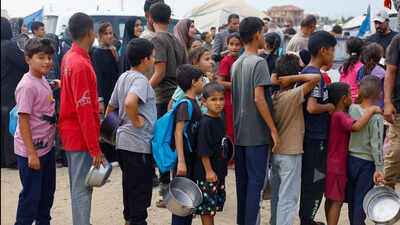
The World Food Programme (WFP) has announced major cuts to food assistance in Gaza due to funding shortages, reducing the number of people it supports from 1.6 million to 1.1 million as winter approaches and families continue to struggle with hunger.The UN agency said it would reduce daily hot meals provided through community kitchens from 250,000 to 150,000. Families in hard-to-reach areas, including those near the Yellow Line marking Israel’s area of military control, will receive meals every other day instead of daily, BBC reported.The number of people receiving flour bags and food ration boxes will also fall from 1.1 million to 600,000 each month. The reductions come after cash assistance for around half a million people had already been cut since July.Shaun Hughes, the WFP’s Palestine director, said the cuts were driven by financial constraints rather than a decline in humanitarian needs or difficulties accessing affected communities.Palestinians remain worriedNearly all of Gaza’s 2.1 million residents remain displaced, and around two-thirds depend on food aid to survive. The WFP said it had received less than half the funding for its Palestinian operations in 2026 compared with previous years and urgently needed $450 million to maintain critical operations over the next six months.The funding crisis comes amid continuing humanitarian hardship despite a ceasefire between Israel and Hamas agreed a year ago. Violence, including near-daily Israeli strikes, has continued, while reconstruction and recovery remain limited.Although food markets are now better stocked, widespread unemployment has left many families unable to afford supplies. More than 80% of people in Gaza are unemployed, according to the report.Families receiving assistance told the BBC that existing rations were already insufficient. Dalal al-Dahdouh, who lives with her family of eight in the ruins of their home in Gaza City, said the flour and food boxes provided by the WFP were not enough and warned that further cuts would have a major impact.Displaced mother-of-five Mervat al-Satari described the reductions as a “disaster”, saying her family sometimes relied on community kitchen meals to eat. Other residents said the portions were already too small to feed their families.