







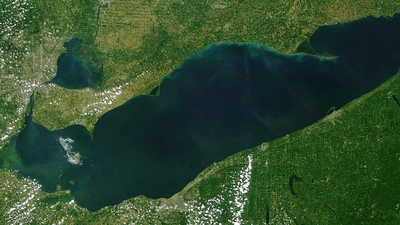
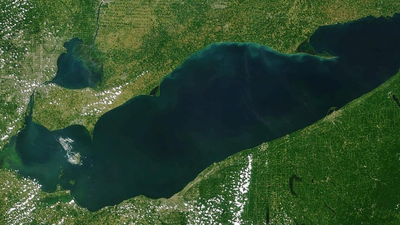
A restored 25-acre coastal wetland on the southern shore of western Lake Erie was used continuously by millions of aquatic animals after it was reconnected to nearby waterways, according to a four-year acoustic monitoring study led by researchers at the United States Geological Survey (USGS). The scientific assessment, published in the journal Aquatic Ecosystem Health & Management, tracked aquatic movement across 2,022 hours of high-resolution sonar monitoring between 2011 and 2014. During the study, imaging equipment recorded 3,436,118 individual fish detections entering and leaving the newly reopened wetland pool. The data provides clear evidence of how aquatic species use restored coastal habitats in the Great Lakes region. Historically, industrial activity, farming and dike construction cut off many inland marshes from the open lake.
Acoustic tracking reveals continuous usage
To measure the success of reconnecting the habitat without disturbing the fish, scientists used advanced acoustic sonar at a passage connecting the 10-hectare (25-acre) wetland pool to Crane Creek within Ohio’s Ottawa National Wildlife Refuge. Traditional methods, including visual counts and 24-hour trap netting, can miss short-term changes in fish movement, especially in muddy and cloudy water. High-resolution sound waves allowed researchers to record underwater activity continuously without depending on light or physical nets. The data showed that fish used the newly reconnected habitat throughout the day and night. Hourly counts ranged from just 3 fish during periods of low activity to 9,353 fish in a single hour. The monitoring work included 56 separate deployment cycles over the four-year study. Of the 3.44 million recorded detections, movement was almost evenly divided. Researchers tracked 1,696,447 fish moving out of the wetland towards Crane Creek, while 1,739,671 fish moved into the wetland pool. The highest activity was recorded during the first monitoring year in 2011, when researchers recorded more than 1.52 million fish detections. Although numbers fell in later years, use remained high, with 973,453 detections in 2012, 511,905 in 2013 and 429,443 in 2014.
Seasonal and daily activity shifts
The research team, led by USGS ecologist Kurt P. Kowalski and co-authors Alexandra A. Bozimowski, McKenzie K.H. Smith, Michael R. Eggleston, Maxwell F. Ramsay and Holly J. Eschenburg, found clear patterns in when fish entered and left the marsh. “Data collected over four years (2011-2014) indicated that the 10 ha wetland was continuously utilized by millions of fish, with discernible fluctuations in usage patterns observed on both daily and annual scales,” the research team explained in the USGS report. The study examined 1,002 hours of daytime data, 529 hours of nighttime data and 491 hours recorded during dawn and dusk. Fish movements increased during certain seasons and under particular light conditions. This showed that fish from lakes, rivers and wetlands regularly use restored coastal marshes for feeding, spawning and shelter. The findings help fill an important gap in Great Lakes conservation research. Millions of dollars are spent each year restoring damaged coastal areas, but it has often been difficult to determine whether aquatic species actually use these reconnected habitats because of limits in traditional sampling methods.
Implications for Great Lakes management
Coastal wetlands in the Laurentian Great Lakes are important nurseries for wildlife, providing shelter and feeding areas for dozens of native fish species. Reconnecting isolated pools to natural water flows is a major goal for environmental managers across the region. The information from acoustic sonar could help wildlife authorities plan future maintenance and construction work. By knowing when fish activity naturally falls, conservation agencies can schedule disruptive activities such as dredging or water-level control during periods when fewer fish are present, reducing ecological damage. “These insights add to our understanding of how fish assemblages respond to restored coastal wetland habitats and can inform management decisions that may impact fish access,” the authors stated in their research findings. “Additional study of short-term fish movements using high-resolution sonar and other technologies will reveal patterns that may enhance the effectiveness of restoration and management efforts in Great Lakes coastal wetlands.” The study is an important step in showing the ecological value of Great Lakes wetland restoration. It demonstrates that when old barriers to fish movement are removed, native fish populations can quickly return to restored habitats and use them as part of their natural life cycles.