







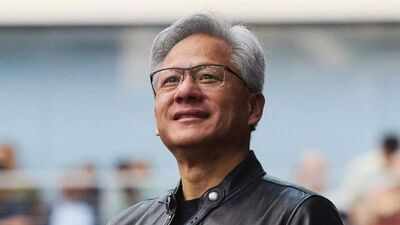
Jensen Huang has pushed back on a proposal from Bill Gates to tax robots and AI tokens. The Nvidia CEO has argued that his own approach to sharing the wealth generated by the AI boom would look different from what the Microsoft co-founder has suggested. In an interview with Fox Business’s The Claman Countdown, Huang said: “I love the heck out of Bill … but I don’t see what he sees. I see something very, very different. And so my remedies will be a little different.”This comes after Gates published an essay this week, titled “The turbulent AI era is here. The choices we make now are critical.” In it, Gates wrote: “Right now, if you’re an employer and you hire someone, you pay payroll taxes on their earnings. But if you buy a robot, you can usually write it off right away as a business expense. The tax system nudges you toward replacing people with machines.”Gates argued that this imbalance in the tax code could accelerate the pace at which companies replace workers with machines. This isn’t Gates’ first attempt to float the robot tax idea; he originally raised the concept in 2017, when economists broadly dismissed it as essentially a tax on productivity gains.Gates has suggested that governments will need the funds, reasoning that if AI takes over human jobs, state revenues from income tax will drop. “A tax would slow the rush away from human labour a little and raise money for retraining and a stronger safety net,” Gates explained.
Jensen Huang says he is open to some taxes, just not this one
“I’m in favour of taxes. And I think that … for anybody who is productive, it’s a great way for us to contribute back to society and the economy. But the fact of the matter is, there are probably lots of different ways to approach this,” Huang added.Huang’s perspective is more positive. He said that while “of course” the nature of jobs would change, as it already has. “I believe … that this will be a net job creator. However, there are going to be many jobs will be disrupted, so we have to be sensible about that. We have to be sensitive about that and be supportive of that,” he added.While Gates suggests that companies could be incentivised to replace humans with robots because of existing fiscal policy, Huang says the historical precedent disagrees: “When companies are more productive, they don’t lay off people, they hire more people. The reason for that is because companies have ambitions … and I would say the vast majority of the world’s companies … have ambitions for growth. When they’re more productive, when they’re more profitable, [it] allows us to invest more and go after more growth. Nonetheless, overall, this is going to be a net job creator at a scale that we have never seen.”A bid for reindustrialisationHuang has previously suggested that skilled, blue-collar workers stand to gain significantly from the AI boom. Trades like plumbers and electricians, Huang has said, will be in high demand as data centers are built across the globe.Speaking this week, the 63-year-old tech titan suggested that the new economic era would be one of reindustrialisation.He explained: “We have lots and lots of white-collar workers, but we’re also going to have a lot of skilled labour. And having a large population of skilled labour and people who build things and make things with their hands is tremendous for the United States. We want to reindustrialise the United States. We want to create more jobs. And all of that’s going to happen right now as we speak with AI.”