









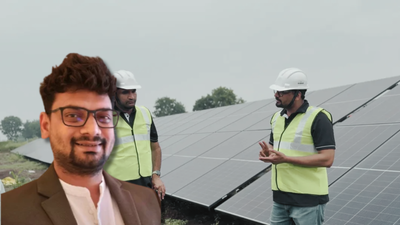
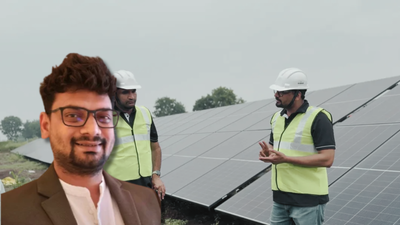
Growing up in a farming family in Khalghat, Madhya Pradesh, Bhavesh Patidar saw how difficult it was for his father to make a steady income from agriculture. Despite spending his entire life working on the farm, his father struggled to achieve financial security. One sentence he often repeated stayed with Bhavesh even after he left home to pursue higher education.“I spent my entire life farming, but never earned a truly good income,” his father would say.Years later, after studying at IIT-BHU and building a career in technology, Bhavesh decided to work on the problem he had witnessed growing up. He founded SolarSure, an Indore-based renewable energy company that helps farmers set up solar power projects on their land and earn an additional income by selling electricity to the grid.As reported by Nishtha Kawrani for The Better India, the company says it has reached more than 50,000 farmers across six states and commissioned over 300 MW of solar capacity since its launch in November 2024. Its projects operate across Madhya Pradesh, Rajasthan, Chhattisgarh, Telangana, Uttar Pradesh and Odisha.The idea is to give farmers another source of income alongside agriculture, which remains dependent on weather conditions, crop prices and other factors beyond their control.
From a farming family to IIT-BHU and the technology sector
Bhavesh grew up in Khalghat, where he closely observed the financial uncertainty faced by farming households. His father’s experience shaped his understanding of the problem long before he began working on renewable energy. Speaking to The Better India’s Nishtha Kawrani, Bhavesh explained why he did not need extensive research to understand the difficulties faced by farmers. “The problem was never something I discovered through research. I had lived it and seen it every day growing up,” he said.He went on to study at IIT-BHU and later entered the technology sector. He also founded an agritech startup called Neurafarms, which was subsequently acquired. His professional experience included working with data-driven systems and climate technology. However, the financial difficulties he had seen in his own family remained a concern.The opportunity to address them came through the government’s PM-KUSUM scheme, which encourages the use of solar energy in agriculture. The programme allows farmers to install solar-powered irrigation pumps and develop grid-connected solar power plants, through which electricity can be supplied to the grid.Instead of limiting solar power to irrigation, Bhavesh became interested in the possibility of helping farmers generate and sell electricity.He first tested the idea on his family’s land. Under the scheme, he set up a 2 MW solar plant and began selling the electricity generated to the grid. According to The Better India, the project offered a more predictable source of income than depending entirely on agricultural earnings.Other farmers in the neighbourhood noticed the installation and began asking him how they could set up similar projects. That experiment eventually led to the launch of SolarSure in November 2024.
How his company helps farmers earn from solar power
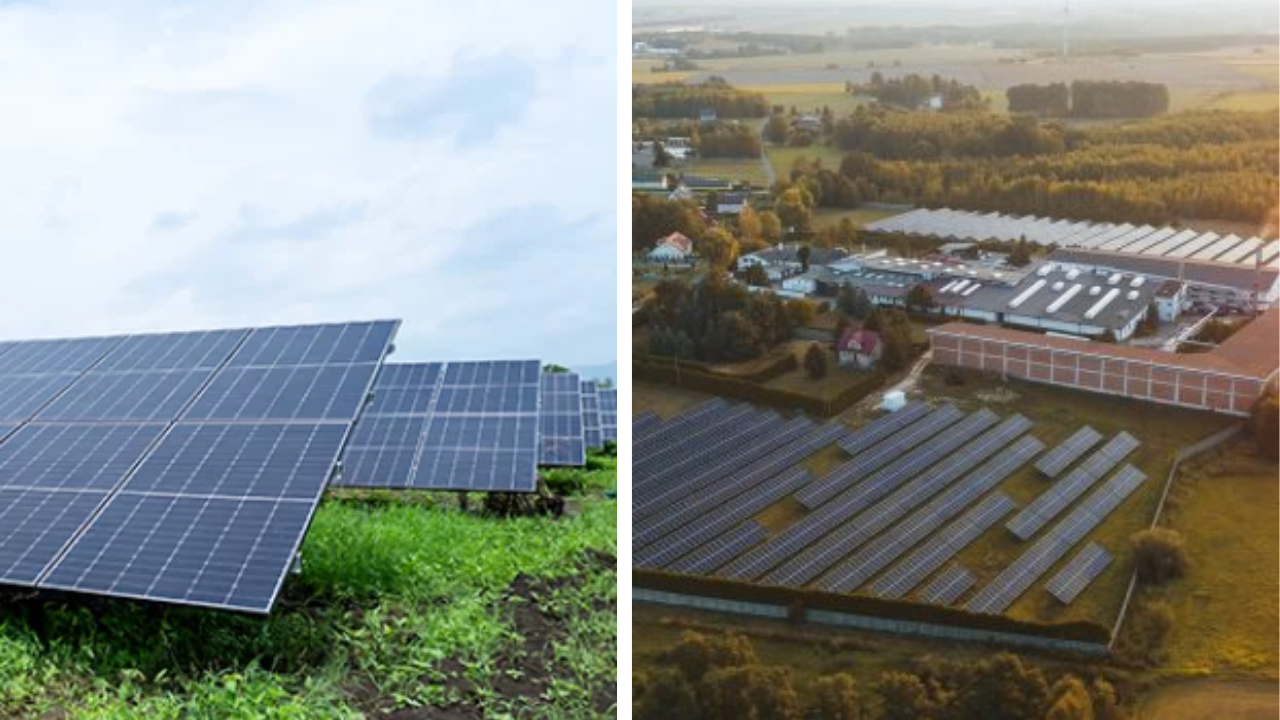
SolarSure also assists farmers with financing, government approvals, installation, maintenance and grid integration.
Founded in November 2024, SolarSure is an engineering, procurement and construction (EPC) company headquartered in Indore. It helps farmers and landowners develop solar power projects on underused or less-fertile agricultural land.According to the company’s official website, its PM-KUSUM services include helping farmers understand the potential of their land, develop solar infrastructure and access renewable energy solutions. Its services cover project design, installation and other technical requirements.SolarSure also assists farmers with financing, government approvals, installation, maintenance and grid integration. The company develops both ground-mounted and rooftop solar systems.Before setting up a project, it uses artificial intelligence and satellite data from agencies such as ISRO and NASA to assess climate risks, wind conditions and the long-term suitability of a location. This helps estimate how effectively a solar installation can generate electricity.The company says it has commissioned more than 300 MW of solar capacity and has a project pipeline exceeding 1.5 GW. It also estimates that farmers participating in its projects have seen income increases of more than 30 per cent.Bhavesh believes the larger opportunity lies in changing how farmers use the energy available to them. He believes solar power can give agricultural families a second income that is less dependent on changing weather conditions and market prices.
The idea behind the business
For Bhavesh, the venture is connected to the financial uncertainty he saw his father face while farming. He wants agricultural families to have an additional source of earnings rather than depend entirely on crop production.SolarSure is a renewable energy infrastructure developer working with farmers, landowners and industries. It is headquartered in Indore and lists operations in Madhya Pradesh, Rajasthan, Gujarat, Uttar Pradesh, Chhattisgarh, Maharashtra and Telangana. The company says its work combines engineering and technology to expand access to solar energy.For Bhavesh, however, the purpose goes beyond installing solar panels. He wants farmers to be able to use their land and available sunlight to generate electricity and improve their financial security.