







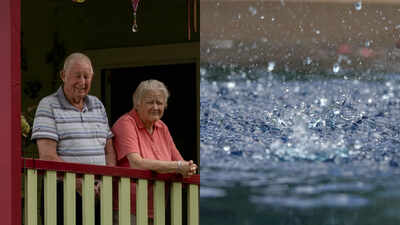
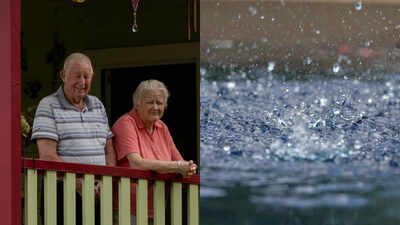
For more than six decades, Ernie and Merrillyn Cole have made looking at the skies part of their daily routine. From their home in Victoria’s Mitta Mitta Valley, the Australian couple have diligently monitored local weather conditions, preserving a record that has become an important resource for the region. At 86 and 82, they want to pass the baton to technology so they can travel and continue their incredible weather recording legacy.As reported by ABC News and Lifestyle News, the couple are appealing to Australia’s Bureau of Meteorology (BOM) to install an automatic weather station at their property, replacing the manual observations they have maintained since 1963.
A family routine that became a lifelong commitment
The Coles arrived in the Mitta Mitta Valley in north-east Victoria in 1963, when Ernie was employed as a forestry officer with the state government. Part of his responsibilities involved reporting local weather conditions to the BOM using an observation station situated outside their home.However, with early starts required for his work, Merrillyn gradually took over the daily task. The responsibility became part of family life, with her often making the journey to the weather station while looking after their young children.What started as a practical arrangement became a 63-year commitment.The couple sends rainfall data from the same property, continuing a regional weather record from before their time.According to ABC News, Ernie also inherited historical observations from Mitta Mitta’s former postmistress when he assumed responsibility for the station. Since the town’s weather records date to 1915, their data will be archived.
Why maintaining the same location matters
For Ernie, the value of the observations lies not just in their longevity but also in their consistency. He believes measurements must continue from precisely the same location to ensure that future readings remain comparable with historical data.This is particularly important in the Mitta Mitta Valley, where rainfall patterns can differ considerably over relatively short distances.Their neighbour and friend Russell, known locally as Ned Kelly, has also supported the campaign for an automatic weather station. A retired pilot who operates the local airfield, Kelly is familiar with the area’s distinctive microclimate and understands the importance of reliable weather information.As highlighted by ABC News and Lifestyle News, rainfall can vary significantly even between locations separated by just 10 kilometres, with differences of approximately 300 millimetres recorded across the valley.Kelly has also raised concerns about a gradual decline in rainfall over the past century, arguing that consistent local observations are essential for farmers trying to understand changing conditions and plan agricultural activities.
A technology-led solution for a 63-year legacy
The Coles are not looking to abandon their contribution to the community. Instead, they want an automated system that can preserve the accuracy of their observations without requiring their daily presence.Over the years, the BOM’s reporting requirements have also evolved. Merrillyn previously received daily telephone calls to report temperature, wind conditions, frost and fog. However, approximately a year ago, the bureau informed her that routine rainfall calls were no longer necessary unless there was particularly heavy precipitation.Australia’s weather-monitoring network has increasingly embraced automation. The BOM operates more than 650 automatic weather stations nationwide, while approximately 3,000 manual observation sites continue to function. Automated technology has progressively replaced many traditional stations since the 1980s.However, the bureau has not confirmed whether it intends to install a new station at the Coles’ property. According to its response reported by ABC News, there are already two automatic weather stations approximately 39 kilometres away and another automated rain gauge six kilometres from Mitta Mitta. It also indicated that volunteer rainfall observations in the town would continue, with no immediate plans to discontinue them.
Time for a well-earned holiday
Until a permanent solution emerges, the couple intend to continue recording rainfall for as long as they are physically able. When they travel, Kelly steps in to maintain the observations, having even postponed holidays previously to ensure the records are not interrupted.A couple could leave home without cover with an automatic station, allowing them to explore while maintaining data continuity.Lifestyle News and ABC News recounted their experience, highlighting regional volunteer weather observers’ unsung work. Behind the forecasts and figures accessed through everyday weather applications are individuals who have dedicated years to documenting changing environmental conditions.For the Coles, a new automatic weather station would mean more than a technological upgrade. It would ensure that a record begun in 1915, carefully maintained through generations, continues from the very same spot, while finally giving its longest-serving observers the freedom to take a holiday.Images Courtesy: ABC Rural/Annie Brown and istock