






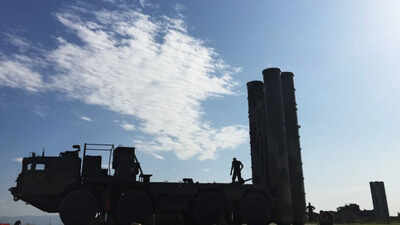
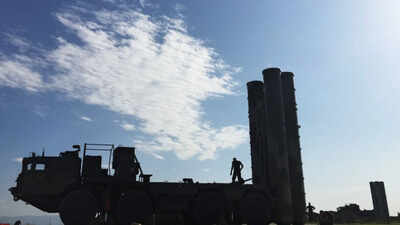
Russia and Iran may be growing closer as military partners, but when it comes to one of Tehran’s biggest defence demands, Moscow has little room to manoeuvre.As Iran seeks Russia’s advanced S-400 air defence system to strengthen its defences against potential US and Israeli attacks, the Kremlin faces a difficult choice between helping its strategic partner and meeting its own military requirements in the war against Ukraine.According to a report by The Telegraph, citing a senior Iranian official, Tehran remains hopeful of securing the S-400 system from Russia. Iranian Supreme Leader Mojtaba Khamenei reportedly sent Mohsen Rezaei, secretary of Iran’s Supreme National Security Council, to Moscow on November 5 with a personal message for Russian President Vladimir Putin, with the air defence system among Tehran’s key demands. The visit was confirmed by Iranian state media and the Kremlin, although no S-400 supply agreement has been announced.The renewed demand comes as Iran looks to rebuild its air defence network following the US-Israeli military campaign, which exposed vulnerabilities in its ability to detect and intercept incoming aerial threats. The S-400 could strengthen Tehran’s ability to track and engage hostile aircraft, drones and missiles, giving it an advanced layer of protection against potential future attacks.The S-400 Triumf is a Russian-made long-range surface-to-air missile defence system developed by Almaz-Antey.Designed to detect, track and intercept multiple aerial threats, including fighter jets, strategic bombers, cruise missiles and certain ballistic missiles, it can engage targets at ranges of up to 400 km, depending on the interceptor missile used. The system combines advanced radar, command-and-control units and mobile missile launchers to provide layered air defence against incoming threats.While the S-400 deal remains uncertain, Russia has continued to expand its military cooperation with Iran through other weapons and defence equipment. According to an investigation by the Financial Times, based on previously undisclosed Russian defence-industry documents, Moscow agreed to supply Tehran with 90 launchers for its LMUR precision-guided air-to-ground missiles, also known as Izdeliye 305. The contract, identified by the code name K-10, was included in a May 2024 production schedule prepared by Russian missile manufacturer Vympel.Why Russia cannot supply the S-400 to IranRussia’s biggest problem is that it needs the S-400 systems for its own defence, even as its ability to manufacture additional units faces mounting pressure from the war in Ukraine.Ukrainian drone and missile attacks have repeatedly targeted Russian oil refineries, military installations and critical infrastructure, forcing Moscow to retain its air defence systems to protect its own territory. Defence Express points to an August Ukrainian strike on an S-400 system in Gelendzhik as an example of how these systems are themselves becoming targets.The challenge, however, extends beyond the availability of existing systems. Russia also faces difficulties in expanding S-400 production because the system depends on a complex network of components, including radars, command posts, launchers, interceptor missiles and supporting equipment.According to Defence Express, several critical components rely on foreign technology, particularly microelectronics, making production vulnerable to Western sanctions and supply-chain disruptions.One example is the use of RO4003C high-frequency laminates manufactured by US-based Rogers Corporation in the S-400 radar system. The production of missile navigation modules also requires inertial systems equipped with French-made laser gyroscopes. These dependencies complicate Russia’s efforts to manufacture additional systems while maintaining supplies for its own armed forces.The production network has also come under pressure from Ukrainian attacks. Defence Express reports that Ukrainian drones have repeatedly targeted facilities operated by Almaz-Antey, the Russian defence conglomerate responsible for manufacturing air defence systems. It also points to the dependence of some machine tools used in production on Western components and software, creating further vulnerabilities for the manufacturing process.Even if Moscow decides to manufacture new S-400 systems specifically for Iran, the delivery process could take years. Defence Express cites Russia’s agreement with Turkey, under which two divisional sets comprising four S-400 batteries took 31 months to deliver from the signing of the contract to the delivery of components.