






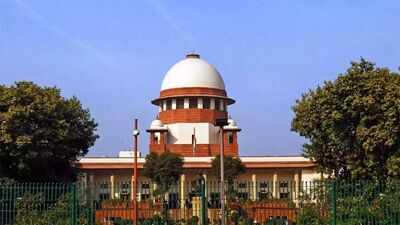
The Supreme Court has modified its controversial three-year practice requirement for entry-level judicial service, reducing the mandatory prior legal practice to one year for future recruitment. At the same time, candidates selected as Civil Judges (Junior Division) will have to undergo one year of intensive training followed by one year of structured law clerkship as reported by the Live Law.The decision marks a significant recalibration of the Court’s May 2025 judgment, which had restored the requirement of three years of legal practice before law graduates could appear for Civil Judge (Junior Division) examinations. The Court has, however, retained the principle that some practical exposure to the legal profession is necessary before a candidate enters the judiciary.The ruling was delivered by a bench comprising Chief Justice of India Surya Kant, Justice August George Masih and Justice K Vinod Chandran, who dissented.
Three-year rule reduced to one year
The Supreme Court has refused to reopen the basic reasoning behind its May 2025 judgment but has substantially altered how the practice requirement will operate.For judicial recruitment notifications issued on or after April 1, 2027, candidates will need to have at least one year of active legal practice before appearing for the Civil Judge (Junior Division) examination. The practice will have to be verified through a certificate, with the Court requiring records of a candidate’s presence and participation in effective judicial proceedings.LiveLaw reported that the Chief Justice emphasised that the Court continued to accept the underlying need for professional exposure before a person assumes judicial office. However, the requirement of prior experience must have a reasonable connection with its objective and should not impose disproportionate hardship on aspiring judicial officers.This effectively replaces the three-year threshold with a shorter but more structured route into judicial service.
Transitional relief for law graduates till March 2027
The Court has also created a transition arrangement for candidates caught between the old and new regimes.Law graduates applying under judicial examination notifications issued between May 20, 2025 and March 31, 2027 will be permitted to appear without having completed three years of practice. They will be treated as having completed one year of active practice for the purpose of their applications and will not have to submit a practice certificate for that deemed period.The relief is aimed at candidates who had planned their careers under the earlier system and were suddenly confronted with the restoration of the three-year requirement.The Court observed that the sudden return of the requirement, without a transitional mechanism, had caused hardship to young lawyers and law graduates. LiveLaw quoted the Court as holding that the restoration had “visited hardship” on graduates who had structured their professional lives around the regime that had prevailed for more than two decades.
Selection will not mean immediate regular appointment
The relaxation in pre-examination practice does not mean that selected candidates will immediately enter regular judicial service.Candidates recruited during the transition period will first be designated as Trainee Judicial Officers. They will have to complete one year of intensive training at the concerned State Judicial Academy. This will be followed by another year of structured law clerkship.The arrangement is designed to shift part of the professional exposure requirement from the period before recruitment to a supervised period after selection.During the academy training, trainees will receive emoluments equivalent to half the gross remuneration of a Judicial Magistrate First Class. During the subsequent clerkship, they will receive the emoluments applicable during their judicial academy training.
Two-stage clerkship to give selected candidates courtroom exposure
The post-selection clerkship will itself be divided into two six-month phases. The first six months will be spent working as a law clerk under the supervision of the Principal District Judge or members of the Higher Judicial Service. The remaining six months will be served under the supervision of sitting judges of the concerned High Court.At the end of the clerkship, the supervising High Court judge will submit a reasoned evaluation assessing the trainee’s progress and suitability. A satisfactory evaluation will pave the way for appointment to the regular judicial post and the accompanying pay and service benefits.The structure therefore places considerable emphasis on supervised practical learning rather than relying entirely on years spent practising at the Bar.
Why the Supreme Court changed course
The dispute arose from the Court’s May 2025 decision restoring the three-year practice requirement for direct recruitment to the post of Civil Judge (Junior Division).The review petitions argued that the rule could discourage capable law graduates from immediately pursuing judicial service. The concern was particularly sharp because candidates preparing for judicial examinations had already planned their careers under a system that did not require three years of prior practice.During the hearing, counsel opposing the three-year requirement warned of its potential effect on diversity in the judiciary. One submission, quoted by LiveLaw, was: “If you delay by three years, they will not take up this profession. Especially women won’t come, persons with disability will not come.”Senior Advocate Pinky Anand, according to LiveLaw, argued that the focus should instead be placed on strengthening judicial training after recruitment. She also called for continuing legal education and a more uniform training framework across the country, rather than relying on differing standards followed by individual State Judicial Academies.
Court retains the idea of practical experience
The judgment does not abandon the principle that future judges need exposure to the legal profession. Instead, the Supreme Court has attempted to balance two competing concerns: ensuring that young judicial officers understand the realities of legal practice while avoiding an unnecessarily long barrier between graduation and entry into judicial service.The Court’s approach effectively recognises that practical competence can be developed through a combination of limited prior practice and intensive supervised training after selection.For candidates appearing under the post-April 2027 regime, the route will therefore involve one year of active practice before the examination, one year of judicial academy training after selection and another year of structured clerkship.
Arrangement can be reviewed after three years
The Supreme Court has made it clear that the new framework is not necessarily permanent. The Chief Justice observed that the impact of the arrangement should be assessed after it has operated for a reasonable period. The Court has indicated that three years would provide sufficient institutional experience to determine whether the new system is meeting its intended objective.The Court may then revisit the framework based on relevant indicators and its actual functioning on the ground.Justice K Vinod Chandran, however, disagreed with the majority. He recorded his dissent and held that the review petitions should be dismissed.
What the ruling means for aspiring judges
For law graduates aspiring to become Civil Judges, the ruling significantly changes the immediate pathway to judicial service.Those covered by the transition window up to March 31, 2027, will not be required to demonstrate prior practice before appearing for the examination. Those entering the system after April 1, 2027, will face a one-year practice requirement instead of the earlier three-year threshold.But the reduced pre-entry requirement comes with a clear trade-off: Successful candidates will have to undergo substantial supervised professional training after selection.The Supreme Court has thus stopped short of eliminating practical experience from the judicial recruitment process. Instead, it has redesigned the route through which that experience is acquired, reducing the time candidates must spend at the Bar before the examination while strengthening structured exposure after selection.The decision could therefore have a direct bearing on thousands of young law graduates who view the lower judiciary as their first professional destination. It also places a greater responsibility on State Judicial Academies and the higher judiciary to ensure that the promised training and clerkship are rigorous, consistent, and capable of preparing new judicial officers for the demands of the courtroom.