





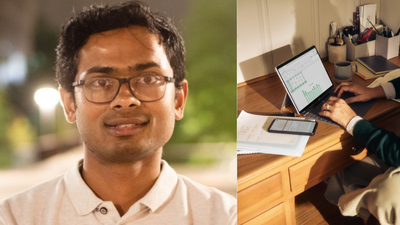
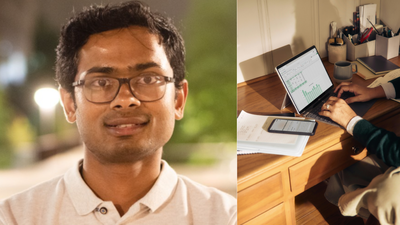
Satyam Kumar’s story begins in a farming household in Bihar and leads, more than two decades later, to a research role at Texas Instruments in the United States. In between lies a path that runs through the Indian Institute of Technology (IIT) Kanpur, a PhD at The University of Texas at Austin, and a research internship at Apple. It is a journey that has been circulating widely online, and the details behind it are worth laying out properly.
From Bakhorapur to IIT Kanpur
Kumar was born on 20 July 1999 in Bakhorapur village in Bihar’s Buxar district. He grew up around farming, in a setting far removed from the country’s engineering hubs. He first drew national attention after reports said he had cracked the Joint Entrance Examination (JEE) for the Indian Institutes of Technology at the age of 13, making him one of the youngest students associated with India’s most competitive engineering entrance exam.He went on to join IIT Kanpur, where he pursued a B.Tech-M.Tech Dual Degree in Electrical Engineering from 2013 to 2018. His time there was not limited to coursework. According to his LinkedIn profile, he was part of the Intelligent System and Sleep Laboratory at IIT Kanpur and a member of the institute’s Robotics Club, an early indication of his interest in applied, hands-on research.One project from this period stands out: an amphibian robotics initiative, through which his team placed second runner-up in the ROBOPIRATES competition at Techkriti 2014, IIT Kanpur’s annual technical festival. His undergraduate years also brought two notable opportunities. In 2016, he received the Charpak Scholarship, which took him to France for a research internship. In 2017, he was awarded a Teaching Assistant Fellowship by the Government of India. Together, these mark a steady progression from exam success to structured, sustained research work.
A PhD at UT Austin, built around the brain and machine learning
In 2019, Kumar moved to the United States to begin a PhD in Electrical and Computer Engineering at The University of Texas at Austin. His doctoral research continued for five years, and he defended his thesis on 24 September 2024.His work sat at the intersection of machine learning and brain-computer interfaces (BCIs), a field concerned with decoding brain signals to control external devices. BCIs hold particular promise in rehabilitation and assistive technology, where they can help restore movement or communication for people with severe physical limitations.Kumar’s research addressed some of the practical problems that keep BCIs confined to controlled lab settings.
The Apple connection
Between May and August 2023, he worked as a Machine Learning Intern with the company’s Siri Perception team in the Greater Seattle Area.
Where he is now
As of October 2024, Kumar is a Machine Learning Systems Research Engineer at Texas Instruments, based in the Dallas-Fort Worth Metroplex. His work there spans edge artificial intelligence (AI), graph compilers, machine learning (ML) accelerators, and kernel optimisation. It marks a shift from academic, neuroscience-adjacent research toward building ML systems that run efficiently at scale, an equally demanding but distinctly different kind of engineering challenge.Taken together, Kumar’s path from a village in Buxar to a doctoral thesis on brain-computer interfaces and a systems role at a major semiconductor company reflects a decade and a half of consistent, specialised work, one that moved steadily from early academic recognition to genuinely original research.