







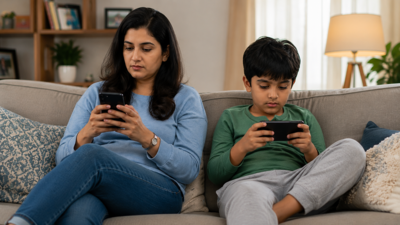
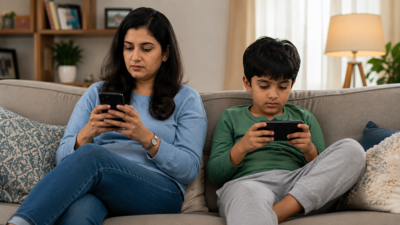
Parents’ excessive attachment to smartphones and screens could have long-term developmental and psychological consequences for their children, a new study claims. Researchers found that children who perceive their guardians’ as distracted by devices are more likely to experience “insecure attachment,” which may affect their confidence, relationships and emotional development later in life.Researchers said caregivers’ device habits can contribute to insecure attachment, making children’s future relationships more anxious and avoidant. According to psychologist and fellow with the American Psychological Association, Don Grant, insecure attachment may lead to lower self-confidence, difficulty building close relationships and reluctance to take risks necessary for success. Grant said,”It could really unfavorably impact their attachment security, which they will carry for life.”The findings, published last month in the peer-reviewed journal Frontiers in Psychology, are based on a survey of 600 US adolescents aged 12 to 17. According to the study, many participants reported feeling ignored or marginalised when their parents were occupied with their phones during interactions.
Study shifts focus to parents’ screen habits
While concerns over children’s social media use have received significant attention in recent years, the researchers said the effects of parents’ excessive screen use have been studied far less.Grant said the research is among the more comprehensive studies examining how children perceive their caregivers’ technology use and how it influences the parent-child relationship.“We know that they got the kids,” Grant said, alluding to the social media companies found liable for designing their platforms to keep young users hooked. “Bravo, you got us too,” he said of parents. “We were not immune to the psychological motivations and manipulations.”The findings also add to a growing body of research on “technoference”, which is the disruption caused when people use digital devices during face-to-face interactions. Previous studies have explored its impact on adult relationships, while the new research examines its effect on children and adolescents.
Parents and children view screen distraction differently
The study comes as surveys indicate that parents and children often perceive screen-related distractions differently.According to 2024 data from the Pew Research Center, nearly half of US teenagers said their parents are “at least sometimes distracted” by their phones during conversations. In contrast, fewer parents acknowledged that this was a frequent issue. Earlier Pew Research Center data from 2020 also found that 68% of parents said their phones “at least sometimes” interfere with quality family time.“I’ve had parents who thought they were the greatest parents in the world saying, ‘I was at every ballet rehearsal, I was at every softball practice, what are you talking about?’” Grant said. “And the kids will say, ‘Yeah, you were there, but you weren’t. Every time I looked up, you were looking down at your device.’”The research comes as technology companies including Meta, Google’s YouTube, TikTok and Snap continue to face lawsuits alleging that their platforms contribute to harm among adolescents. While much of the public discussion has focused on children’s technology use, the study highlights that parents’ own screen habits may also influence children’s emotional well-being and sense of attachment.“I’ve had parents who thought they were the greatest parents in the world saying, ‘I was at every ballet rehearsal, I was at every softball practice, what are you talking about?’ And the kids will say, ‘Yeah, you were there, but you weren’t. Every time I looked up, you were looking down at your device,’” Grant said. “
Phone distractions have become increasingly common
The study comes as concerns over technology use continue to expand beyond children and teenagers to include parents and caregivers.According to 2024 Pew Research Center data cited by the researchers, nearly half of American teenagers said their parents were “at least sometimes distracted” by a phone during conversations or shared time. When parents were asked about their own behaviour, fewer believed it was a problem.Earlier 2020 Pew Research Center findings also showed that 68% of parents said their phones “at least sometimes” distracted them during family time.The research follows growing scrutiny of technology’s impact on young people, with several social media companies, including Meta, YouTube, TikTok and Snap, facing lawsuits alleging that their platforms contribute to harm among adolescents.