






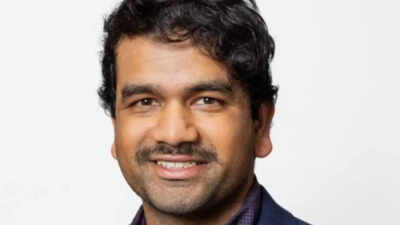
Indian-American engineer Vibhav Altekar has come into the spotlight after a drone boat developed by his company, Saronic Technologies, played a role in a first-of-its-kind US military rescue mission near the Strait of Hormuz.Altekar studied Electrical Engineering at the University of California, Davis. During his time there, he worked on research projects in areas including machine learning, bioinformatics and materials science. He also carried out research at the University of California, San Francisco, where he worked on a micro-fabricated drug delivery device. The project earned recognition at several science competitions, including Intel’s International Science and Engineering Fair.Alongside his studies, Altekar gained industry experience through internships and research roles. He worked at Intel, where he helped develop algorithms for wearable technology, and at Twitter, where he worked on machine-learning projects. He also held roles at companies such as Synthego, Juicero and investment firm 8VC.
From engineer to entrepreneur
After graduating, Altekar joined defence technology company Anduril Industries. He was among the company’s early engineers and worked on a number of programmes involving autonomous systems. One of the projects he contributed to was the Royal Australian Navy’s Ghost Shark drone submarine programme.His experience in autonomous technology eventually led him to co-found Saronic Technologies in Austin, Texas, in 2022. Today, he serves as the company’s Chief Technology Officer.At Saronic, Altekar oversees the development of the software and autonomous systems that power the company’s unmanned vessels. His work spans areas such as navigation, machine learning and command-and-control systems that help vessels operate with limited human intervention.Saronic focuses on autonomous surface vessels, which are boats that can carry out tasks with minimal crew on board. These vessels are designed for missions such as surveillance, logistics and maritime operations.According to the company, Altekar also leads teams working across product development, engineering and special programmes. His role involves bringing together software, artificial intelligence and maritime technology to develop new systems for defence applications.