








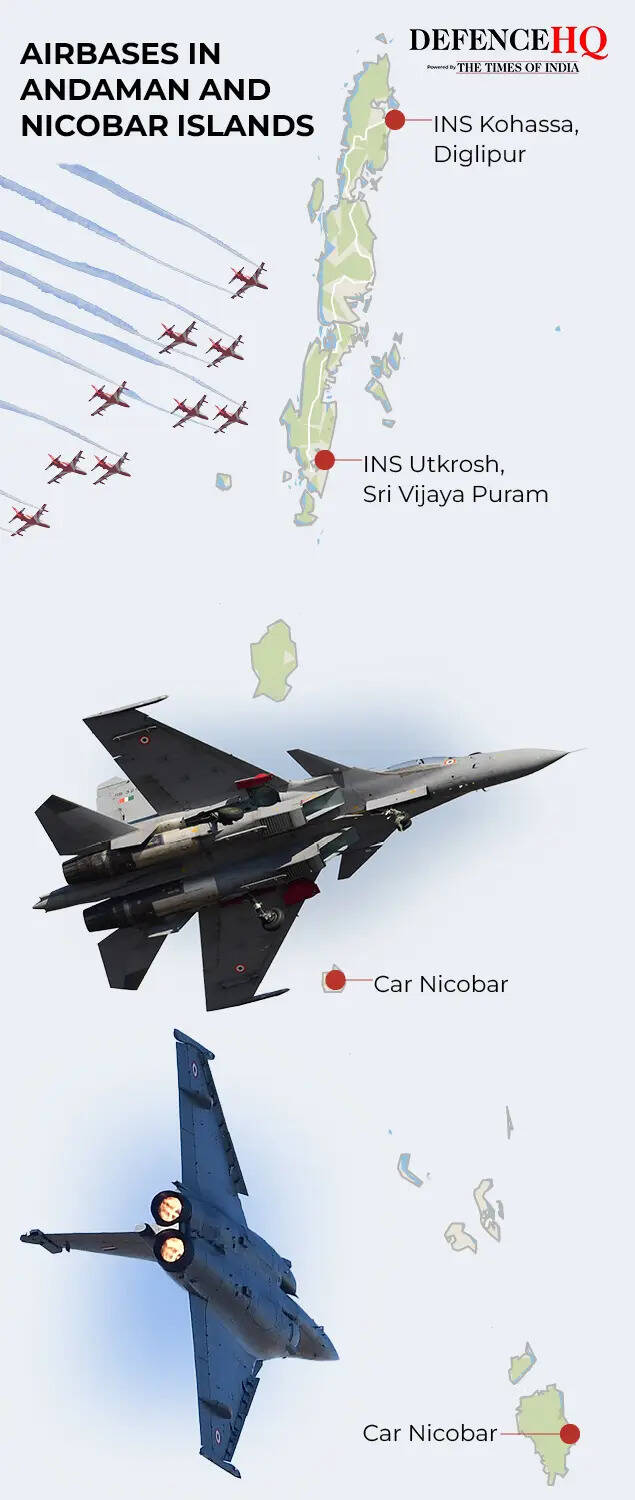
India’s Rs 13,000 crore investment in the Great Nicobar Island to build a dual-use airport and runway marks a critical step in strengthening both civilian connectivity and military readiness at one of the most critical global maritime chokepoints, the Strait of Malacca.This critical waterway is the most commonly used corridor between the Indian and the Pacific Oceans.Strategically located near the Strait of Malacca, the project enhances India’s ability to monitor one of the world’s busiest trade routes, directly impacting China’s energy security and enhancing New Delhi’s leverage in the Indo-Pacific.“Under the Great Nicobar Island development project, India has plans to invest Rs 13,000 crore to build an airport and runway for use by both the Indian Navy and civilians. The project is expected to be completed in five years, and the budget will be shared by both the defence ministry and the ministry of civil aviation,” a source in the defence ministry said.The Great Nicobar Islands development project is central to India’s maritime strategy. Situated just 40 nautical miles from international shipping lanes, the island provides a vantage point over the Strait of Malacca, through which nearly 75–80% of China’s energy imports pass.By establishing an international airport with a naval enclave, India is effectively creating a forward operating base that will expand surveillance reach across critical chokepoints like the Malacca, Sunda and Lombok straits.This dual-use infrastructure, jointly funded by the defence ministry and the ministry of civil aviation, is expected to be completed in five years, reflecting a long-term vision of integrating economic and military objectives.Economically, the project includes plans for a trans-shipment hub at Galathea Bay under the Maritime India Vision 2030.This will reduce India’s dependence on foreign ports such as Colombo, Dubai and Singapore, saving millions in foreign exchange while positioning India as a key player in global container traffic.The development of power plants and townships alongside the airport further underscores the government’s intent to transform Great Nicobar into a sustainable economic hub.For India, this is not just about infrastructure—it is about asserting influence in the Indo-Pacific, where maritime trade and energy flows define strategic competition.From a strategic point of view, the airport will complement the Andaman and Nicobar Command, India’s only tri-services command, which already monitors Chinese naval movements. Improved logistics and communications will improve the effectiveness of forces, thus strengthening deterrence against coercive tactics and improving the forward deployments of the forces.India’s Rs 13,000 crore investment in the Great Nicobar Island to build a dual-use airport and runway marks a critical step in strengthening both civilian connectivity and military readiness at one of the most critical global maritime chokepoints, the Strait of Malacca.This critical waterway is the most commonly used corridor between the Indian and the Pacific Oceans.Strategically located near the Strait of Malacca, the project enhances India’s ability to monitor one of the world’s busiest trade routes, directly impacting China’s energy security and enhancing New Delhi’s leverage in the Indo-Pacific.“Under the Great Nicobar Island development project, India has plans to invest Rs 13,000 crore to build an airport and runway for use by both the Indian Navy and civilians. The project is expected to be completed in five years, and the budget will be shared by both the defence ministry and the ministry of civil aviation,” a source in the defence ministry said.
The Great Nicobar Islands development project is central to India’s maritime strategy. Situated just 40 nautical miles from international shipping lanes, the island provides a vantage point over the Strait of Malacca, through which nearly 75–80% of China’s energy imports pass.
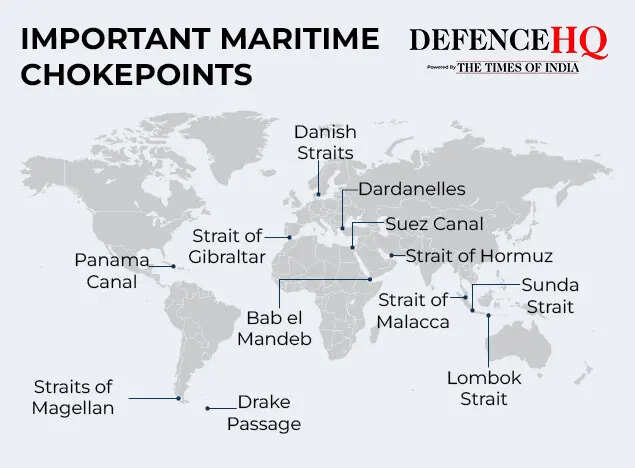
By establishing an international airport with a naval enclave, India is effectively creating a forward operating base that will expand surveillance reach across critical chokepoints like the Malacca, Sunda and Lombok straits.This dual-use infrastructure, jointly funded by the defence ministry and the ministry of civil aviation, is expected to be completed in five years, reflecting a long-term vision of integrating economic and military objectives.Economically, the project includes plans for a trans-shipment hub at Galathea Bay under the Maritime India Vision 2030.This will reduce India’s dependence on foreign ports such as Colombo, Dubai and Singapore, saving millions in foreign exchange while positioning India as a key player in global container traffic.The development of power plants and townships alongside the airport further underscores the government’s intent to transform Great Nicobar into a sustainable economic hub.For India, this is not just about infrastructure—it is about asserting influence in the Indo-Pacific, where maritime trade and energy flows define strategic competition.From a strategic point of view, the airport will complement the Andaman and Nicobar Command, India’s only tri-services command, which already monitors Chinese naval movements. Improved logistics and communications will improve the effectiveness of forces, thus strengthening deterrence against coercive tactics and improving the forward deployments of the forces.