






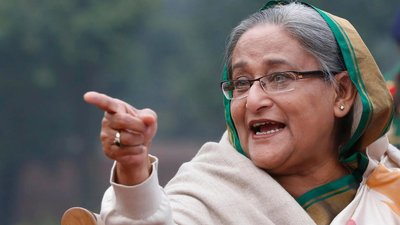
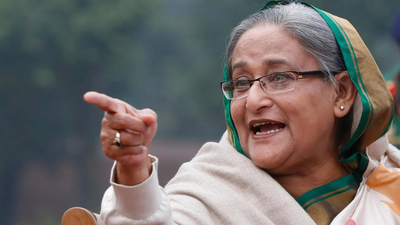
Former Bangladesh Prime Minister Sheikh Hasina was on Monday sentenced to death by the International Crimes Tribunal in Dhaka after the court convicted her of “crimes against humanity” linked to last year’s student-led protests that ultimately triggered the collapse of her Awami League government in the South Asian nation.
Here are the key takeaways from the verdict:
- According to the charge document, the tribunal stated: “…Sheikh Hasina has committed crimes against humanity. Six protesters at Chankharpul were killed using lethal weapons on August 5. By issuing orders and through the inaction of Sheikh Hasina, the then home minister, and the IG of police, the students were killed. These killings happened under the orders and full knowledge of PM Sheikh Hasina. By such acts, they committed crimes against humanity.”
- The court held her responsible for both direct command and failure to prevent the killings during the student unrest.
- The International Crimes Tribunal has sentenced former Bangladesh home minister Asaduzzaman Khan Kamal to death.
- Former Inspector General of Police Chowdhury Abdullah Al-Mamun has been handed a five-year prison term.
The verdict came after months of hearings, during which Hasina — now removed from office and living in exile — was held responsible for ordering a violent crackdown on the student-led movement.Before the judgement by Bangladesh’s International Crimes Tribunal (ICT), Hasina claimed that the court was controlled by her political rivals who were trying to damage the Awami League’s image and hide their own failures.“India is our country’s most important ally and would understandably prefer to deal with a regime in Dhaka that was legitimized by a popular vote. So, I ask our friends in India to continue their call for Yunus (chief adviser) and his cronies to respect democratic norms and not to disenfranchise millions of Bangladeshis,” Hasina told TOI in a written response last week.Hasina, the country’s longest-serving leader, faced several charges after large-scale protests forced her to resign in August 2024.A UN rights office report estimated that up to 1,400 people were killed between July 15 and August 15 during the “July Uprising” after her government ordered a major security action.Hasina and Kamal were later declared fugitives and tried in absentia. Mamun first appeared in court but later became an approver.Chief prosecutor Mohammad Tajul Islam called Hasina the “mastermind and principal architect” behind the attacks on protesters, while her supporters insist the case was politically motivated.Hasina fled the country on the day she stepped down and has since been living in India. Kamal is also believed to be in India. The interim government under Muhammad Yunus has asked India to send Hasina back, but there has been no reply yet.Authorities tightened security nationwide before the verdict. On Sunday, Dhaka Police Commissioner Sheikh Md Sajjat Ali issued shoot-at-sight orders against anyone involved in arson, explosions, or attacks on police or civilians.A day before the verdict, Dhaka saw large protests supporting Hasina. The situation grew tense after several crude bombs exploded across the capital, adding to public fear. No casualties were reported, but security was increased overnight as incidents continued in multiple areas.