






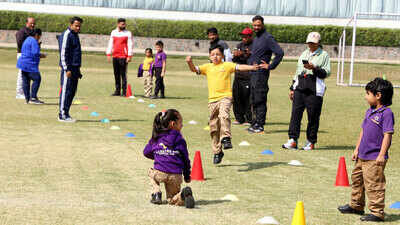
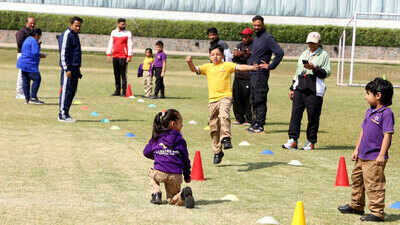
NEW DELHI: The Council for the Indian School Certificate Examinations (CISCE) has launched a large-scale physical health and fitness assessment programme, ACTIVE CISCE, covering more than 31 lakh students across its affiliated schools. The initiative aims to integrate physical fitness into the school system in line with the National Education Policy (NEP) 2020’s emphasis on holistic development.According to CISCE, the programme has reached 31,24,073 students from over 3,300 affiliated schools. Of these, 26,51,199 students have completed their fitness assessments, representing a completion rate of nearly 85%, while another 2,64,622 assessments are currently underway.Programme focuses on age-appropriate fitness assessmentACTIVE CISCE assesses different physical fitness parameters based on students’ age groups. For children in Classes I to III, the programme focuses on fundamental movement, object control and body management skills. For students in Classes IV to XII, it evaluates speed, flexibility, muscular endurance, cardiovascular endurance, abdominal and core strength, and body composition.The Council said it is also developing a separate battery of tests for Children with Special Needs (CWSN). Each participating student receives a Fitness Report Card, which allows schools and parents to monitor health indicators and physical development over time through a dedicated parent login.Speaking about the initiative, Dr. Joseph Emmanuel, Chief Executive and Secretary of CISCE, said: “ACTIVE CISCE represents our commitment to placing health, fitness, and well-being at the heart of school education. Through this initiative, we aim to create a culture of active living, empower students to make healthier choices, and establish a robust national framework for monitoring and promoting physical fitness among young learners”.He added: “Olympic and international sporting champions are identified and nurtured during their school years. Through ACTIVE CISCE, we aim to identify young sporting talent at an early stage and encourage students to pursue sports as a viable career. CISCE schools have already produced icons such as Sania Mirza and Leander Paes. We aspire to nurture the next generation of Olympic champions and actively contribute to the nation’s sporting mission.“States report high participation levelsTo support implementation, CISCE has divided its affiliated schools into five geographical clusters covering states, Union Territories and overseas schools.According to the Council, the Andaman & Nicobar Islands recorded a 100% completion rate. Puducherry, Punjab, Chhattisgarh, Chandigarh, Himachal Pradesh, Tamil Nadu, Gujarat, Odisha and Jharkhand also reported high participation, while Kerala, Andhra Pradesh, Maharashtra, Karnataka, West Bengal and Uttar Pradesh accounted for a significant share of the students assessed.Schools, students and experts welcome initiativeSchool leaders and stakeholders said the programme has strengthened the focus on student health and well-being.Mr. David George Cyril, Principal, St. Jude’s School, Gorakhpur, said: “Health and well-being are fundamental to a child’s overall development. A healthy body nurtures a healthy mind, which in turn supports academic excellence. ACTIVE CISCE has encouraged schools to view physical fitness as an integral component of education. The programme provides valuable insights into student well-being, promotes healthier lifestyles, and helps create a learning environment that prepares students not just for examinations, but for life.“Student participant Amrit Dhankar of St. Joseph’s Academy, Dehradun, said: “The fitness assessment helped me to understand my strengths and areas for improvement. It has motivated me to participate more actively in sports and physical activities.”Dr. Joseph Emmanuel also said the programme is expected to generate national-level benchmarks through the School Health Index and School Fitness Index. “These indicators are expected to support evidence-based interventions, strengthen school health programmes, and contribute to long-term policy development,” he said.According to CISCE, the National Health and Fitness Indices developed through the programme highlight encouraging levels of balance, coordination and muscular endurance among students, while also identifying concerns related to flexibility, endurance, nutrition, body composition and sedentary lifestyles that may require targeted interventions.