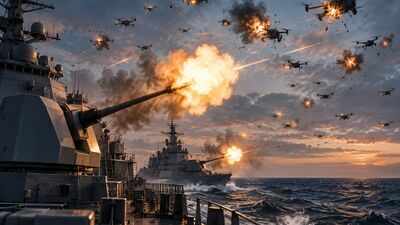






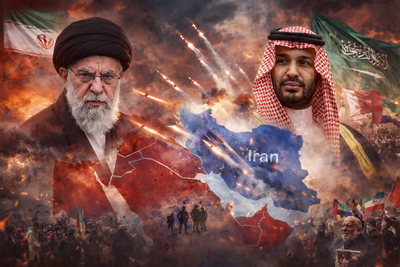
The first signs did not come with a declaration or a warning. They came as flashes in the Gulf sky, as sirens cut through the stillness of cities that had long believed they could stay outside the direct line of fire. For decades, West Asia had learned to live with tension. Proxy battles, covert strikes, deniable operations and quiet escalations had defined the region’s uneasy equilibrium. But what unfolded in recent weeks broke that pattern. Iran did not just respond to the joint strikes by the United States and Israel, it widened the battlefield.
In doing so, it dragged the Gulf into a conflict many believed would remain contained between Tehran, Washington and Tel Aviv. The shock was not limited to the region. Even United States President Donald Trump admitted that the scale and direction of the strikes caught Washington off guard. “They weren’t supposed to go after all these other countries in the Middle East,” Trump said. “Nobody expected that. We were shocked.” He doubled down on the surprise. “Nobody, nobody, no, no, no. The greatest experts, nobody thought they were going to hit,” he said.
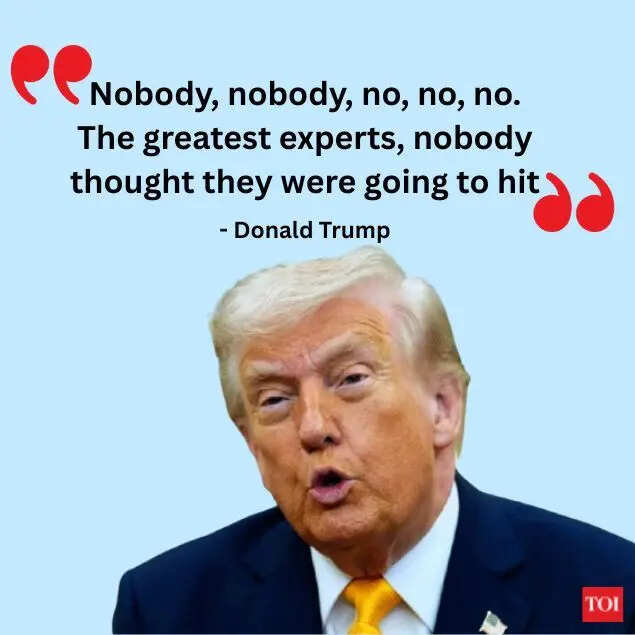
Trump on Iran attacking the Gulf nations
Yet beneath the shock lies a deeper story. One that cannot be reduced to missiles piercing the military targets. One that stretches back centuries and has shaped alliances, rivalries and identities across the region. To understand why Iran chose to strike the Gulf, one must look beyond the immediate triggers of war and into the shadow that has long loomed over West Asia. The divide between Shia and Sunni Islam, often invoked but rarely understood in its full complexity, forms the backdrop against which this escalation is unfolding. This is not a simple tale of religious hostility. It is a story of power, legitimacy, influence and survival.
The origins
The Shia-Sunni divide go back to the year 632. The death of the Prophet Muhammad left behind a question that would shape Islamic history. Who should lead the community. One group believed leadership should be chosen through consensus. They supported Abu Bakr. Another believed authority should remain within the Prophet’s family. They supported Ali. What began as a political disagreement over succession gradually evolved into a broader distinction in religious authority and identity.
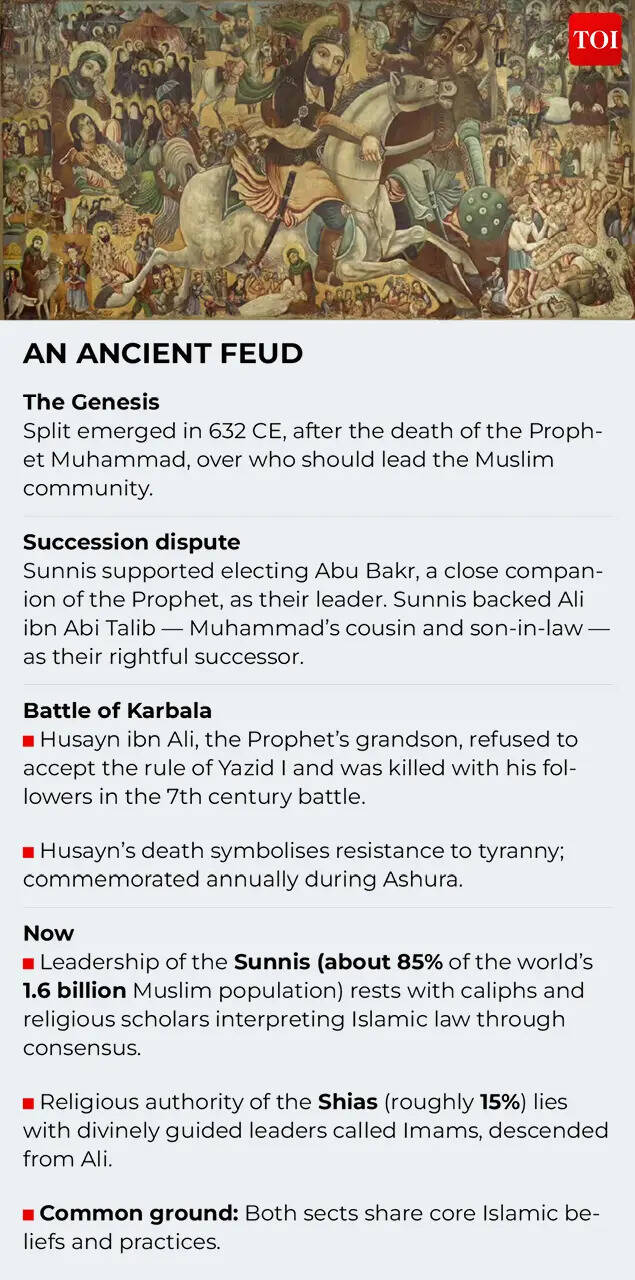
An ancient feud
Over time, these differences hardened. Sunnis came to emphasise collective leadership and scholarly interpretation. Shia Muslims developed the concept of divinely guided Imams. Yet for centuries, these distinctions did not always translate into constant conflict. Communities coexisted, interacted and shared cultural spaces.The transformation of this divide into a geopolitical fault line is a much more recent phenomenon.
The 1979 revolution
The turning point came in 1979 with the Islamic Revolution in Iran. When Iran overthrew its monarchy and established an Islamic republic led by clerics, it did more than change its own political system. It introduced a new ideological force into the region. Tehran positioned itself as a champion of resistance against Western influence and as a voice for Shia communities across borders.This alarmed Sunni-led states, especially Saudi Arabia, which saw itself as a leader of the Sunni world and a custodian of Islamic tradition. The rivalry between Tehran and Riyadh soon became the defining axis of West Asian politics. It played out not through direct confrontation but through proxy conflicts in countries like Iraq, Syria and Yemen.In Iraq, the fall of Saddam Hussein after the US invasion in 2003 shifted power towards Shia groups with ties to Iran. In Syria, Tehran backed Bashar al-Assad while Sunni-majority states supported opposition factions. In Yemen, the rise of the Houthis added another layer to this rivalry. Each conflict deepened mistrust and sharpened sectarian narratives.
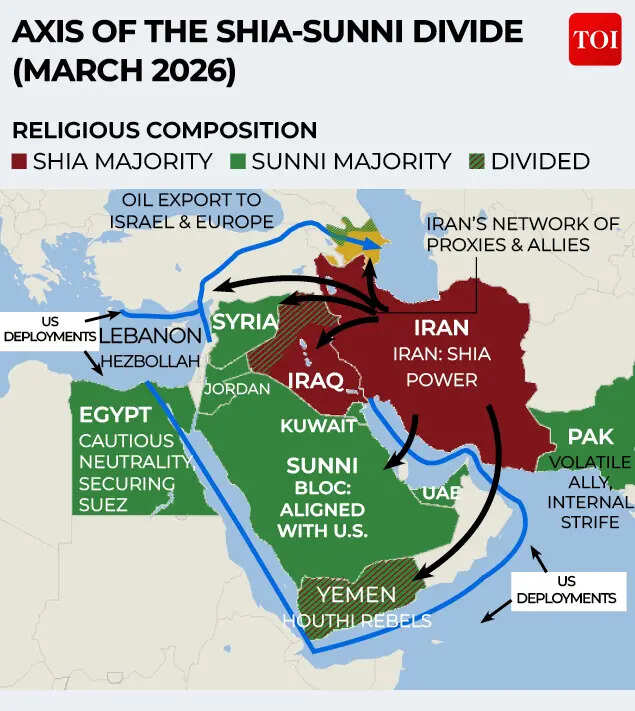
Axis of the Shia-Sunni divide
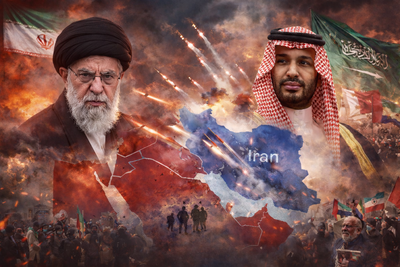
Yet even as these battles raged, there remained an unspoken boundary. The Gulf monarchies, despite their tensions with Iran, were not directly targeted on this scale. That boundary has now been crossed.In the aftermath of Ali Khamenei’s assassination in joint US-Israeli operation, Iran launched thousands of projectiles towards Gulf Cooperation Council (GCC) countries in recent weeks. These strikes have not been symbolic. They have hit infrastructure, disrupted economies and sent a clear message. No state in the region is beyond reach.
Why did Iran take this step?
At one level, the answer lies in deterrence. By expanding the battlefield, Tehran is signalling that any attack on its territory will carry consequences not just for its direct adversaries but for their partners and allies. Gulf states host US military bases, provide logistical support and are deeply integrated into the regional security architecture shaped by Washington. From Iran’s perspective, these countries are not neutral actors. They are part of the strategic environment that enables US and Israeli operations.At another level, the strikes reflect a calculated attempt to reshape the conflict. By targeting energy infrastructure and shipping routes, Iran is leveraging one of the region’s most critical vulnerabilities. The Gulf is the artery through which a significant portion of the world’s oil flows. Disruption here does not remain a regional issue. It becomes a global one.
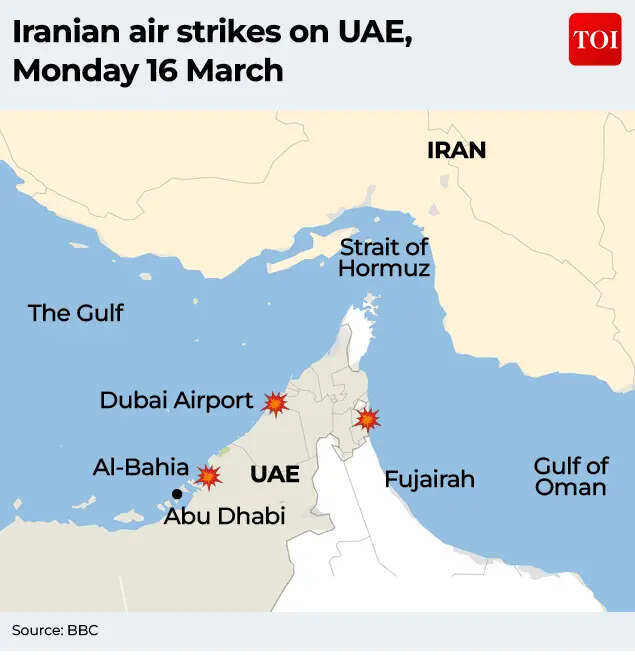
Iran attack on UAE
This is where the shadow war becomes visible.For years, Iran relied on proxies to exert influence. Groups aligned with Tehran operated in Lebanon, Iraq, Syria and Yemen. This allowed Iran to maintain plausible deniability while extending its reach. The current escalation suggests a shift. Tehran is no longer content to operate solely through intermediaries. It is willing to act directly, even if it risks broader confrontation.The sectarian dimension adds another layer to this strategy. By striking Sunni-majority Gulf states, Iran is not just sending a military signal. It is also challenging the political order that has long positioned these states as counterweights to its influence. This does not mean the conflict is purely sectarian. Far from it. The driving forces remain geopolitical.But sectarian identity provides a powerful narrative framework. It shapes perceptions, mobilises support and influences how actions are interpreted.For many in the Gulf, Iran’s actions reinforce long-standing fears. The idea that Tehran seeks to expand its influence across Arab states has been a persistent concern. The strikes on cities, ports and energy facilities are seen not just as acts of retaliation but as part of a broader strategy to destabilise the region.
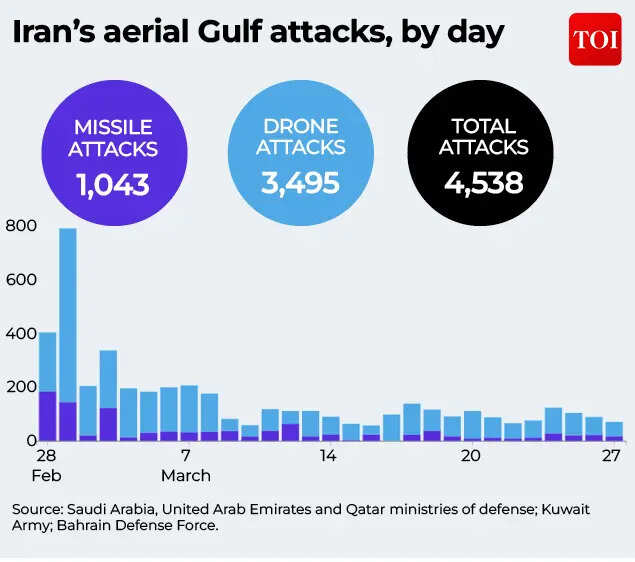
Iran’s aerial Gulf attacks
The economic impact is already visible. Oil markets have reacted with volatility. Infrastructure damage has raised questions about resilience. The possibility of further escalation has forced governments to reconsider their security postures.At the same time, Iran’s actions carry risks for its own position. By targeting neighbouring countries, it risks alienating states that had, at least publicly, maintained a degree of distance from the conflict. It also raises the possibility of a coordinated response.The United States now faces a complex challenge. Restoring stability in the Gulf is not just about military operations. It is about ensuring the flow of global trade, maintaining alliances and preventing the conflict from spiralling further. Support from European allies and partners like Japan reflect the global stakes involved.Yet the situation is far from straightforward. Intelligence assessments had already warned that a wider retaliation was a possibility. The fact that it has materialised raises questions about whether the risks were fully accounted for.Trump’s remarks capture the tension between expectation and reality. Publicly, the strikes may have been framed as surprising. Privately, the possibility of escalation was on the table. This gap between perception and preparedness is now at the heart of the unfolding crisis.Meanwhile, Iran’s military capabilities are drawing increasing attention. The use of ballistic missiles, drones and potentially more advanced systems indicates a level of preparedness that goes beyond reactive defence. Precision targeting suggests pre-planned coordinates and strategic foresight.This has implications that extend beyond the immediate conflict. If Iran continues to develop and deploy such capabilities, it could alter the balance of power not just in West Asia but in relation to Europe and beyond.
Gulf in flames
For the Gulf states, the immediate priority is defence. Interception systems, air defence networks and coordinated responses are being tested in real time. But defence alone may not be enough. The question of retaliation looms.If Gulf countries choose to respond directly, the conflict could enter a new phase. One that moves from a triangular confrontation involving Iran, the US and Israel to a broader regional war.The concept of Ummah, the idea of a unified Muslim community, also comes under strain. Iran’s strikes on Sunni-majority countries challenge this notion. They highlight the extent to which political and strategic considerations have overtaken religious unity.
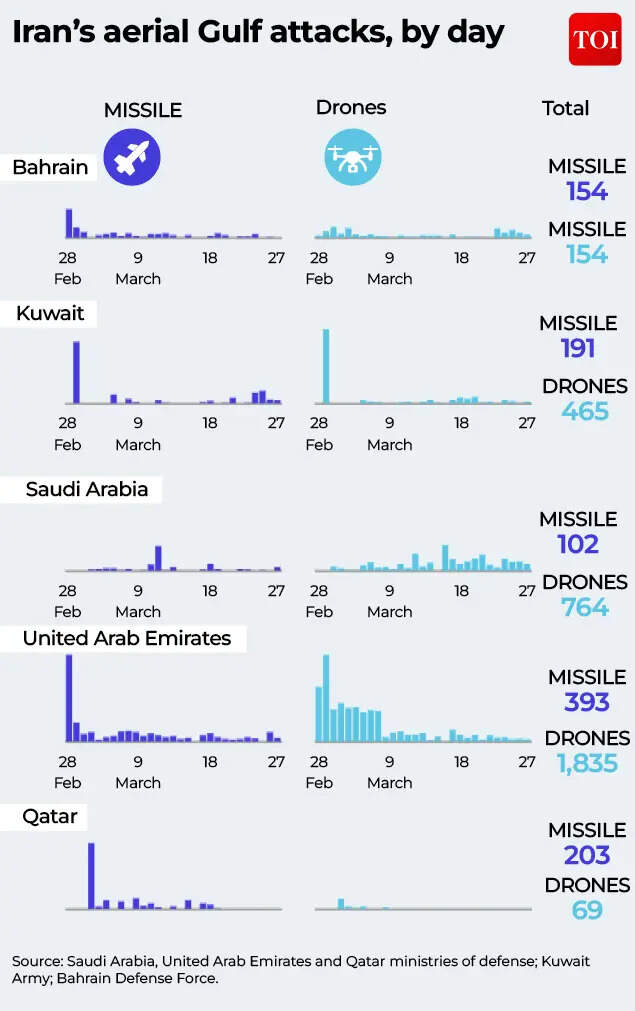
Iran’s serial Gulf attacks
Yet it would be a mistake to see this as a simple breakdown of religious solidarity. The region’s politics have long been shaped by competing interests. Alliances shift. Rivalries evolve. Sectarian identity is one factor among many.What makes the current moment significant is the convergence of these factors. Military escalation, economic disruption, ideological narratives and geopolitical rivalry are all interacting at once.
Shadow war is no longer in shadows
It is unfolding in plain sight, with consequences that are immediate and far-reaching. For West Asia, this could mark a turning point. A moment when long-standing patterns of conflict give way to a more direct and unpredictable phase.For the rest of the world, it is a reminder that regional conflicts do not remain confined. They ripple outward, affecting markets, security and global stability.
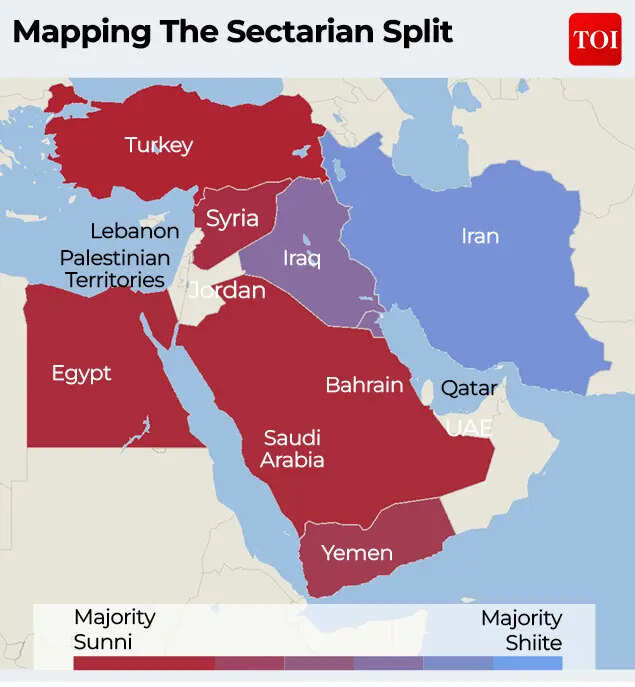
Map of sectarian split
As the situation continues to evolve, one thing is clear. Understanding the Shia-Sunni divide is essential but not sufficient. It provides context, not a complete explanation. The real story lies in how history, identity and power intersect in a region that has long been at the centre of global attention.Iran’s decision to strike the Gulf has brought these dynamics into sharp focus. It has exposed the fragility of existing arrangements and raised questions about what comes next.The answers are not yet clear. But the stakes could not be higher.