



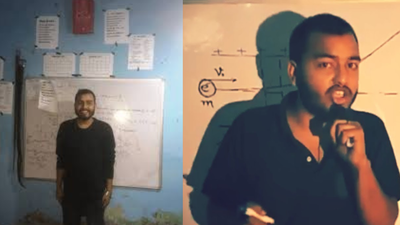
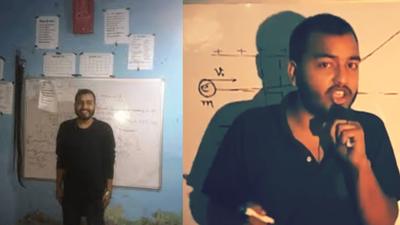
Before every major exam season, a familiar ritual played out across millions of Indian homes. Phones were propped against textbooks, earphones slipped in, and anxious students searched for one name on YouTube. They were not looking for entertainment. They were looking for clarity. Because when this teacher explained physics, something unusual happened: the confusion lifted. Concepts that once felt intimidating suddenly made sense. For many students preparing for competitive exams, his videos became the difference between panic and understanding.Long before the headlines, before investors and billion-dollar valuations, there was simply a teacher from Prayagraj who discovered that the internet could turn a classroom into a national lecture hall. That teacher was Alakh Pandey. And the online channel he started would eventually grow into PhysicsWallah, the education company that helped carry him onto the Forbes 2026 billionaires list. Scroll down to read more.
A classroom before the company
Alakh Pandey’s story is rooted in Prayagraj, Uttar Pradesh, where he grew up and later dropped out of engineering college in his third year. Several reports trace his early working life back to private tutoring and low-paid teaching jobs, long before PhysicsWallah became a brand. The key pivot came in 2016, when he launched PhysicsWallah on YouTube to reach more students with free, accessible lessons. That move would later become the backbone of the company that bears the same name.

The early appeal was not difficult to understand. Pandey’s teaching style was plainspoken, energetic and designed for students who were trying to survive India’s toughest entrance-exam ecosystem without paying premium coaching fees. That positioning mattered. PhysicsWallah did not sell itself as a prestige product; it sold itself as an affordable route to aspiration. Reports note that affordability and trust became central to the company’s growth, especially as larger edtech rivals struggled with layoffs, losses and investor skepticism.
The billion-dollar turn

The money story sharpened in 2024, when PhysicsWallah raised $210 million in a Series B round, and its valuation more than doubled to $2.8 billion. By March 2026, estimates placed Alakh Pandey’s net worth at around $1 billion, marking his debut on the Forbes 2026 Billionaires List at global rank 3332. In other words, the teacher who once built an audience lesson by lesson had crossed into the kind of wealth bracket that only a tiny fraction of founders ever reach.
Why his rise stands out
Part of the fascination is that Pandey’s rise runs against the usual startup script. Many edtech founders chased scale first and profitability later. PhysicsWallah, by contrast, built momentum through low-cost teaching, then widened into a fuller business without losing the frugal tone that made it popular in the first place. Reuters noted that the company had kept its footing while peers such as Byju’s, Unacademy and Vedantu were battling financial stress, layoffs or insolvency-related turmoil. That contrast made PhysicsWallah look less like a bubble and more like a business.

There is also a symbolic edge to the story. Pandey is now not just a wealthy founder but also a reminder of how digital education reshaped the geography of opportunity in India. A student in a small town did not need to move to a metro or pay for a high-end institution to learn from him. A phone screen was enough. That, perhaps, is why his ascent resonates beyond the billionaire list. It is not merely a tale of valuation; it is a tale of access, of language, of a marketplace where one teacher’s style became a scalable product. The biggest irony is that his business was built on making education feel cheaper, simpler and closer to home and that same model has now produced a billionaire. For PhysicsWallah, the road from a YouTube channel to the public markets was measured in classes, not slogans. For Alakh Pandey, it ends, for now, with a Forbes listing that confirms what millions of students already knew: the teacher from Prayagraj was building something far bigger than a classroom.