






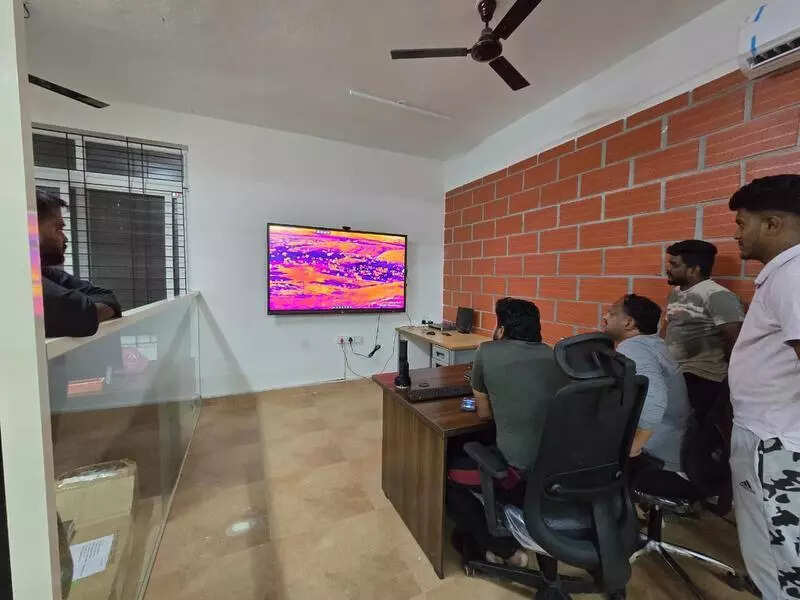
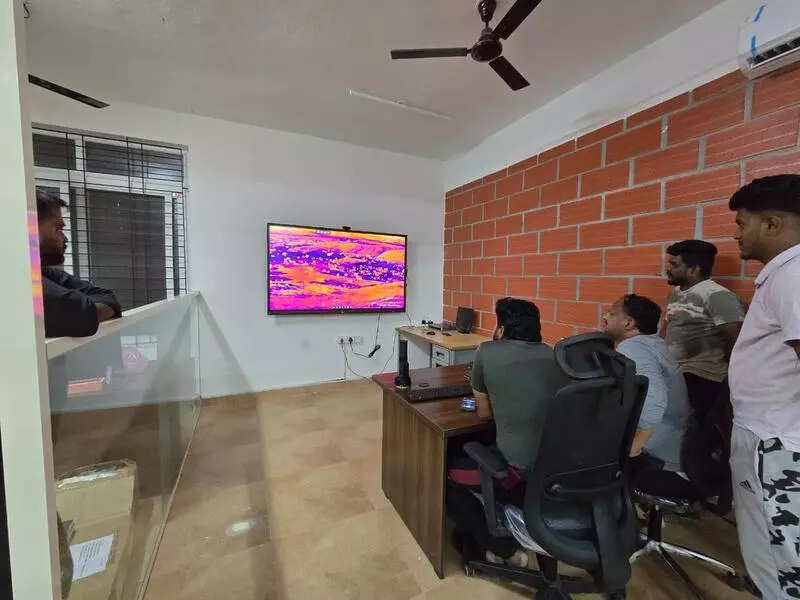
Mysuru: To keep a tab on the movement of wildlife in Bandipur Tiger Reserve and to prevent human-animal conflict, forest officers installed thermal cameras, a first in Karnataka, in the Gopalaswamy Hills forest range. It enables forest protectors to monitor activity up to a range of 20 km during day time and 5 km during night time.Bandipur director S Prabhakaran told TOI that this was the first-of-its-kind initiative in Karnataka and would help foresters greatly in tackling challenges in forests. “To prevent human-elephant conflict, curb poaching, protect forests from fires, and support other conservation initiatives, a modern AI-enabled thermal camera was experimentally installed on the tower of Mahadeshwara camp in Gopalaswamy Hills forest range in Bandipur,” he stated.Following directions from forest minister Eshwar Khandre, thermal camera was installed on an experimental basis. The project was designed as a scientific, technology-driven measure to strengthen real-time monitoring and improve the speed and accuracy of field response, he explained.The key objective of the system is to track the movement of wildlife, especially elephants, up to a distance of 20 km. With thermal imaging and AI support, the camera can detect movement even in low light and challenging weather conditions, enabling continuous surveillance beyond the limits of conventional patrolling.This made it possible for forest staff to observe elephant movement directly from the field director’s office, improving coordination and decision-making.The primary focus is to prevent elephants from entering agricultural fields and damaging crops, thereby reducing conflict between wildlife and local communities. “At the same time, the system supports anti-poaching efforts by improving detection of suspicious movement and enabling quicker deployment of patrol teams. It also contributes to forest fire protection by helping identify early signs of fire or unusual heat signatures, allowing faster action before fires spread,” Prabhakaran explained.Based on its success, the approach is expected to be expanded to other forest areas across Karnataka in the future, where it is likely to provide significant benefits for wildlife protection, community safety, and forest management, he explained.