




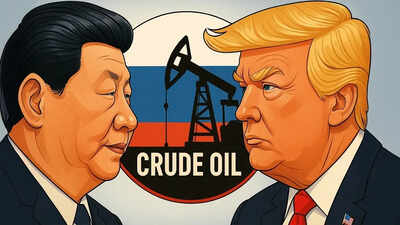
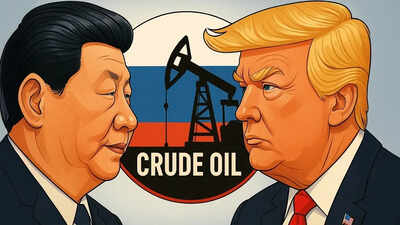
Amid Trump’s sanctions, China’s financial regulator has reportedly instructed the country’s biggest banks to temporarily halt fresh lending to five refineries that have been targeted by recent US sanctions over their links to Iranian crude imports.The United States has stepped up efforts to restrict Iranian oil exports, a major source of revenue for Tehran. Late last month, the Treasury Department’s Office of Foreign Assets Control imposed sanctions on Hengli, targeting one of the most prominent and well-connected companies in China’s large crude-processing sector.Washington also warned banks that they could face secondary sanctions if they continue supporting Chinese private refiners involved in purchasing Iranian crude.The National Financial Regulatory Administration has directed lenders to reassess their exposure and commercial relationships with the affected companies, including Hengli Petrochemical (Dalian) Refinery Co., one of China’s largest privately owned refiners, sources told Bloomberg. While banks have been advised not to issue new yuan-denominated loans to these firms for the time being, they were also told not to demand immediate repayment of existing borrowings.The guidance was issued before China began its extended May 1 holiday period. The move appeared to differ from a notice released by China’s Ministry of Commerce on May 2, which urged domestic companies to ignore US sanctions. That announcement marked the first use of a blocking mechanism introduced by Beijing in 2021 to shield Chinese businesses from foreign measures it considers unfair.The developments underscore the delicate balancing act facing Beijing as it seeks to maintain a firm stance against the Trump administration while also protecting major state-owned banks from the risk of secondary US sanctions. The situation comes amid rising tensions between the two countries ahead of an anticipated meeting between US President Donald Trump and Chinese President Xi Jinping in Beijing scheduled for May 14-15.Meanwhile, the US Treasury Secretary Scott Bessent said that America had sent warning letters to two Chinese banks, cautioning them about the risk of secondary sanctions if they were found assisting transactions linked to Iran. However, he did not name the lenders involved.Although Chinese banks have not publicly disclosed their exposure to Hengli, loan data compiled by Bloomberg showed that China’s four largest banks – Industrial & Commercial Bank of China Ltd., Agricultural Bank of China Ltd., China Construction Bank Corp., and Bank of China Ltd. – had extended loans to Hengli as recently as 2018.While China has frequently criticised unilateral sanctions, it has also, in previous instances, quietly permitted some of its biggest companies to comply with such restrictions in order to avoid negative consequences for its own economy. Major Chinese state-owned banks have historically complied with US sanctions related to Iran, North Korea, and even senior Hong Kong officials to avoid losing access to the US dollar clearing system.In earlier cases, Beijing sought to shield its systemically important lenders by routing Iran-related transactions through Bank of Kunlun Co., a subsidiary of China National Petroleum Corp, which is currently under sanctions.