







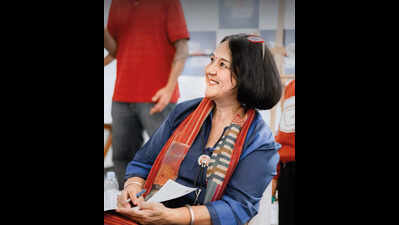
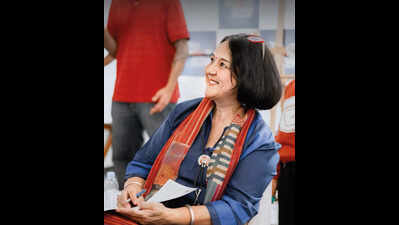
When speakers have to raise their voices because the children outside are having far too much fun, you know you’re in the right place,” says writer, philanthropist and educator Rohini Nilekani, setting the tone for her session at Makkala Habba, part of the ongoing BLR Habba. Her session underscored the importance of childhood, freeplay and the transformative power of imagination.‘PLAY IS NOT A BREAK FROM LEARNING; IT IS THE WORK OF KIDS’“Play that comes without instructions, outcomes or constant adult supervision is essential. Play is not a break from learning,” Rohini emphasises.Unstructured play, she explains, allows the brain to develop more holistically, building curiosity, resilience, empathy and imagination in ways no textbook evercan. “When children are allowed to discover, invent rules, fall, negotiate and even get bored, they are quietly learning how to be human in an ever-evolving world,” she points out.‘PARENTING TODAY REQUIRES A NEW KIND OF COURAGE ‘“One of the hardest things for parents today is giving themselves permission to just be,” says Rohini, adding that this, in turn, allows children the freedom to enjoy unstructured play and discovery. “In our world, children are constantly placed into boxes. Parents must step back from the anxiety of optimisation and allow children the freedom to simply exist, imagine and wander. When we let children be, we allow them to grow into kind, caring and curious people,” she observes.Acknowledging the realities of modern parenting, Rohini expresses deep empathy for parents navigating the digital age. “Devices are everywhere. Parentingtoday requires a whole different kind of courage, which is why I call parents brave warriors,” she says. “In my time, parents worried about us watching toomuch television; today, it’s all about devices. This is about balance, and as adults, we must examine our own screen habits too. Parents don’t have to be hypervigilantabout keeping children constantly engaged. A child needs the space to feel bored and to wonder,” she avers.‘CHILDREN MUST BE TAUGHT THE ABILITY TO ADAPT’“Education can no longer be purely transactional,” Rohini notes. “Many of the assumptions we grew up with may no longer hold true. What children need instead is the ability to handle change.” She stresses the importance of adaptability, critical thinking, collaboration and, above all, humanity. “Our anganwadis are working towards this mission — shaping not just educated individuals, but a morecompassionate society,” she concludes.