





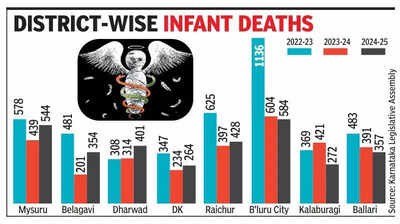
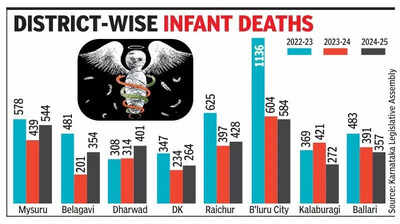
Mysuru: Mysuru district recorded a rise in cases of infant mortality last year. According to data released by the health department, the district reported 544 infant deaths in 2024-25, compared to 439 deaths in 2023-24.However, district health officials clarified that this uptick in infant mortality rate (IMR) is primarily due to critical cases being referred to other hospitals at the last minute. They insist that keeping this one factor aside, IMR in Mysuru district is below the state average. For the record, statistics show that even Belagavi and Dharwad districts have seen a rise in infant deaths in recent months. Replying to a query during the ongoing assembly session, health minister Dinesh Gundu Rao said IMR in Karnataka has declined, and that there have been no neonatal deaths due to lack of proper medical care. Sharing district-wise data on infant deaths for the last three years, the minister said the main causes of neonatal and infant deaths are preterm births, complications due to low birth weight, birth asphyxia, pneumonia and sepsis, congenital heart diseases, and neurological defects. He assured that to prevent neonatal and infant deaths, essential health services are being provided in all govt hospitals across the state. Gundu Rao added that according to the sample registration system report, Karnataka’s infant mortality rate has dropped to 12 per 1,000 live births, which is lower than the national average of 19. Mysuru district health officer Dr P C Kumaraswamy told TOI IMR has dropped to 10.8 per 1,000 live births in Mysuru, which, according to him, is less than the state average of 12 per 1,000 live births. The head of the department of paediatrics at Mysuru Medical College and Research Institute, Dr N Pradeep, explained that on an average, 700 deliveries are conducted at Cheluvamba Hospital, run by the medical education department, every month. He said meconium aspiration syndrome (MAS) is the most common cause of death among neonates less than a month old. MAS typically occurs when a newborn inhales meconium (first stool) mixed with amniotic fluid, leading to difficulties in breathing. Citing a case in point, Dr Pradeep said since Cheluvamba Hospital is a tertiary care centre, with a 40-bed NICU unit, it receives complicated cases from primary and secondary centres and even from private hospitals. Deaths of infants happen due to referrals to the hospital at the very last stage, he explained. |