





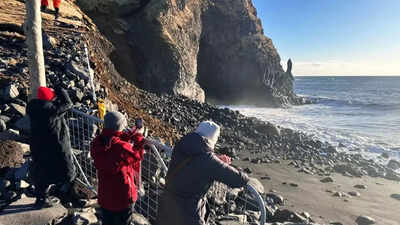
Iceland’s famous black sand beach has always felt a little unreal. Dark as charcoal and framed by cliffs. Pounded by Atlantic waves that don’t play nicely. For years, travellers have stood on the shore at Reynisfjara Beach, staring at its basalt columns and snapping photos that barely look real. It’s one of those places that seems permanent. And yet, in a matter of weeks, much of that iconic black sand appears to have vanished. Swept away and dragged into the North Atlantic, as cited by Arcticportal.org. Visit Iceland has long described it as one of the country’s most hazardous destinations. Sneaker waves, those sudden, powerful surges, have swept visitors into the sea before. Several people have died over the years, including one as recently as summer 2025. Now, the erosion may be adding another risk!
Iceland’s black sand beach nears to ‘extensive erosion’: Reports
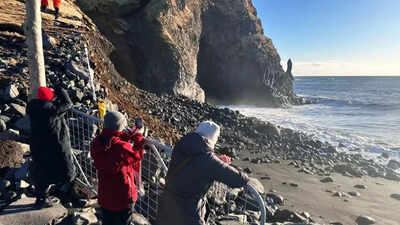
Reports from Iceland suggest that powerful winds and heavy currents have stripped away large sections of the shoreline at Reynisfjara Beach. What was once a wide, dramatic stretch of black volcanic sand is now reportedly reduced to a narrow strip in places. The environmental change is described as “extensive erosion.” The appearance and accessibility of the beach are said to be dramatically altered.The transformation, which locals say is that the towering basalt columns that once sat high above the sand are now rising almost directly from the sea. These formations, shaped by ancient volcanic activity, used to be easily reachable on foot. Now they appear much closer to the crashing surf.
What can be the reason behind the disappearance of sand
Experts near Reynisfjara Beach are pointing to unusual wind patterns this winter. Coastal engineer Sigurður Sigurðarson from the Icelandic Road Administration explained to Icelandic media that easterly winds have dominated recently. That’s not typical.Usually, southwesterly winds push sand eastward along Iceland’s south coast. This winter, the pattern seems to have flipped and easterly winds have reportedly pushed sand westward instead. The nearby mountain Reynisfjall juts far into the sea. When sand moves west, it hits that natural barrier and stops. Reynisfjara doesn’t receive fresh sand from the east under these conditions. So the beach shrinks. Experts say it’s still unclear whether the sand will return. It all depends on future wind directions and wave patterns.