







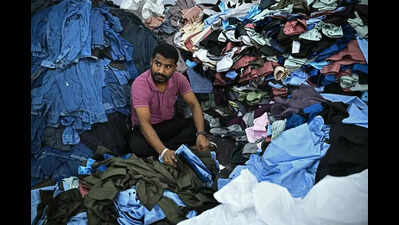
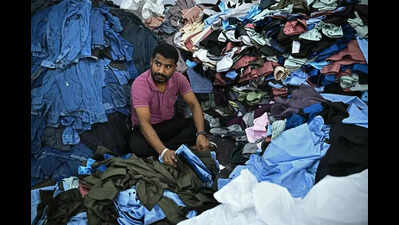
Bengaluru: The latest GST reforms for the garment sector in Karnataka — Bengaluru alone is home to close to 6 lakh workers — have been bittersweet. While the industry has welcomed rationalisation of rates and removal of the inverted duty structure, many players say they had hoped for a uniform tax bracket covering the entire value chain.They say passing on benefits to consumers could help boost demand and, in turn, production at a time when global trade uncertainties, including Trump’s tariffs, loom large. Bengaluru, often called the country’s ‘garment capital’, houses more than 400 units. The department of handlooms and textiles says Karnataka is the country’s second-largest textile employer, producing 20% of national garment output and accounting for 11% of garment exports. It also dominates silk production, contributing 65% of India’s raw silk and 24% of silk exports, sustained by about 55,000 weaver families. The new reforms have accepted two key industry demands: Aligning the fibre-to-fabric chain at 5% and adopting a fibre-neutral policy that puts man-made fibres and cotton on par. Extending the 5% slab from garments priced up to Rs 1,000 to those costing up to Rs 2,500 has also been welcomed as a relief for both consumers and manufacturers. But concerns remain about garments priced above Rs 2,500, which will now attract 18% GST. Industry bodies say this category includes woollens, traditional wear, hand woven fabric, and embroidered clothes largely consumed by the middle-class. “These will now face a price increase,” one industrialist said. However, with several online platforms offering options from such categories at lower prices through offers and sales, customer’s burden is expected to be offset — at least a little. The Clothing Manufacturers Association of India (CMAI), which counts several members in Karnataka, described the reforms as a “long-pending relief” but urged the council to extend uniformity. Addressing concerns about overcharging, especially apparel in the higher tax bracket, Rahul Mehta, chief mentor, CMAI, told TOI: “We are in touch with authorities concerned and are seeking clarifications on how to manage this transition period.” For now, industry players see the reforms as progress but maintain that a single-rate GST is critical for long-term stability.