






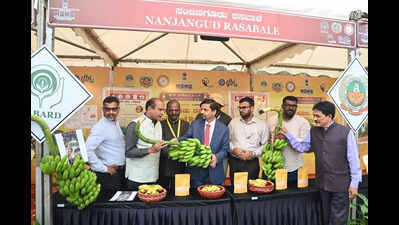
Mysuru: Director of the Directorate of Agribusiness Development Board (DADB), Tamil Nadu Agriculture University, E Somasundaram, on Friday highlighted the need to promote Geographical Indication (GI) products at both national and international levels. With a huge market for GI products internationally, he said such activities not only boost exports, but also promote tourism and empower the rural economy and artisans. Somasundaram, was speaking at the four-day GI Mahotsav 3.0 here, organised jointly by the Madurai Agribusiness Incubation Forum (MABIF) of Tamil Nadu Agriculture University, the Ministry of MSME, and the Central Food and Technological Research Institute (CFTRI) at its campus in the city. He said GI is not just a tag, it involves heritage and a living identity of the nation, as GI protects products that are deeply rooted in the soil, culture, traditions, and craftsmanship of a region. They also safeguard the uniqueness of our agricultural varieties, foods, handlooms, handicrafts, and traditional knowledge systems. The promotion of GI products not only opens doors for farmers, producers, and consumers to receive authentic quality products, but also to premium markets, rural marketing, value appreciation, and sustainable livelihood. The first two GI Mahotsavs were held in Madurai and Kanyakumari in Tamil Nadu, while the third is being held in CFTRI in Mysuru, to bring together producers, buyers, and policymakers under one vibrant platform to showcase the richness of India’s GI heritage, as well as provide a marketing heritage for producers. Darjeeling tea was India’s first GI registered product in the country, followed by black rice, Nanjanagudu Rasabele, Mysuru Betel Leaf, Mysuru Silk, and several other products. Presiding over the event, CFTRI director Giridhar Parvatham said GI 3.0 Mahotsav is being organised with the intention of providing a platform to interact with food technologists, quality experts, and market specialists to enhance product value. The four-day event involves expert sessions, cultural performances, hackathon presentations, and a start-up expo to discuss success stories of GI associations, cross-involving budding entrepreneurs, and necessary food testing validation for the benefit of farmers. As many as 54 stalls are part of the event, showcasing various GI-tagged products.