







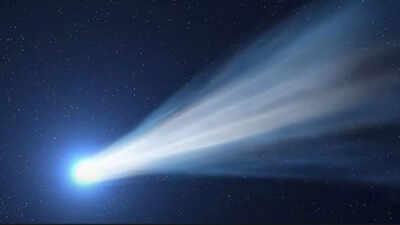
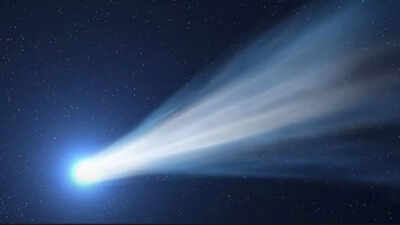
NASA’s Hubble Space Telescope has captured a rare moment involving the comet C/2025 K1 (ATLAS) as it began breaking apart. Events like this are not often seen, mainly because comet fragmentation is difficult to anticipate and even harder to observe at the right time. The results were later published in the journal Icarus.Interestingly, the comet was not part of the original plan. A change in the observation schedule led the team to select it instead. That decision ended up offering a closer look at how such breakups unfold, giving researchers more detail than they usually get from similar events.
NASA’s Hubble Space Telescope documents early breakup of comet C/2025 K1 (ATLAS)
The research team, which consisted of scientists from Auburn University, had originally intended to observe another comet. However, because of their technology’s limitations, they decided to observe C/2025 K1 (ATLAS). According to NASA reports, the research team made their observations over three days: 8th to 10th November 2025.While reviewing the images taken of the comet, John Noonan, the research team’s co-investigator, noticed something unusual. Instead of one bright point of light, there were many. The research team’s review of the images revealed that the comet had indeed split into at least four different fragments. Each of these fragments had its own “coma,” which is the gas and dust that normally surrounds the “core” of the comet.
Hubble Space Telescope tracks three-day progression of comet
The sequence of images shows how the breakup unfolded over time. On the first day, multiple bright spots appeared close together. By the second day, the largest fragment had already divided into two. On the third day, the pieces had drifted farther apart, continuing along a similar path.Hubble’s sharp imaging made it possible to clearly distinguish these fragments. At the same time, ground-based telescopes could only detect faint, blurred patches of light. Researchers believe the fragmentation had actually started about eight days before Hubble captured it. During the observation period, one of the smaller fragments also continued to break down further.
Comet fragmentation reveals early solar system material , says Dennis Bodewits
According to principal investigator Dennis Bodewits, comets are leftover material from the early solar system. They formed billions of years ago, and while their outer layers have changed over time, their interiors may still hold more original material. When a comet breaks apart, that inner material becomes exposed. This gives scientists a chance to study what lies beneath the surface and better understand how the solar system formed.One detail that stood out in this case was the delay between the breakup and the increase in brightness seen from Earth. Normally, freshly exposed ice quickly turns into gas, which makes the comet appear brighter. Here, that brightening happened later than expected. Researchers suggest that this could be due to a layer of dust forming first or because the heat needed more time to reach deeper layers before triggering visible activity.
Composition and future analysis
Early observations from ground-based telescopes suggest that C/2025 K1 (ATLAS) contains less carbon than many other comets. This is not typical and could offer clues about where it formed and how it has changed over time. Further analysis is expected using Hubble’s instruments, including the Space Telescope Imaging Spectrograph and the Cosmic Origins Spectrograph. These tools can provide a closer look at the comet’s chemical makeup.
Current status of the comet
After breaking apart, the fragments of C/2025 K1 (ATLAS) are now moving away from the Sun. They are currently about 250 million miles from Earth and lie within the constellation Pisces. The comet is following a path that will take it out of the solar system. Based on current estimates, it is not expected to return.